
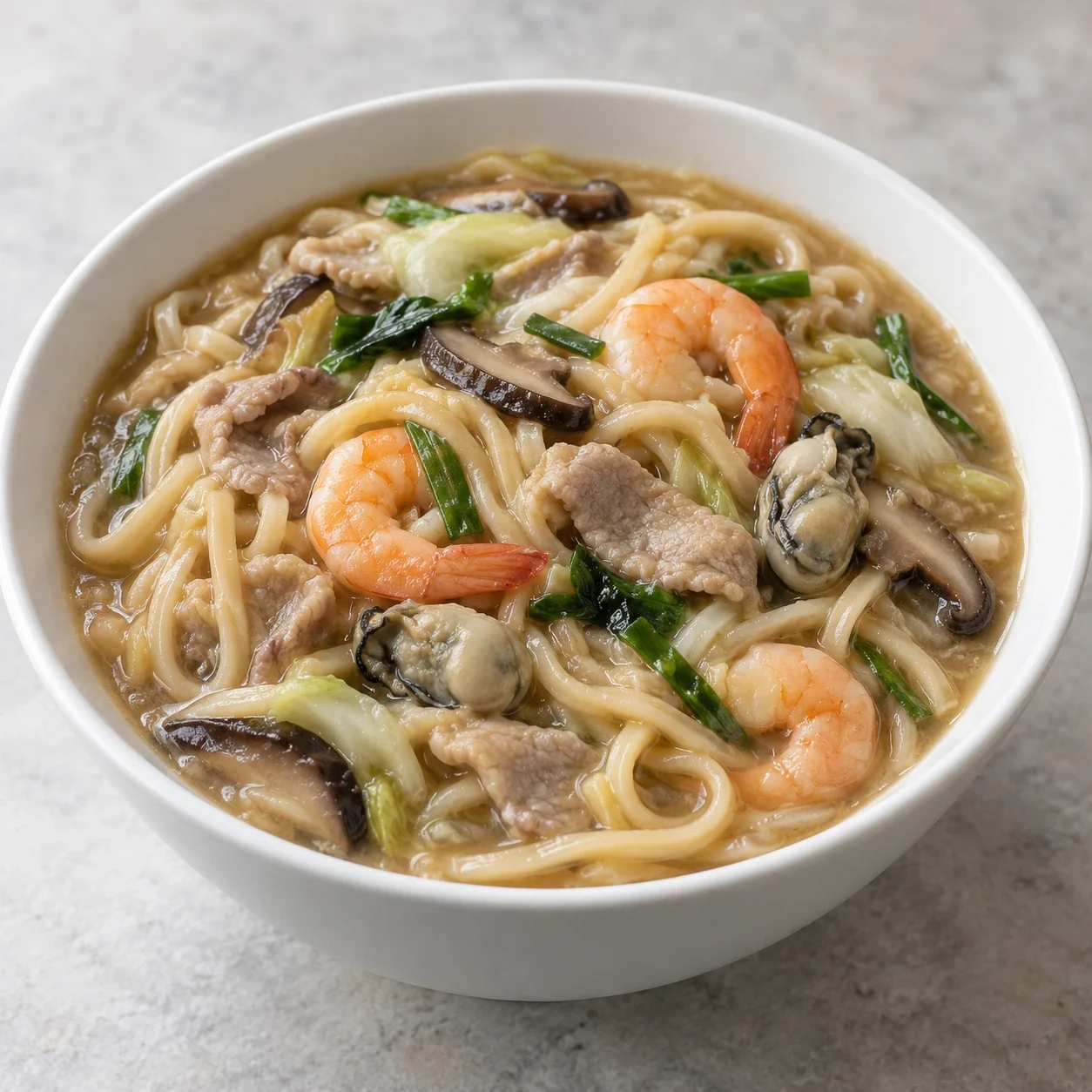
At the table
Loosen a small portion with chopsticks and use a spoon for the broth. Remove any shrimp tails or shell fragments. Ask “是一人份还是大份?” whether it is an individual or sharing portion.
Contains wheat, pork and shrimp; this version also has oysters. Removing visible seafood does not remove its juices from the broth.
Ask about stock, shellfish and cooking wine. A bowl with vegetables is not automatically vegetarian.
GET TO KNOW THE DISH
What goes into it?
Explore some key ingredients below. Preparations may use additional seasonings and ingredients.
Fresh or dried shrimp, vegetables and shellfish vary. Some versions use bone stock; this is not one fixed seafood combination.
Typical ingredients
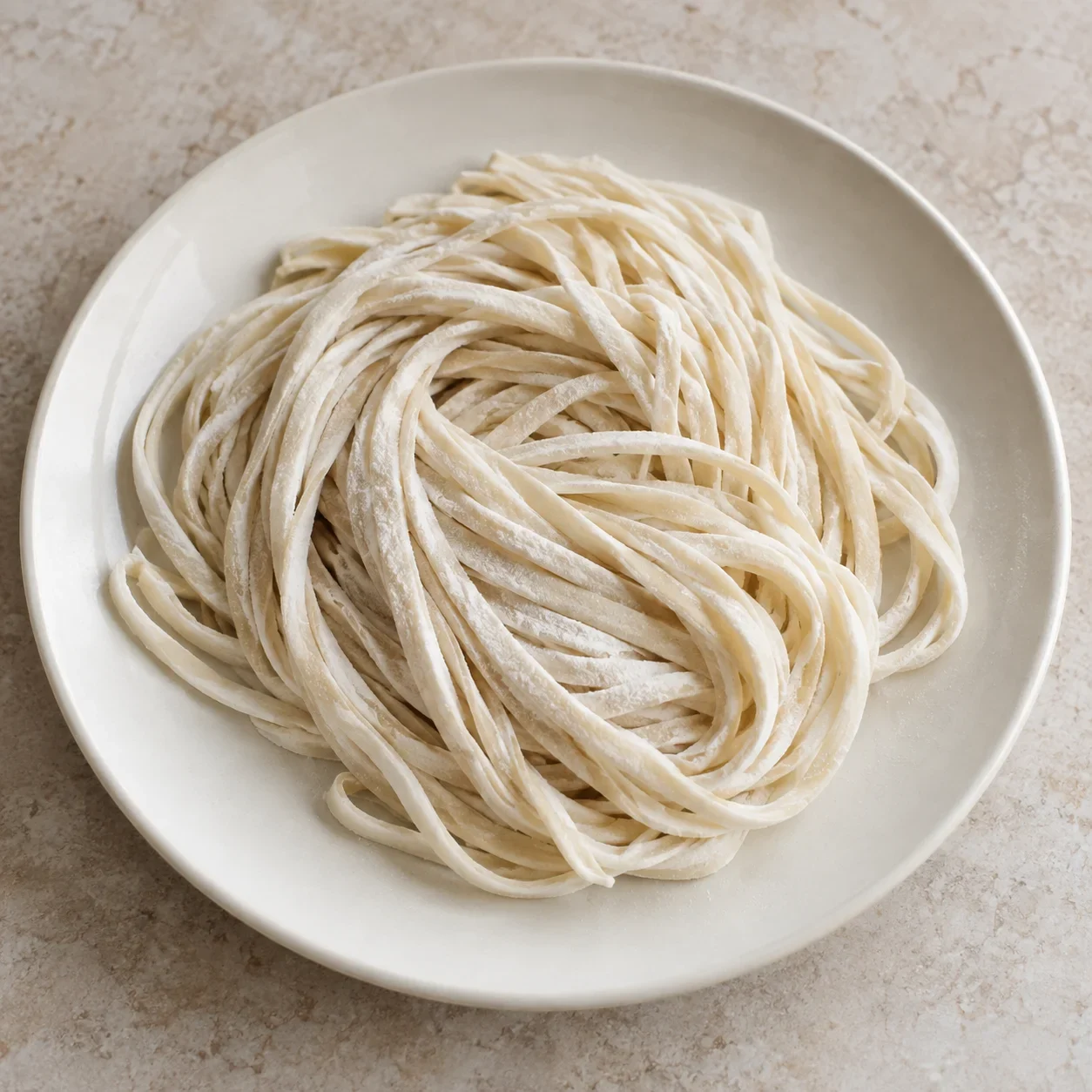
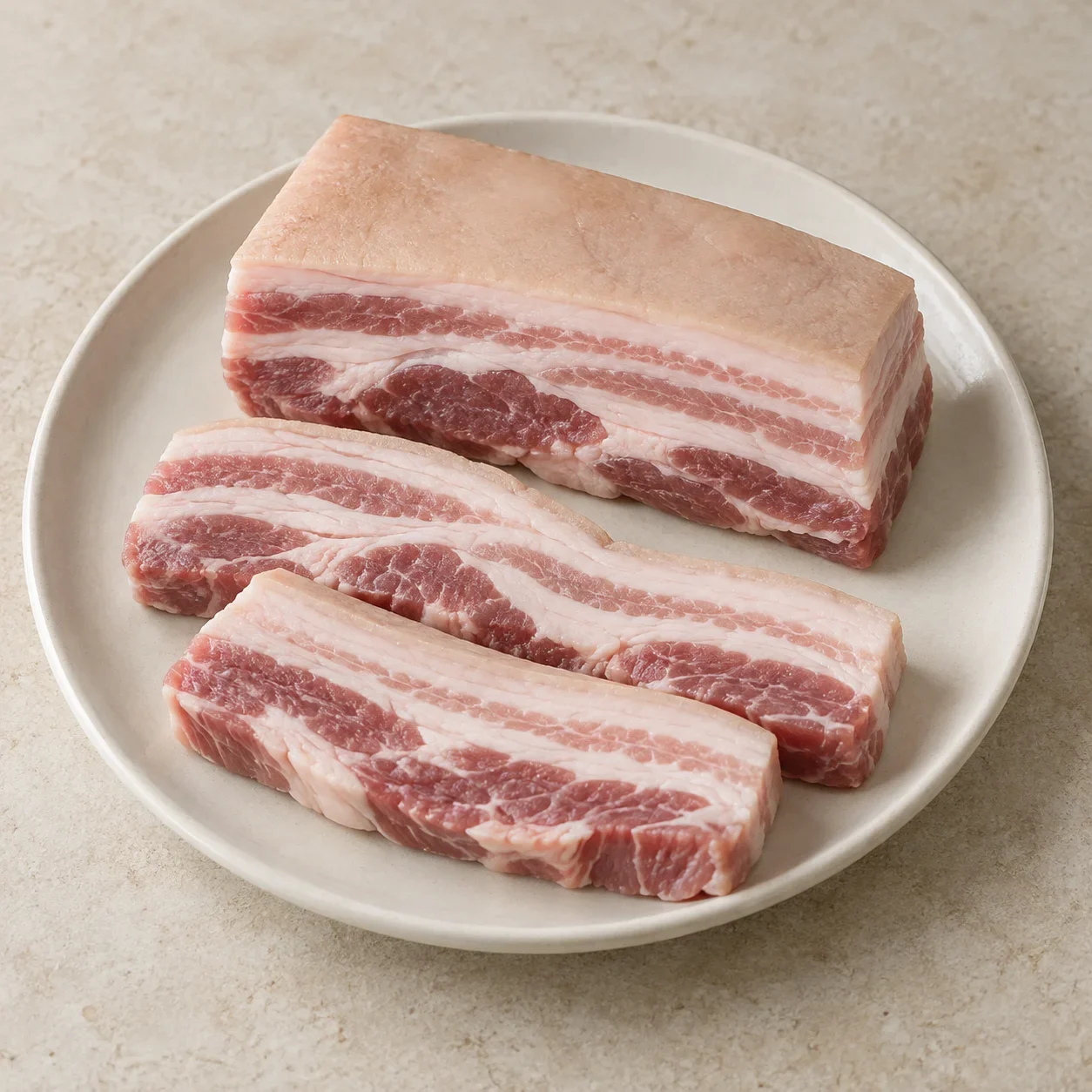
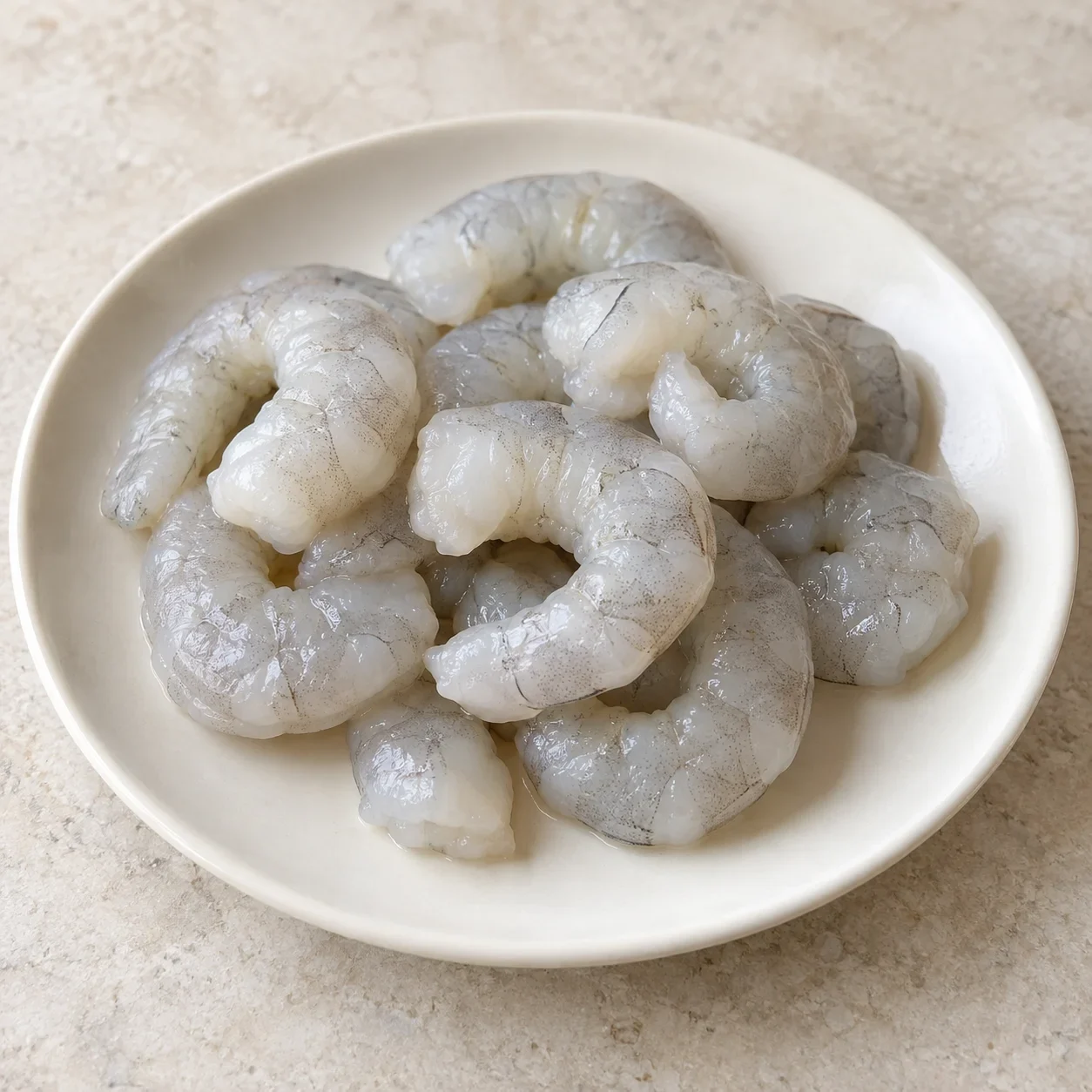
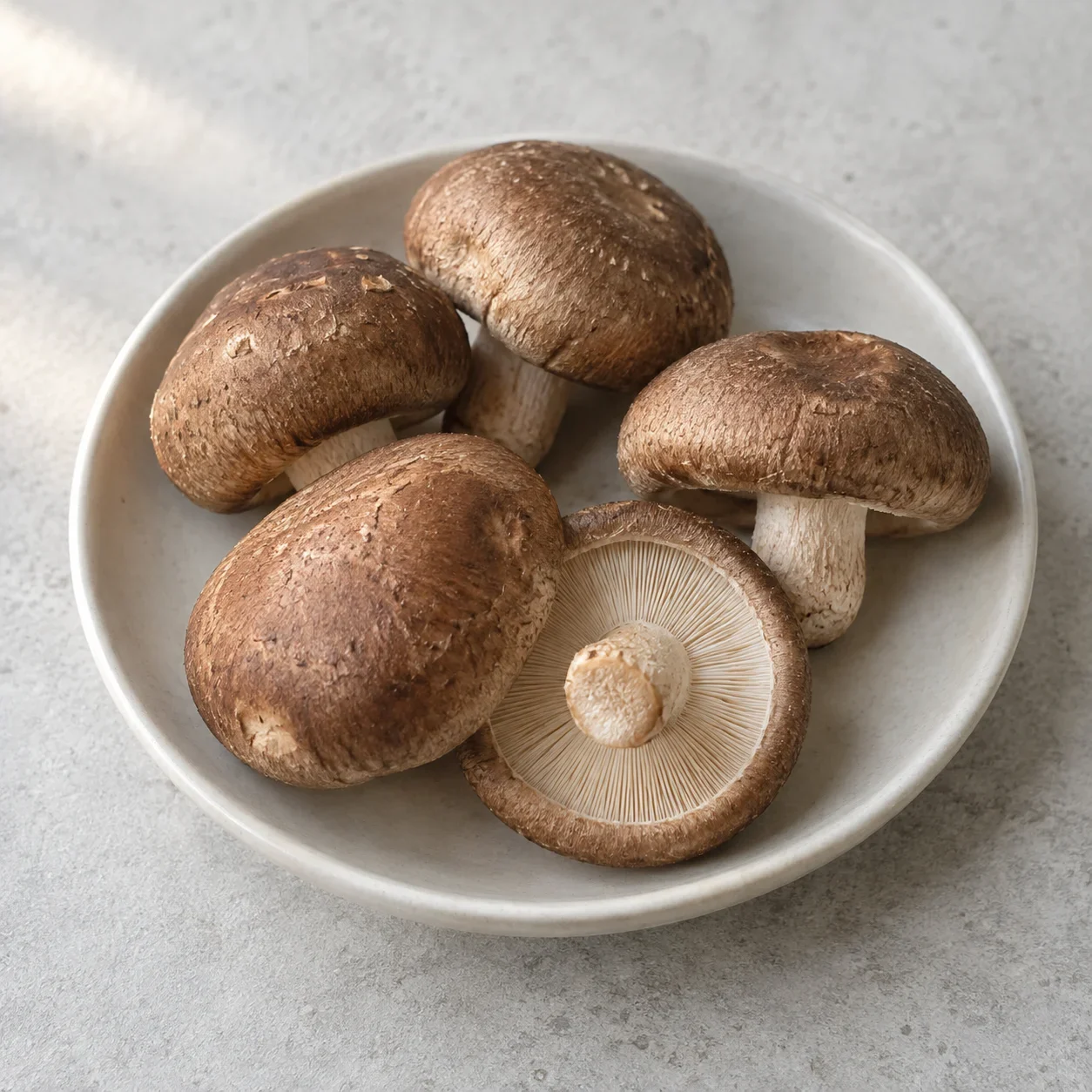
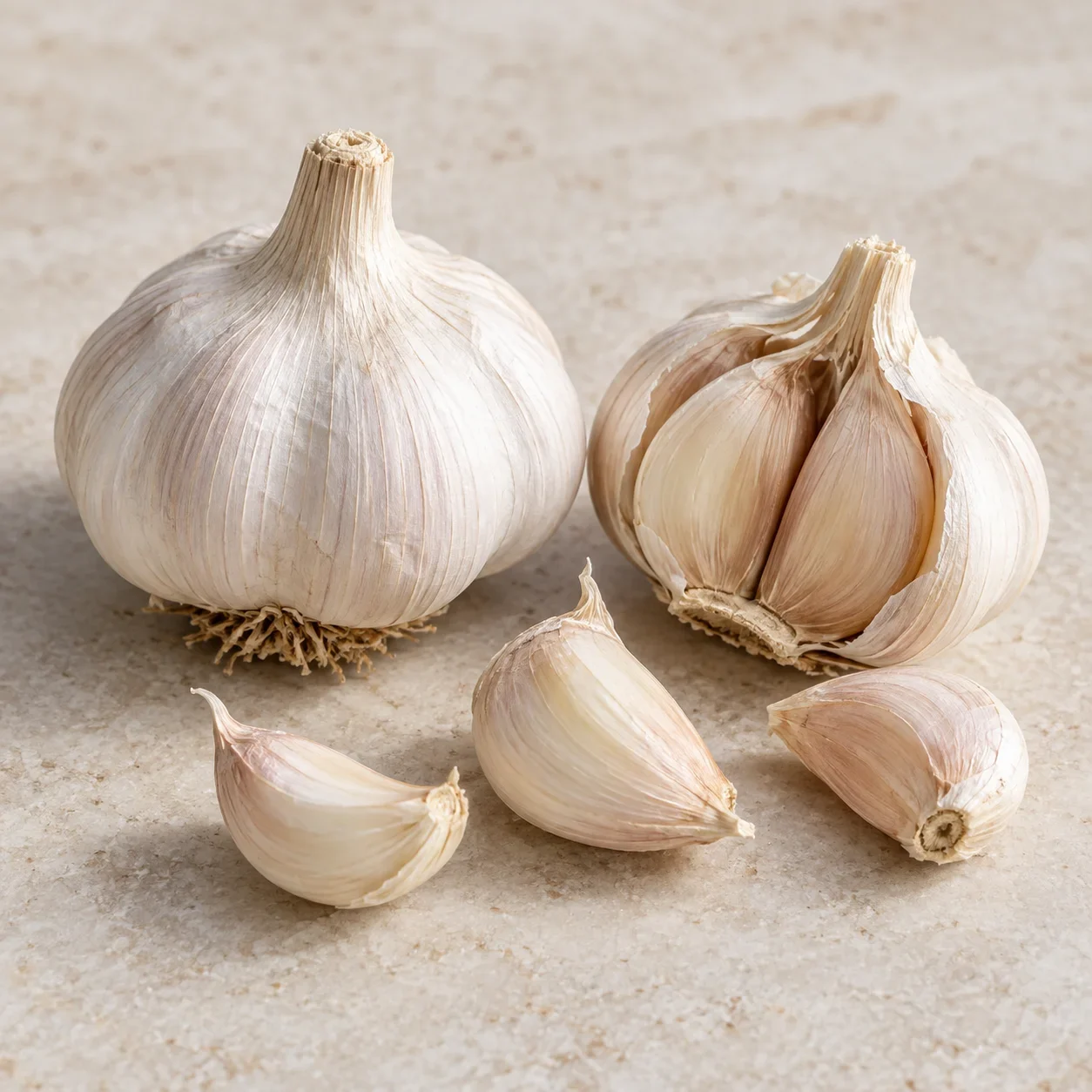

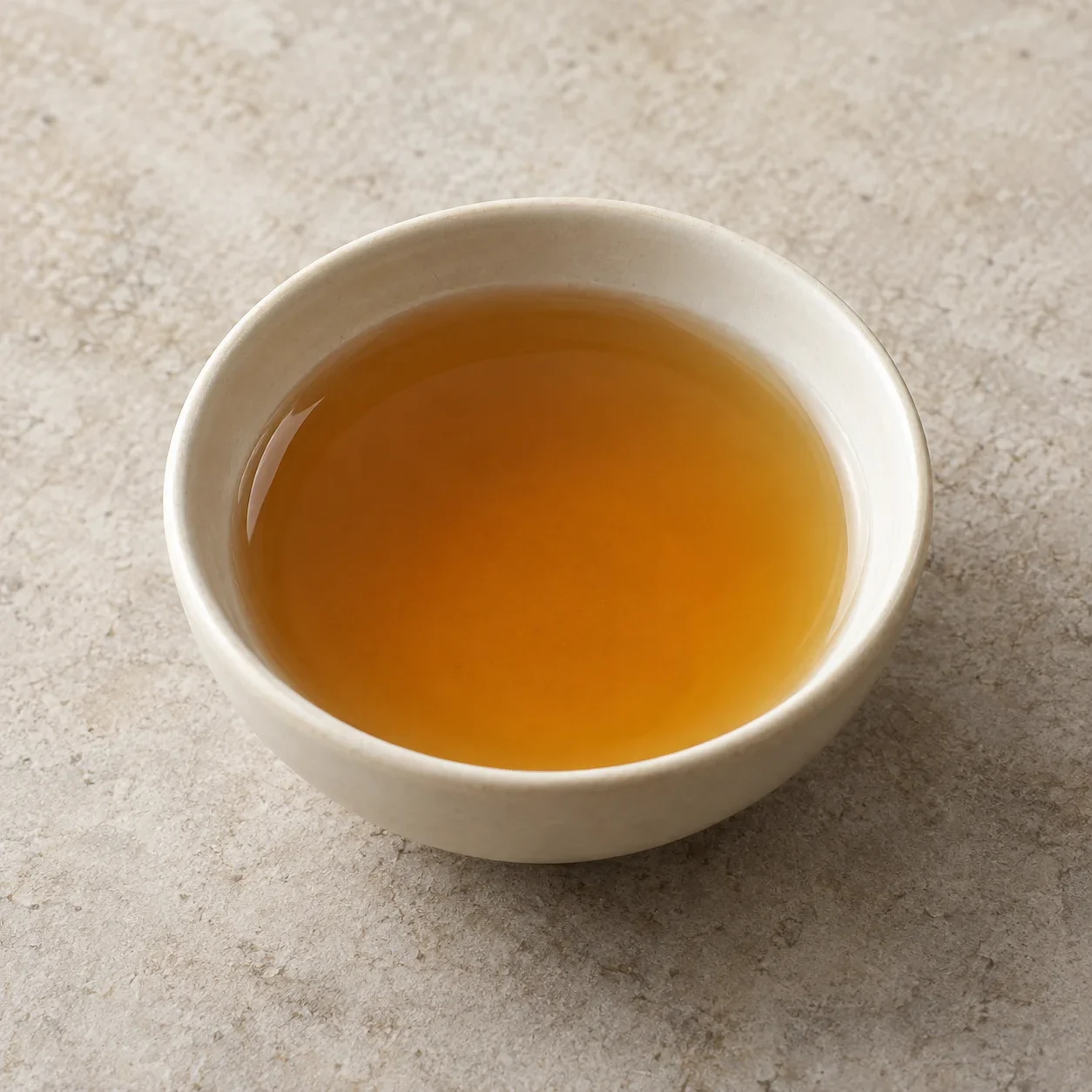
In some versions
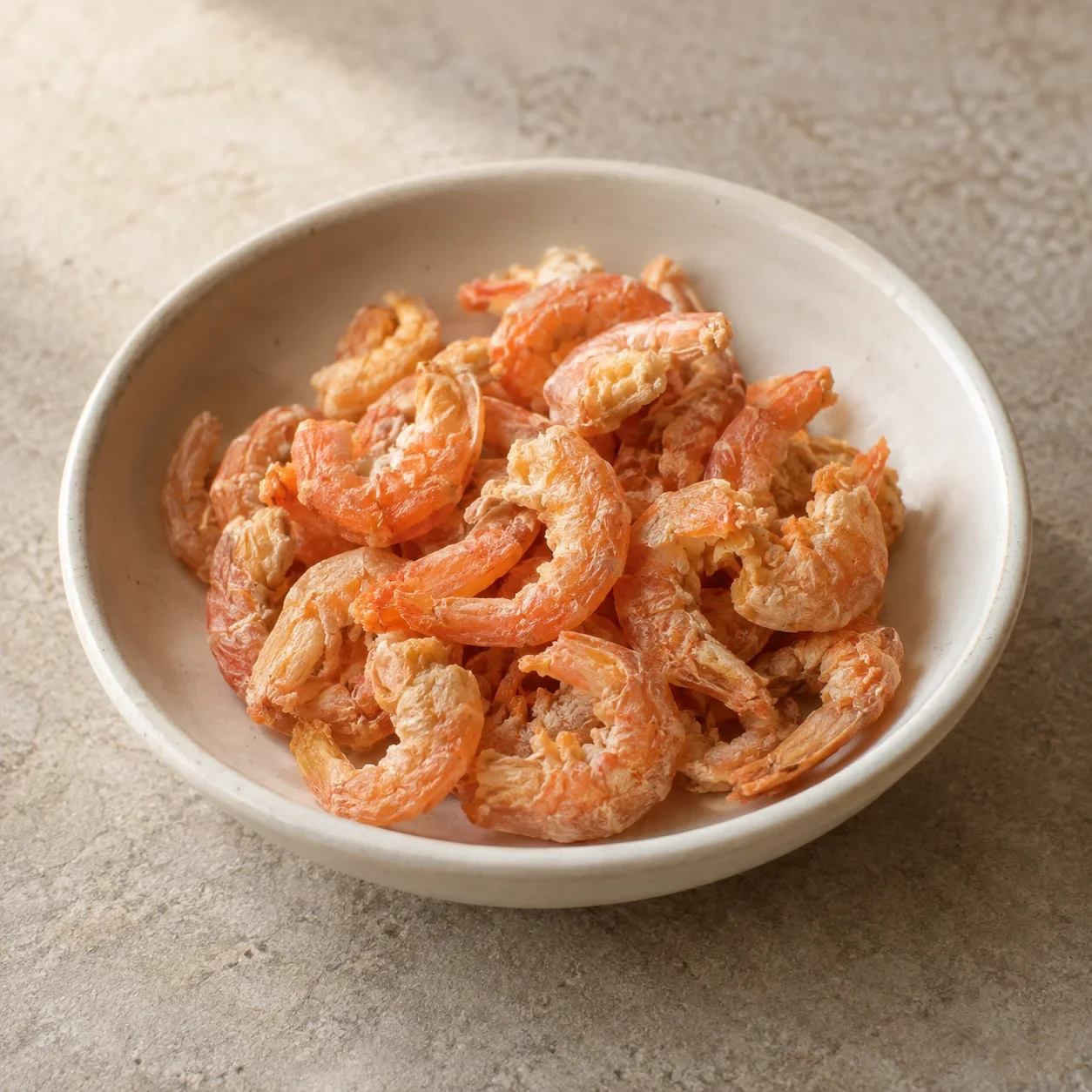
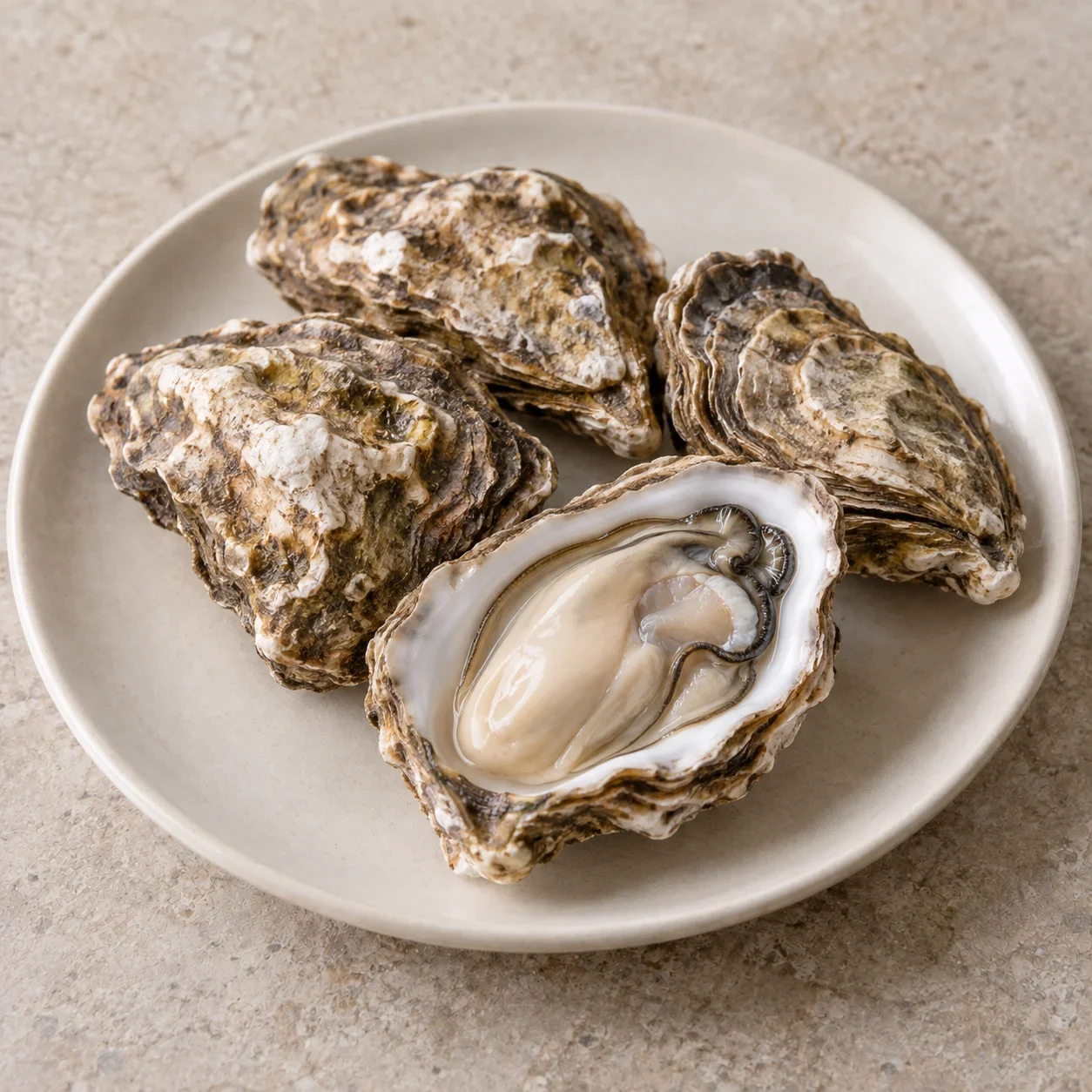
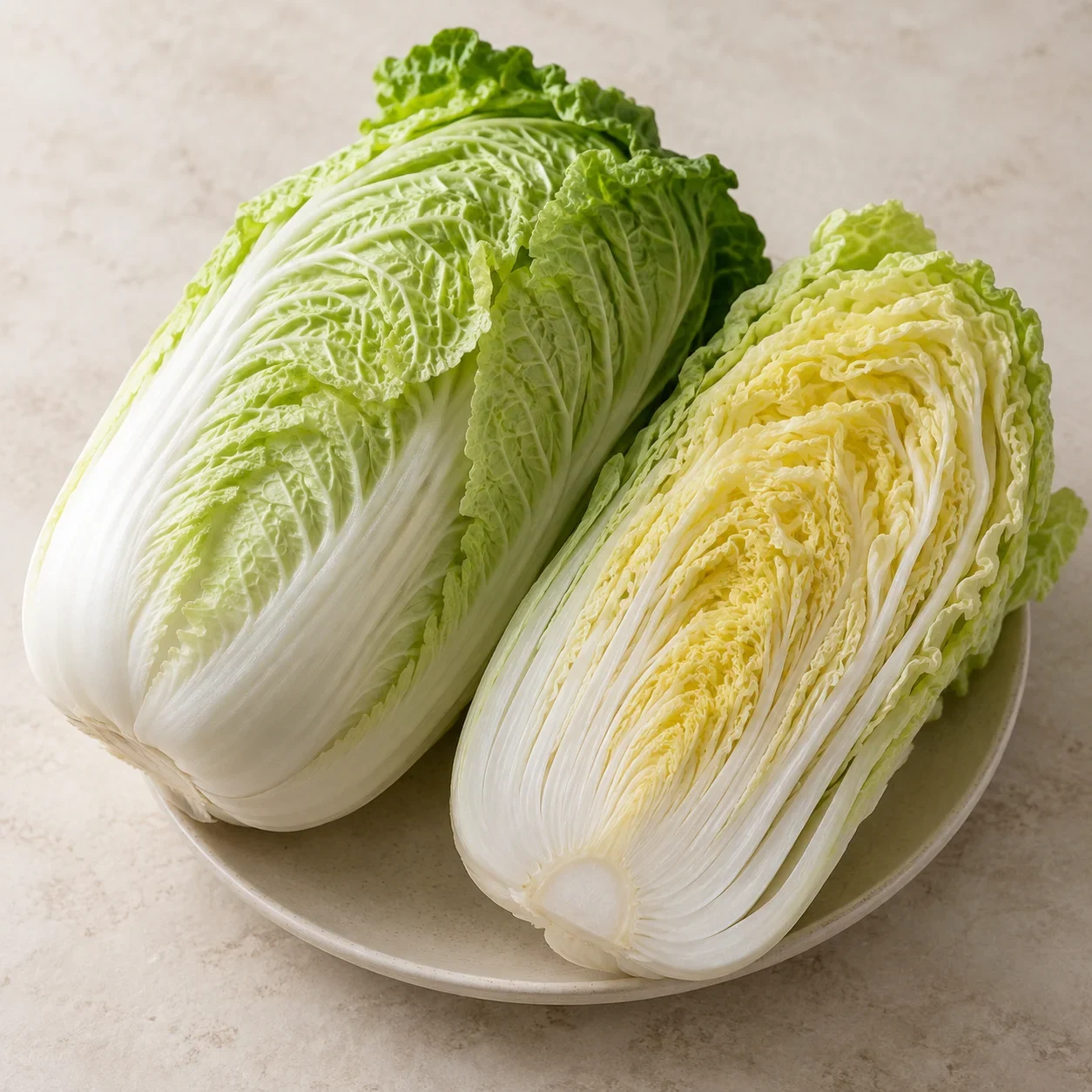
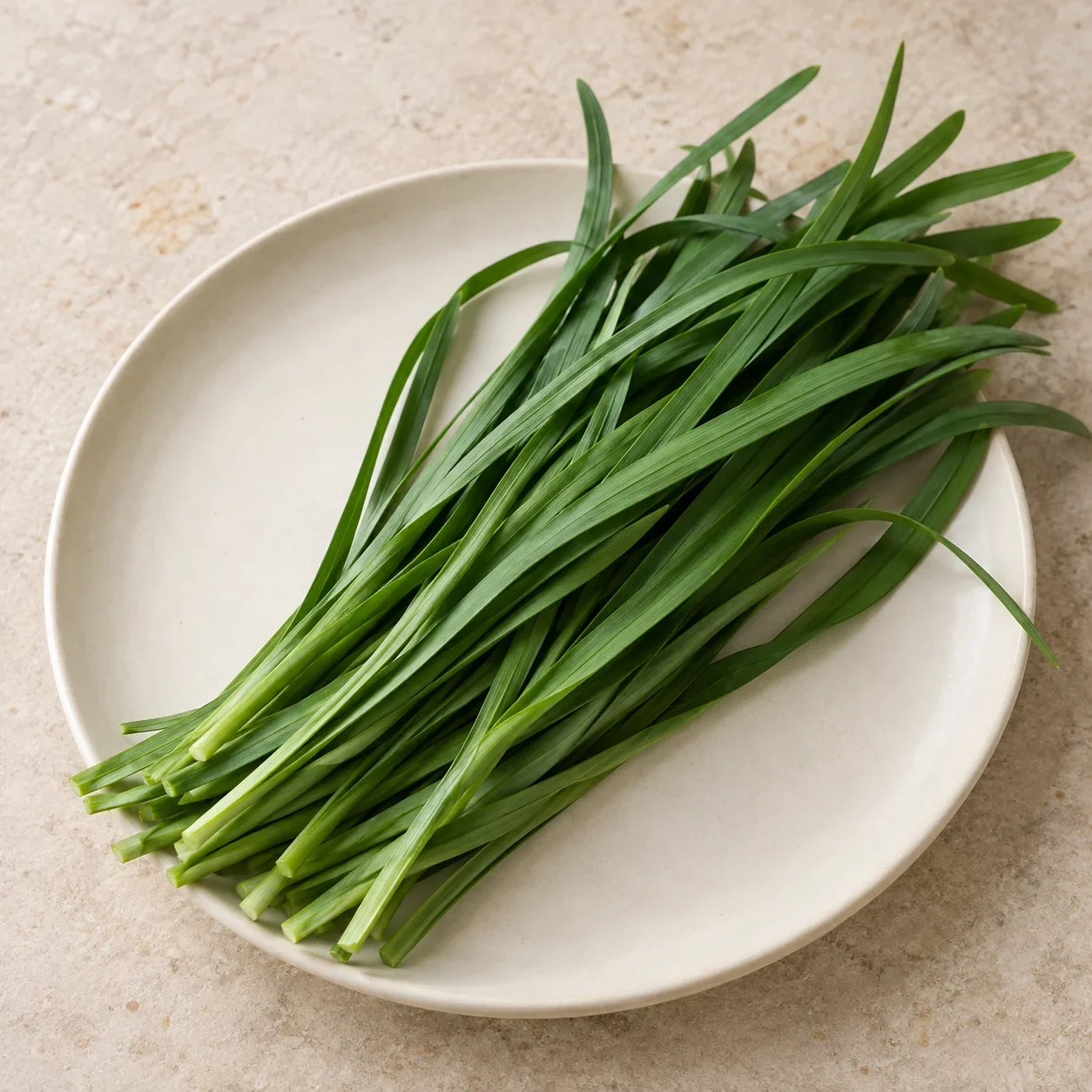
Recipes vary by restaurant.
How does it taste?
Savory pork, mushroom and seafood juices, without chili in this version.
- Chili heat
- Texture
- Soft, slightly chewy noodles coated in a moist, thickened cooking liquid.
- How it’s made
- Pork releases fat to fry garlic, mushrooms and shrimp. Water is added, then noodles and vegetables simmer together; salt and cooking wine season this version.
Fresh or dried shrimp, vegetables and shellfish vary. Some versions use bone stock; this is not one fixed seafood combination.
A CONNECTION TO PLACE
Origin & regional roots
Associated with Fujian.
About this regional connection
Fujian: Core Putian identity; do not merge with Zhangzhou lu mian.
Ask if they have it first
请问你们有莆田卤面吗?
Do you have this item?
A LITTLE SOMETHING TO READ
Story & history
A Putian dish for gathering
This account describes a tradition or story, rather than an established historical fact.
Lu mian is associated with Putian hospitality and banquets. Cooking the noodles with the ingredients lets the broth become part of the dish, rather than a separate topping.