A quick translation of the meal
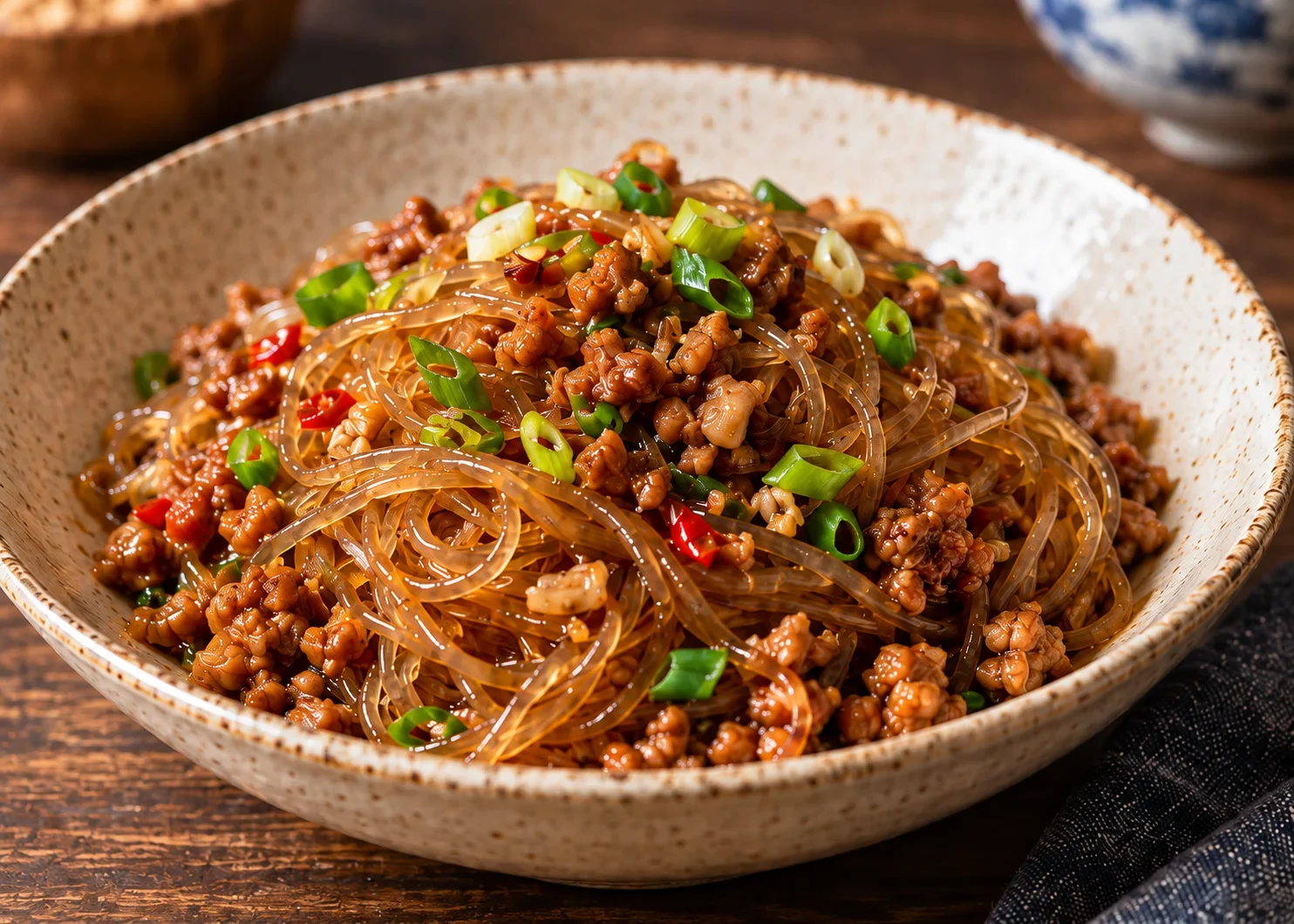
- Ants climbing a tree · 蚂蚁上树: glass noodles with minced pork.
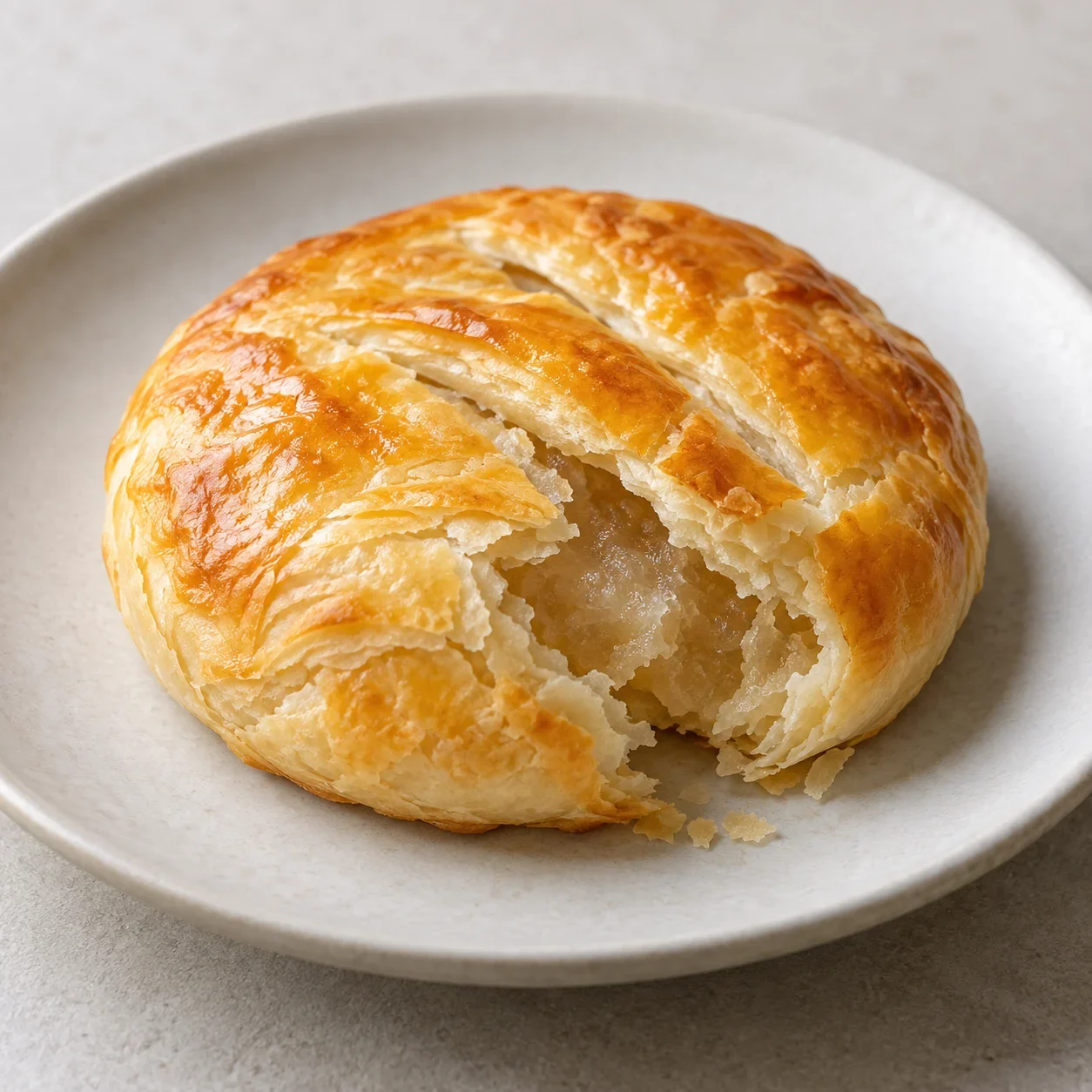
- Wife cake · 老婆饼: a flaky sweet pastry with winter-melon filling.
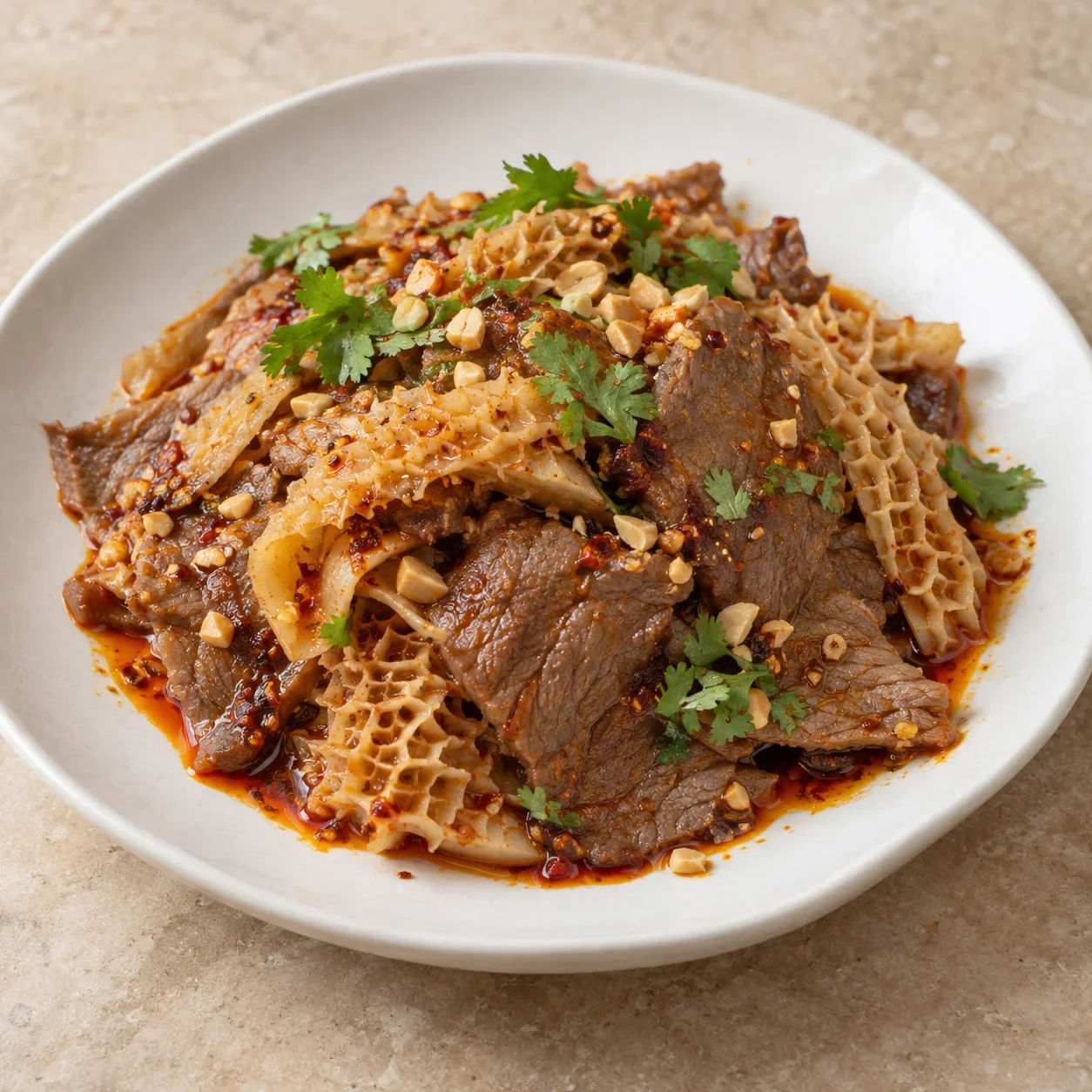
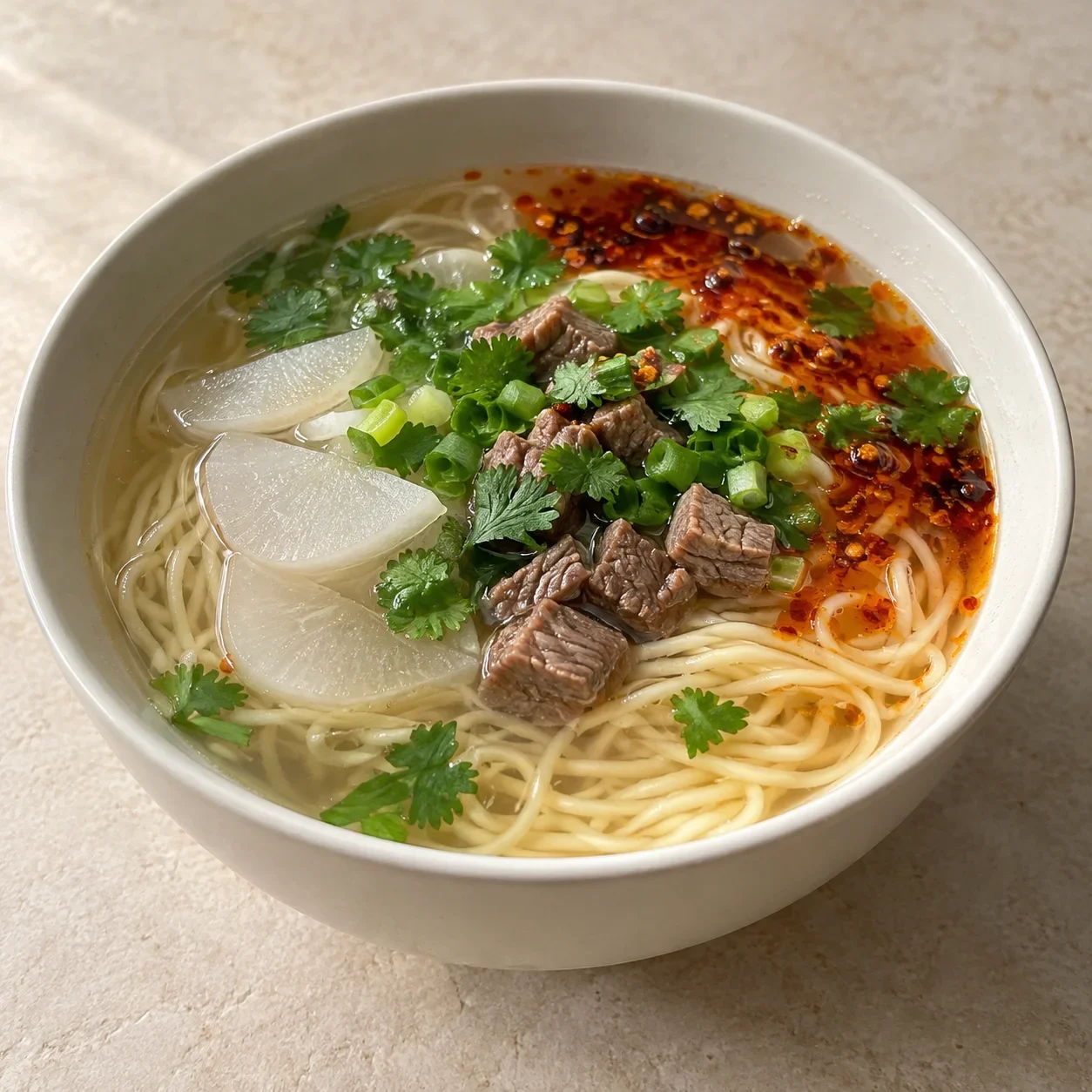
- Husband-and-wife lung slices · 夫妻肺片: cooked beef and offal in chili dressing. Ask which cuts are used.
Ants climbing a tree: 蚂蚁上树
The ‘ants’ are the little pieces of minced pork caught among glass noodles. The dish in our guide uses a savory sauce with fermented chili-bean paste. You may see ‘Ants Climbing a Tree’ or ‘Ants Climbing Trees’ in English; the Chinese name identifies the dish more consistently.
This is a good moment to ask about what matters beyond the name. Glass noodles do not make the whole dish meat-free, and chili-bean paste can bring heat even when there are few visible chilies. The appearance and recipe vary between kitchens.
Wife cake and ‘lung slices’ are different kinds of surprises
Wife cake, 老婆饼, is a flaky Cantonese pastry with a sweet winter-melon filling and a slightly chewy centre. The name is not a literal description of its ingredients. The sweet filling and flaky layers explain more about the pastry than its literal translation.
Fu qi fei pian, 夫妻肺片, is a cooked-beef and offal dish served in an aromatic chili dressing. If you want to avoid offal, ask which cuts are used or choose something else. Translating the title as ‘husband-and-wife lung slices’ is not enough to tell you what will arrive.
A better way to read any unfamiliar menu
Put the translated name beside a plain description: ingredient, preparation, texture and seasoning. Buddha jumps over the wall, for example, is a rich Fuzhou stew combining seafood and meat ingredients; the title alone does not communicate that combination.
Save the Chinese characters so you can match the item on a real menu. Then ask the kitchen about the actual version. A food guide helps you know what to ask; it does not replace the restaurant’s answer about ingredients or substitutions.
Before you order
- Keep the Chinese name as well as the translation.
- Read the main ingredient and preparation.
- Check meat, offal and chili separately.
- Treat a dish’s story and its ingredient list as different information.
Phrases to show at the table
这道菜里面有猪肉吗?
Does this dish contain pork?
这道菜用了牛的哪些部位?
Which cuts of beef or beef offal are used in this dish?
Turn curiosity into a shortlist.
Pick one food you are curious about and keep its Chinese name with your notes. Use the questions above when you compare it with a restaurant menu.
Look up dishes and their Chinese names