
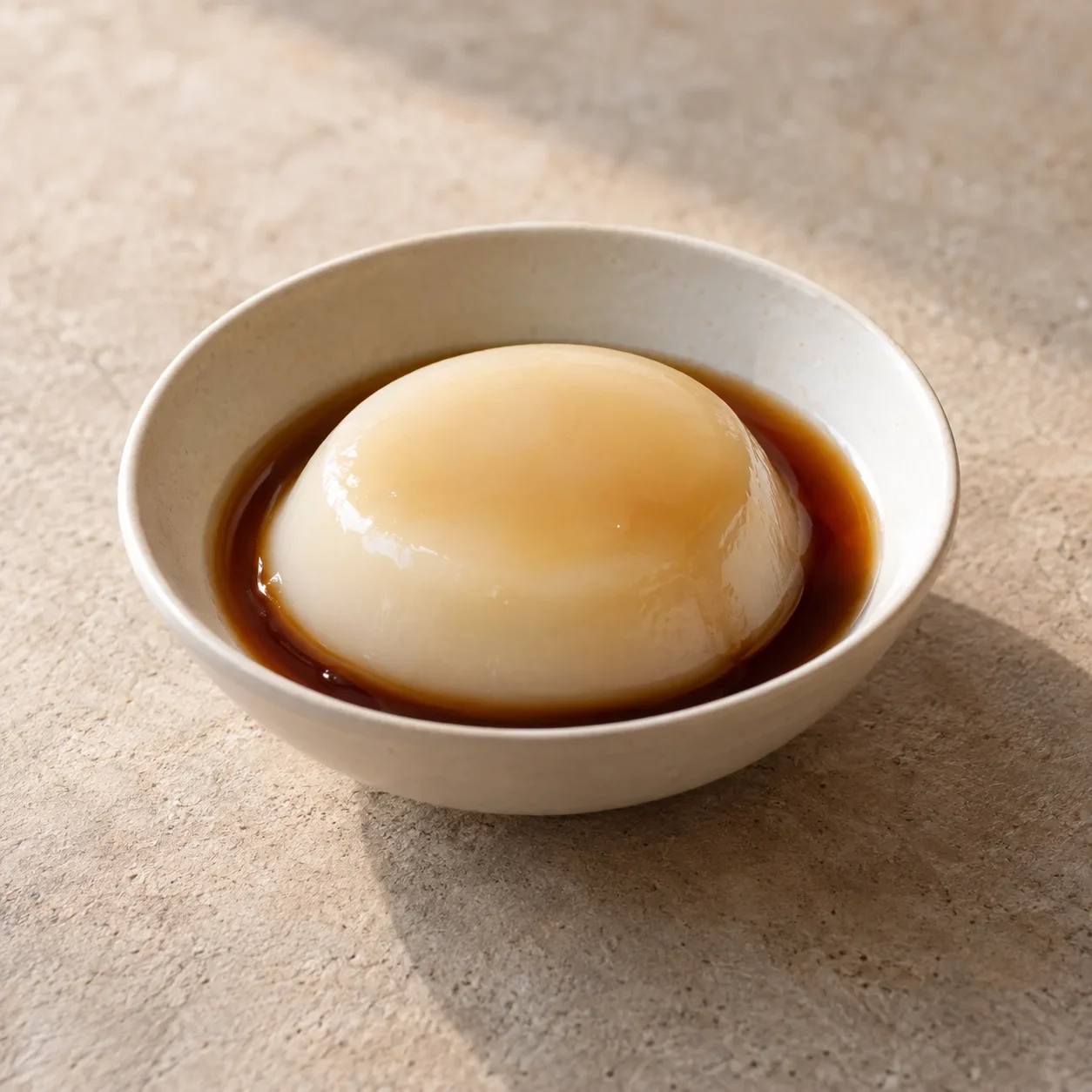
At the table
Use a spoon to cut small portions of the cool, softly set rice pudding. Combine a little syrup with each bite; ask for less syrup if you prefer it less sweet.
Usually made with rice, water and brown sugar; some makers use culinary limewater during setting. Preparation varies. Confirm the ingredients if you have allergies or dietary restrictions.
GET TO KNOW THE DISH
What goes into it?
Explore some key ingredients below. Preparations may use additional seasonings and ingredients.
The setting process varies; some local makers use limewater during cooking. The amount of syrup changes the sweetness.
Typical ingredients
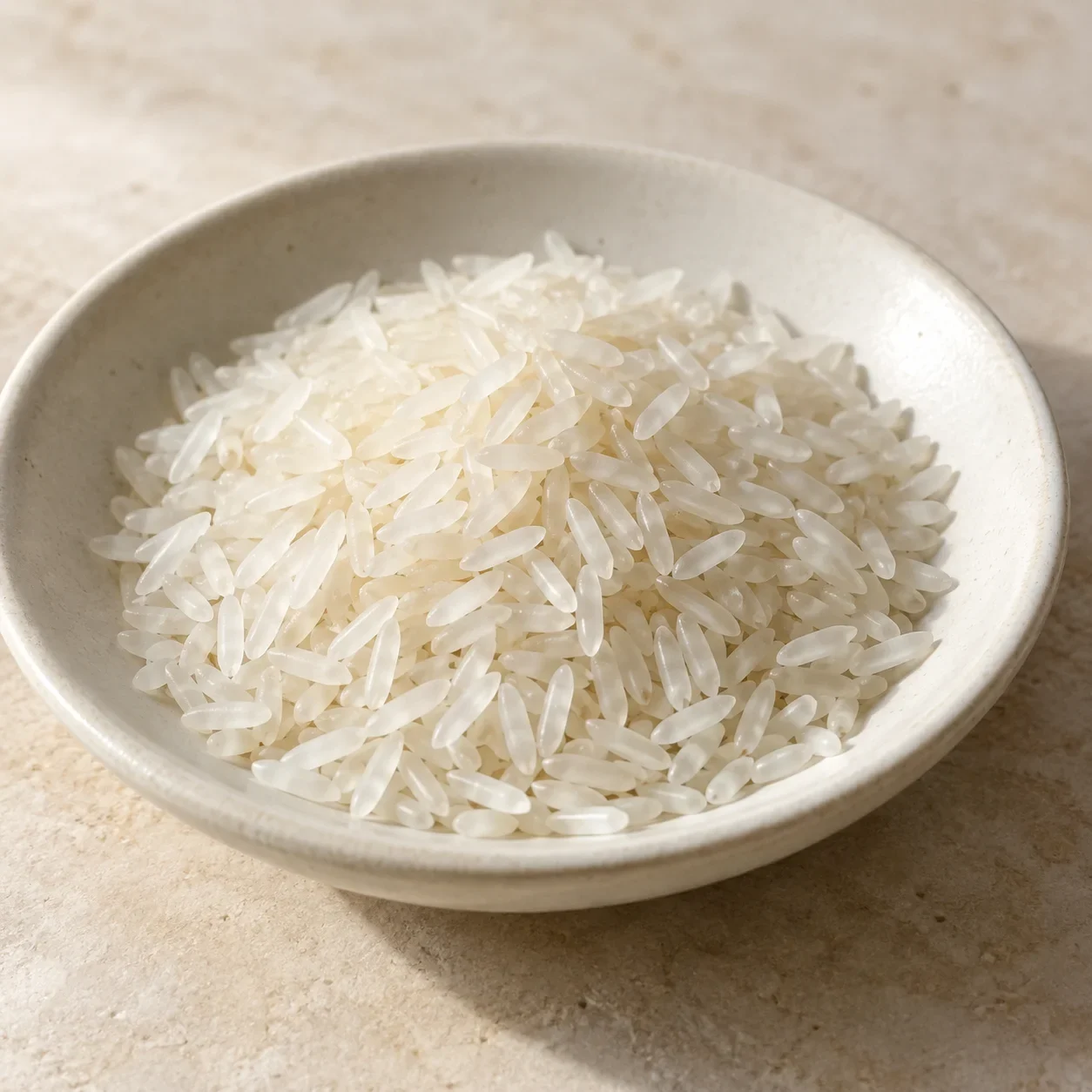
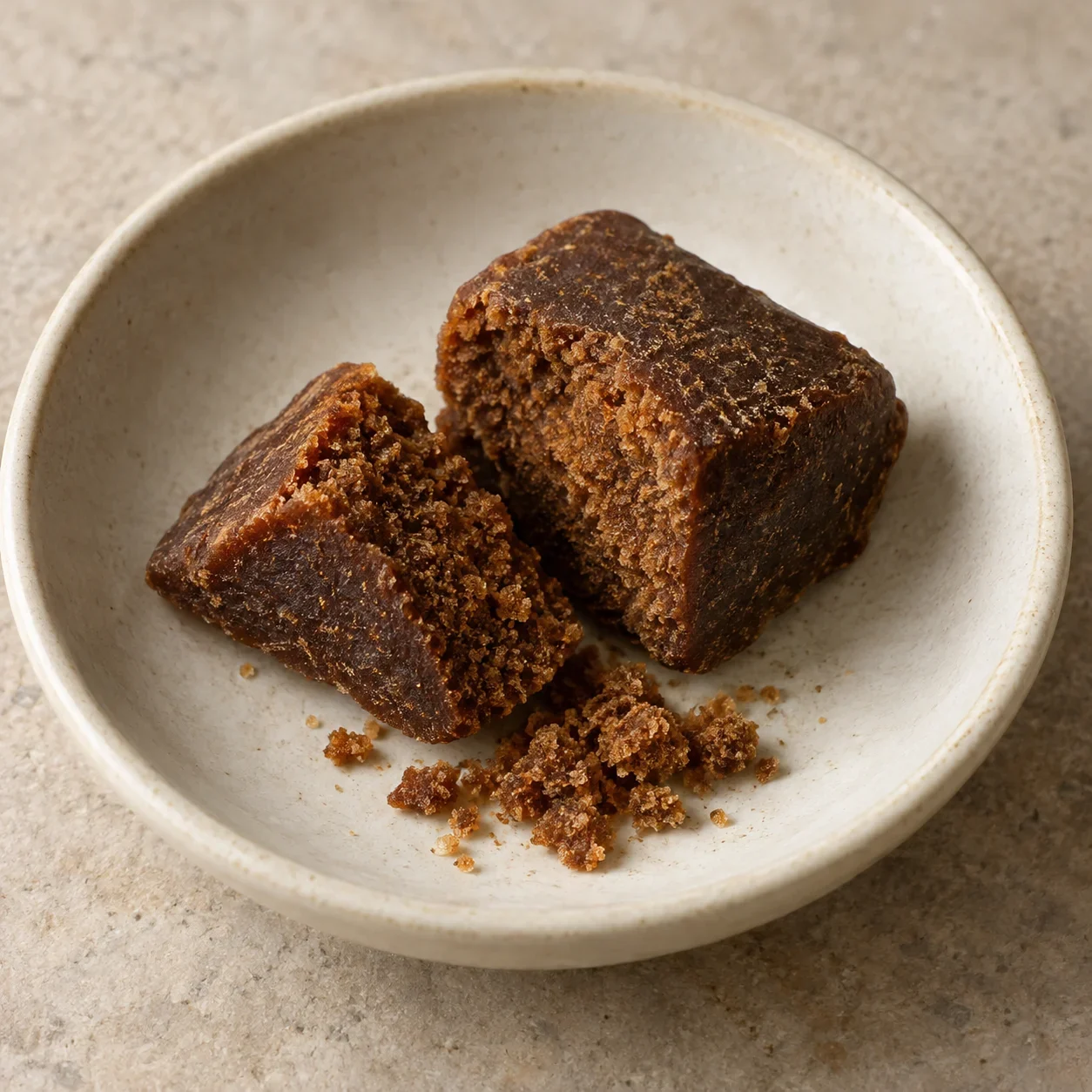
In some versions
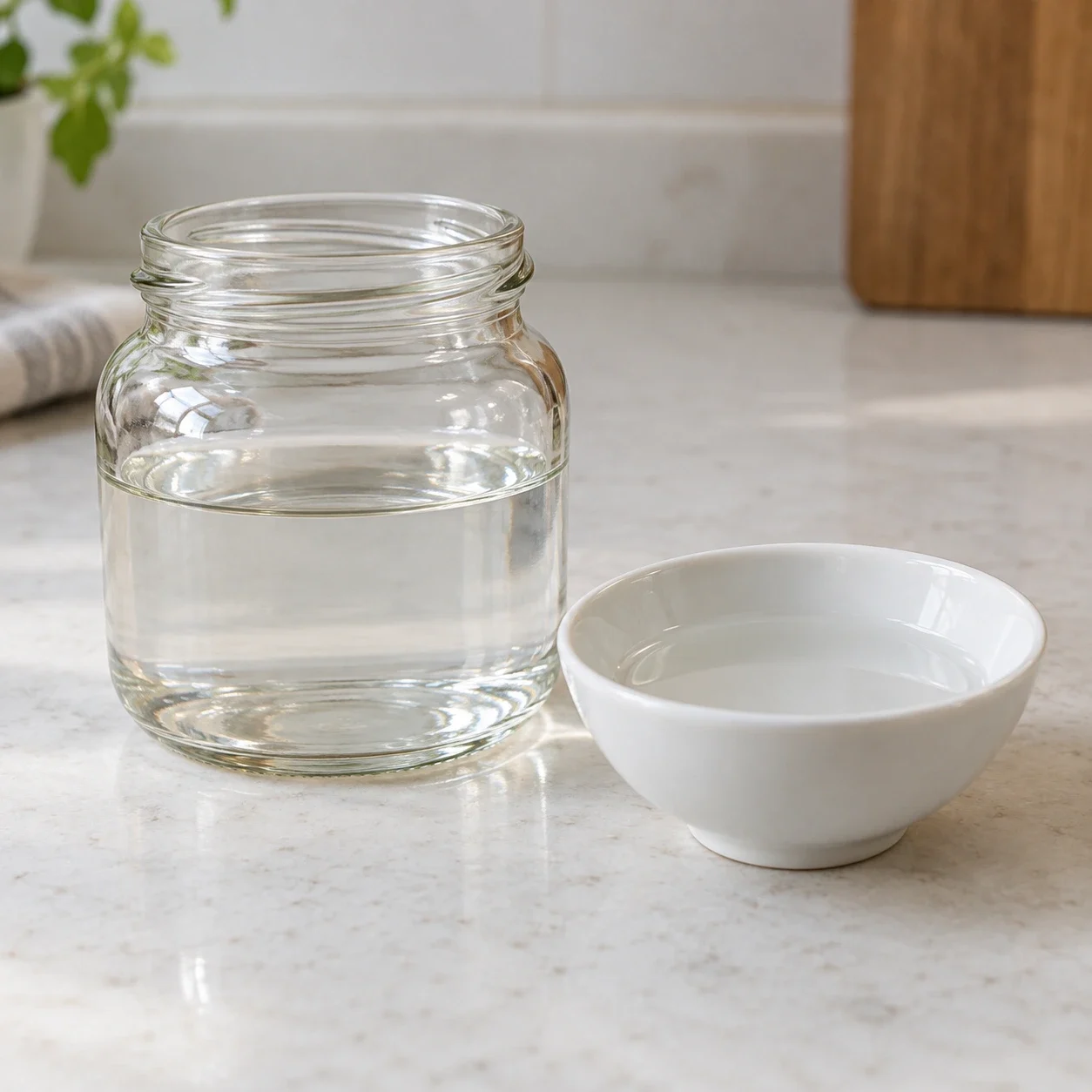
Recipes vary by restaurant.
How does it taste?
Sweet brown-sugar syrup over a mild rice base.
- Chili heat
- Texture
- Soft, smooth and gently set, holding its shape in a bowl.
- How it’s made
- Rice is soaked and ground into a slurry, cooked while stirring, then portioned into bowls to cool and set. Brown-sugar syrup is added for serving.
The setting process varies; some local makers use limewater during cooking. The amount of syrup changes the sweetness.
A CONNECTION TO PLACE
Origin & regional roots
Associated with Sichuan.
About this regional connection
Sichuan: Associated with Shuanghe, Changning, Yibin, Sichuan; not an exclusive-origin claim.
Ask if they have it first
请问你们有双河凉糕吗?
Do you have this item?
A LITTLE SOMETHING TO READ
Story & history
The “grape well” name of Shuanghe lianggao
Shuanghe lianggao is also called Putaojing lianggao. Putaojing means “grape well,” a name linked to clusters of bubbles rising in the local spring. The dessert’s familiar texture comes from rice that is ground, cooked and cooled to set. Served with brown-sugar syrup, it is a cool local snack in Shuanghe, Changning.