
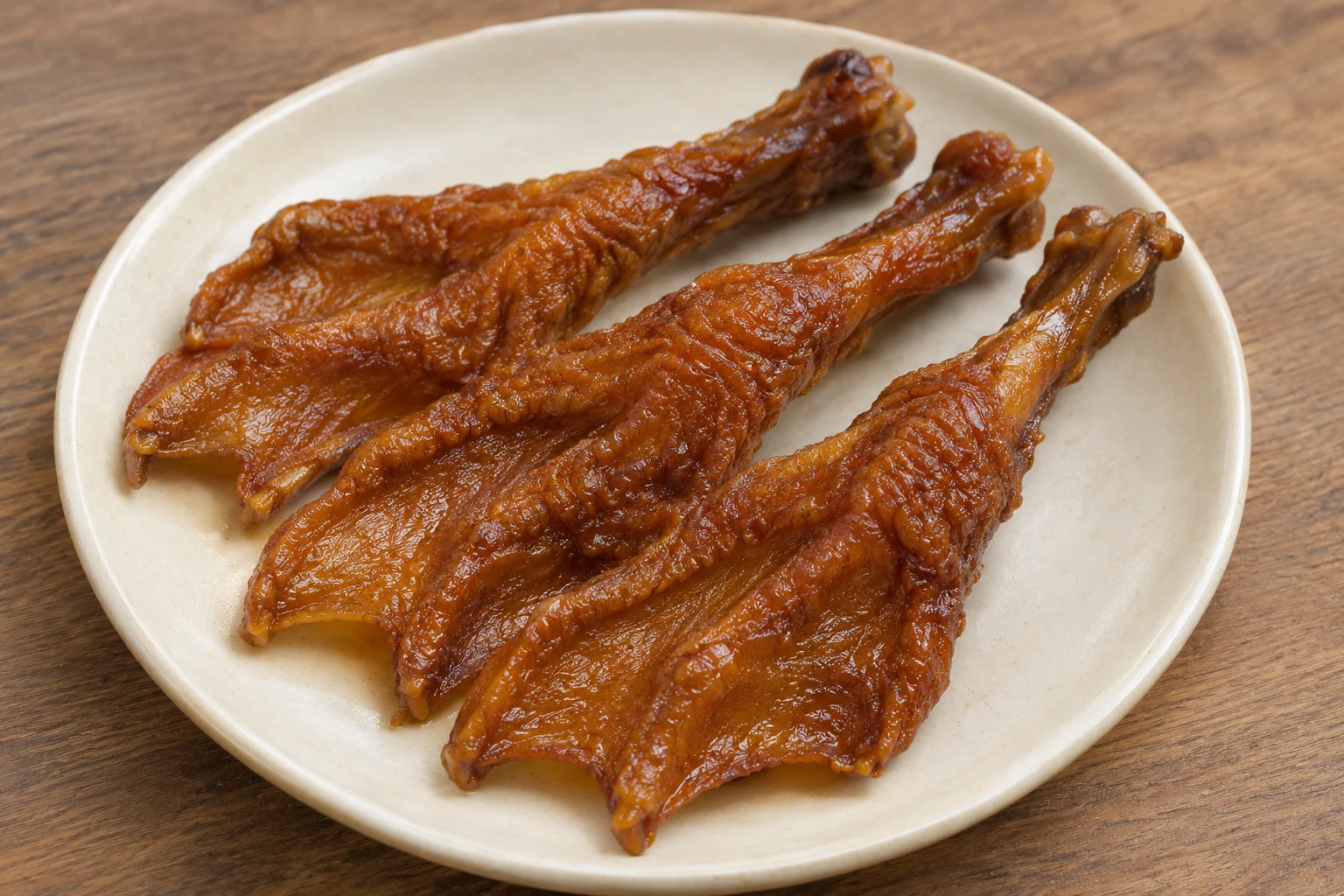
At the table
Hold one piece with chopsticks or use the utensils provided. Remove small portions of skin and tendon from the bones and leave all bones on a side plate. Do not swallow the toes whole. Eat alone or with noodles.
Contains duck and many small bones; not vegetarian or vegan. Depending on the broth, it may also contain snail, pork, soy, wheat or oyster sauce. Ask about the cooking liquid and chilli.
Chilli, sauce, soaking and simmering time vary. A mildly spicy braised version is the editorial baseline. Plain braised duck feet and boneless versions should be distinguished when ordering.
GET TO KNOW THE DISH
What goes into it?
Explore some key ingredients below. Preparations may use additional seasonings and ingredients.
Chilli, sauce, soaking and simmering time vary. A mildly spicy braised version is the editorial baseline. Plain braised duck feet and boneless versions should be distinguished when ordering.
Typical ingredients
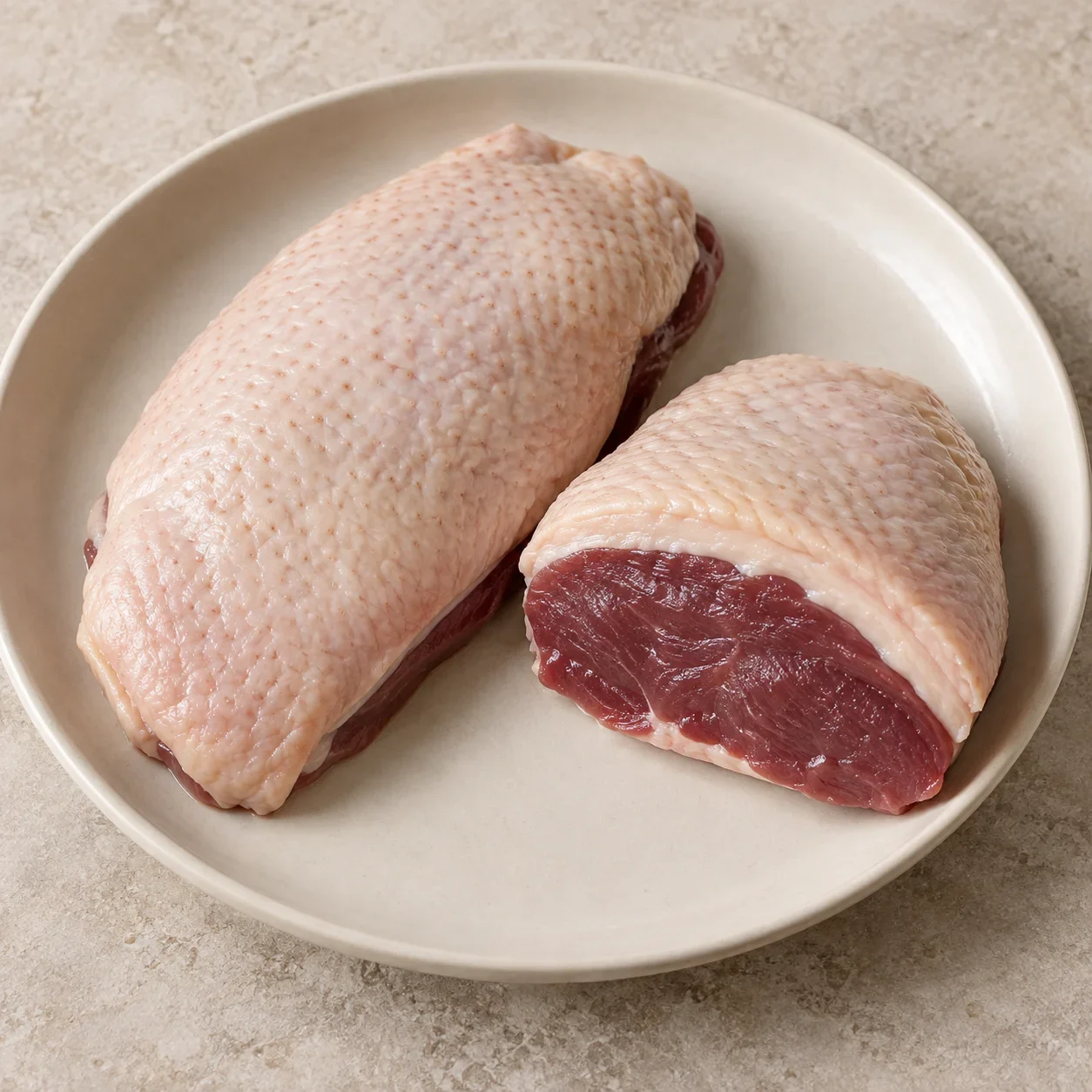
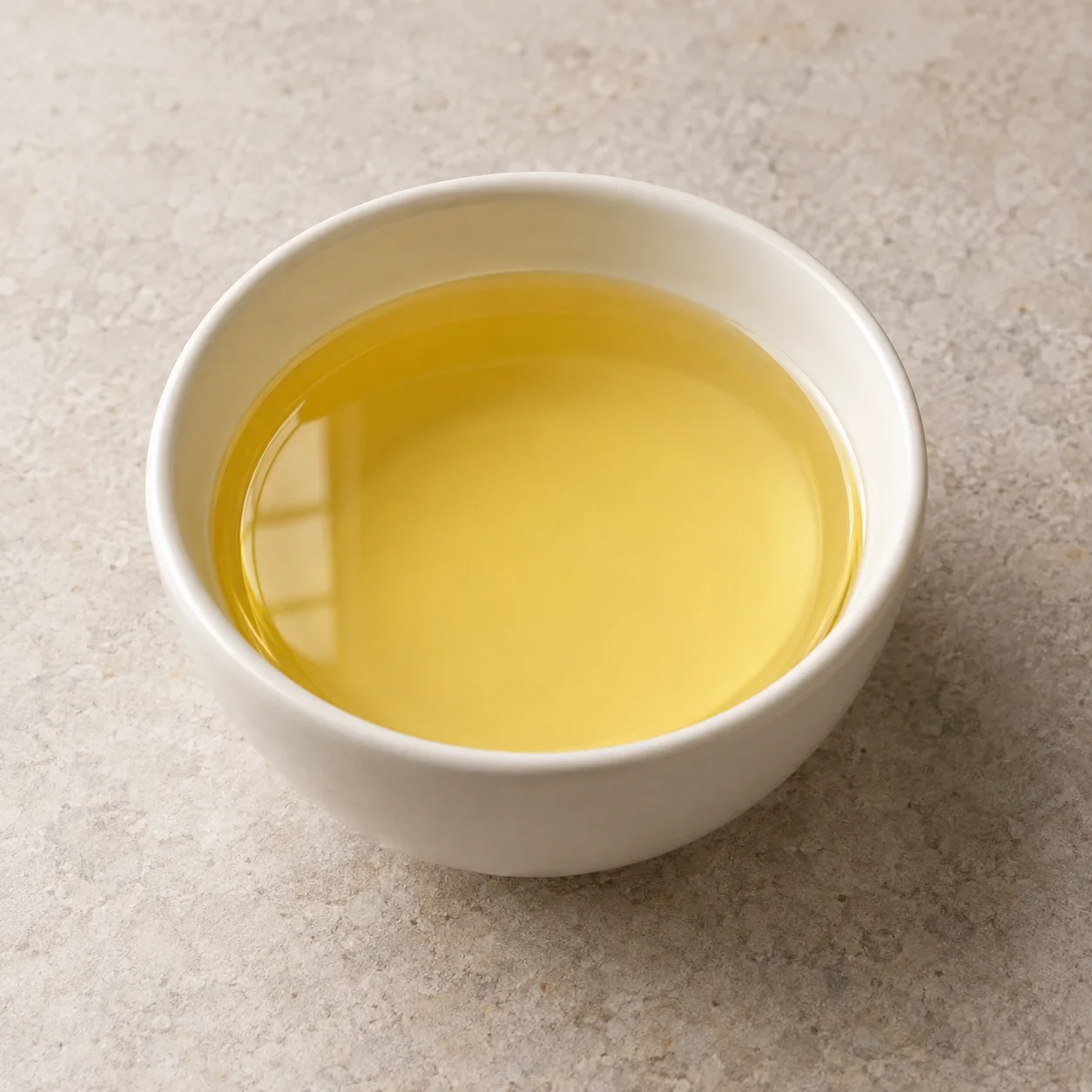
In some versions

Recipes vary by restaurant.
How does it taste?
Savoury braising spices; chilli and sour bamboo notes depend on the broth.
- Chili heat
- Texture
- Soft wrinkled skin and springy tendons around many small bones, with little meat.
- How it’s made
- Skin-on duck feet are fried to blister the surface and then simmered in seasoned liquid. Some preparations use a sour-bamboo and snail broth; others use a separate braising sauce.
Chilli, sauce, soaking and simmering time vary. A mildly spicy braised version is the editorial baseline. Plain braised duck feet and boneless versions should be distinguished when ordering.
A CONNECTION TO PLACE
Origin & regional roots
Associated with Guangxi.
About this regional connection
Guangxi: Standalone cooked side or luosifen pairing; not an exclusive origin claim.
Ask if they have it first
请问你们有虎皮鸭脚吗?
Do you have this item?
A LITTLE SOMETHING TO READ
Story & history
Tiger-skin duck feet
This account describes a tradition or story, rather than an established historical fact.
Enjoy this food separately or alongside noodles. The Guangxi association describes a local way of eating it, not an exclusive origin in the region.