
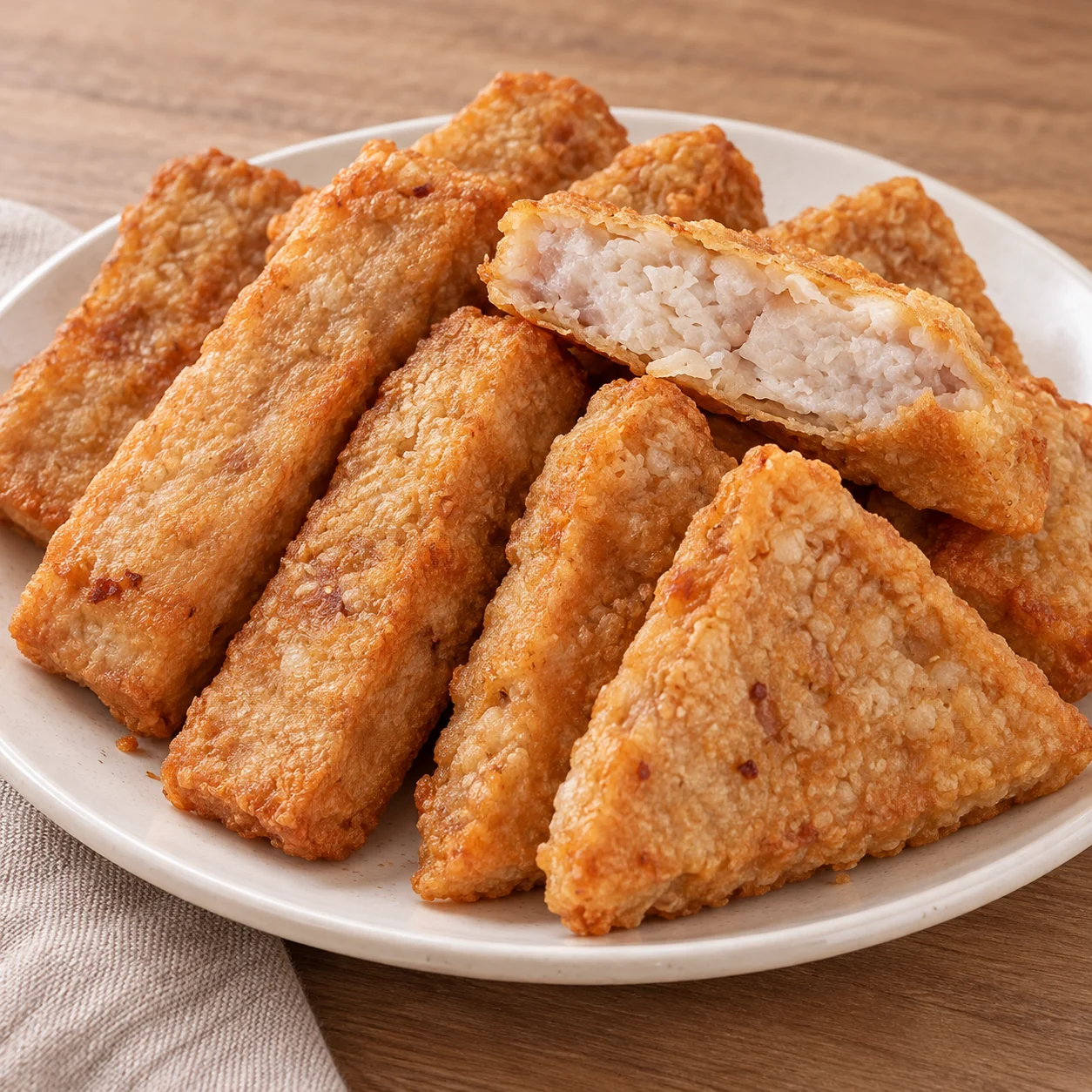
At the table
Take small bites or split a piece with chopsticks; the center may remain hot after the surface cools.
Ask about frying fat and added meat or dried shrimp if avoiding animal ingredients. The name alone does not settle the recipe.
Seasonings and additions vary. This is the square fried Fuzhou form, not a leaf-wrapped curved taro dumpling.
GET TO KNOW THE DISH
What goes into it?
Explore some key ingredients below. Preparations may use additional seasonings and ingredients.
Seasonings and additions vary. This is the square fried Fuzhou form, not a leaf-wrapped curved taro dumpling.
Typical ingredients
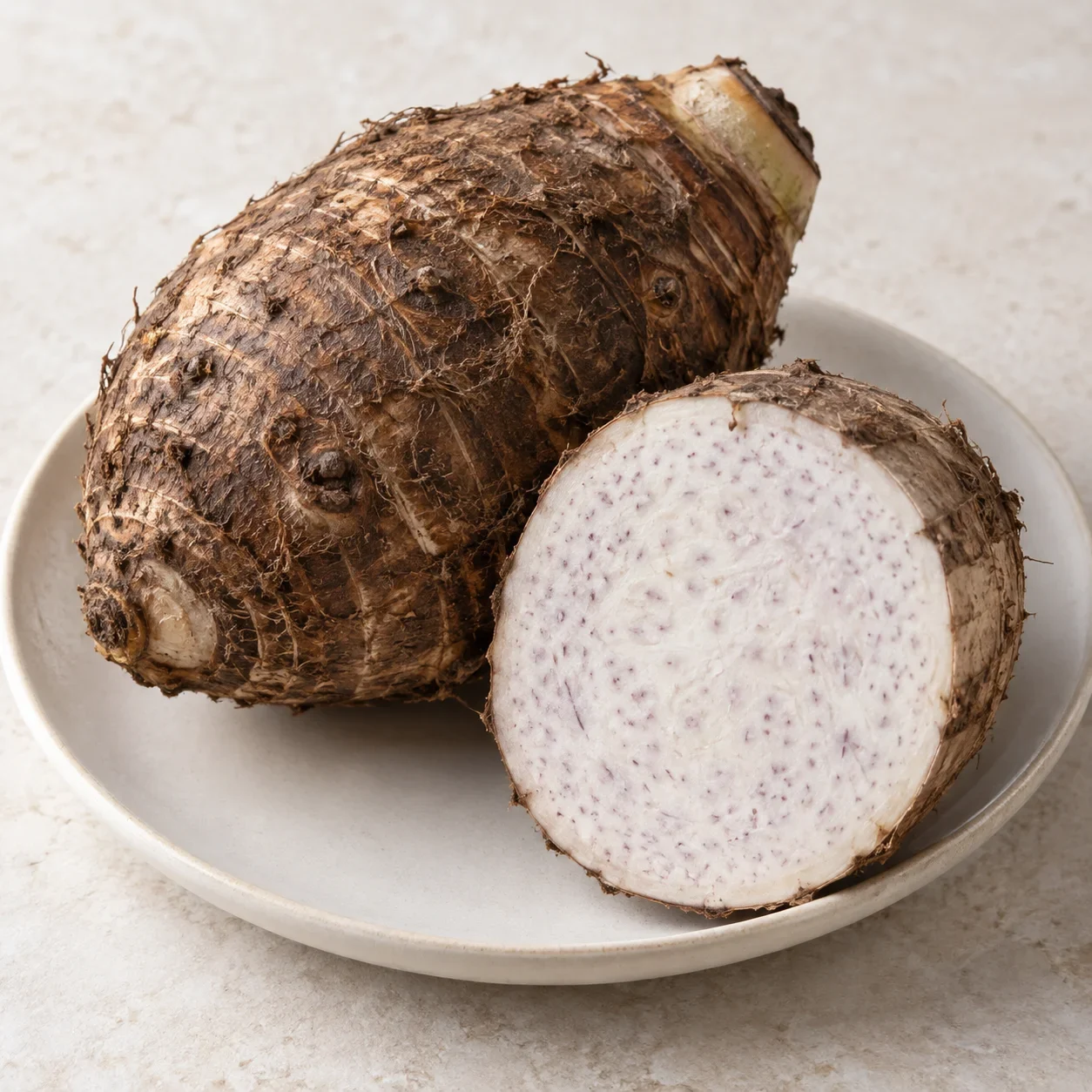
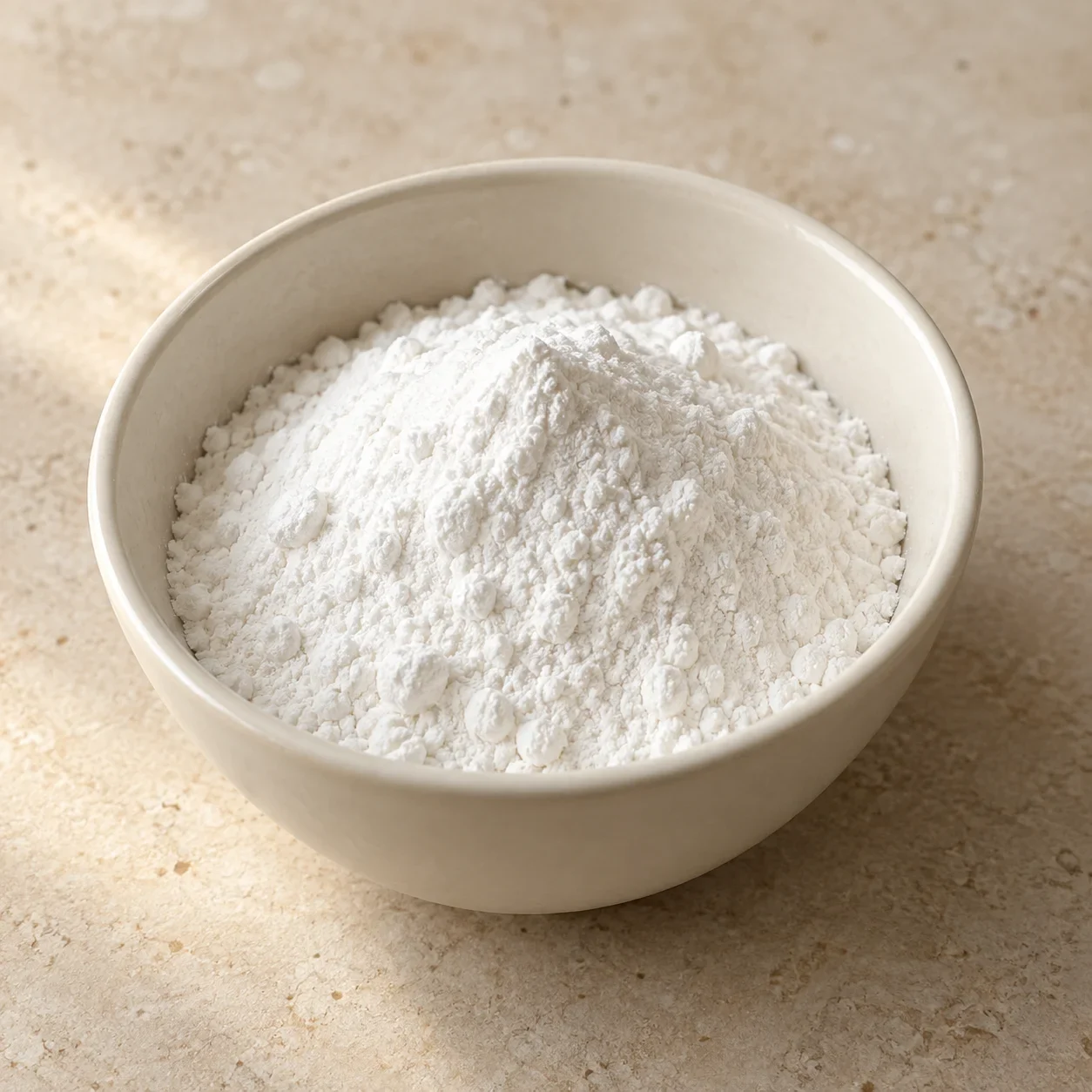
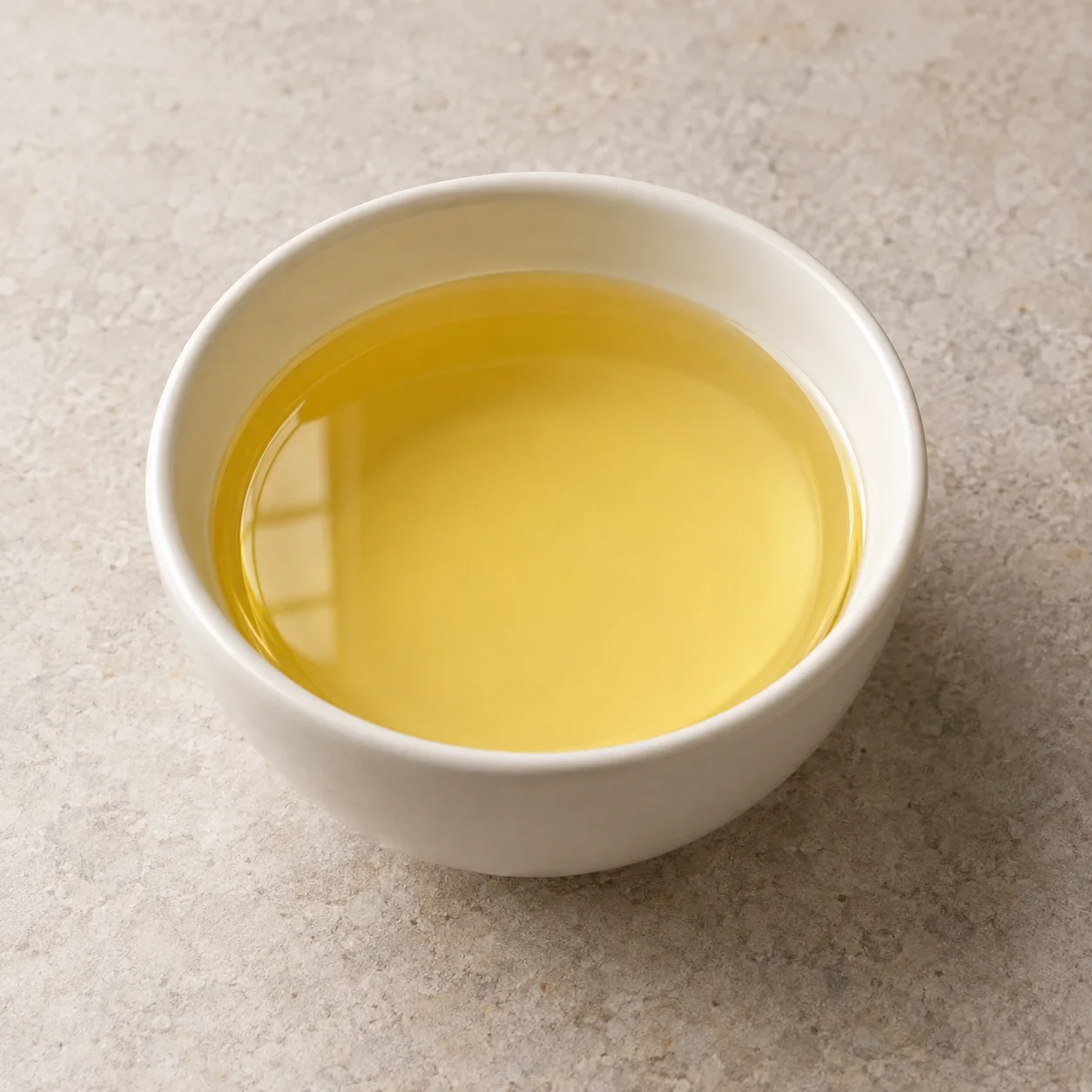

Recipes vary by restaurant.
How does it taste?
Mild taro flavor with savory seasoning.
- Chili heat
- Texture
- Crisp edges and a soft, slightly sticky interior threaded with taro.
- How it’s made
- Taro shreds and rice batter are steamed into a cake, cut and fried.
Seasonings and additions vary. This is the square fried Fuzhou form, not a leaf-wrapped curved taro dumpling.
A CONNECTION TO PLACE
Origin & regional roots
Associated with Fujian.
About this regional connection
Fujian: Supported local food association, not exclusive origin.
Ask if they have it first
请问你们有福州芋粿吗?
Do you have this item?
A LITTLE SOMETHING TO READ
Story & history
An everyday Fuzhou snack
Fuzhou’s taro cakes belong to its year-round snack tradition. Steaming first holds the taro shreds together; frying the cut pieces creates the contrasting crust.