
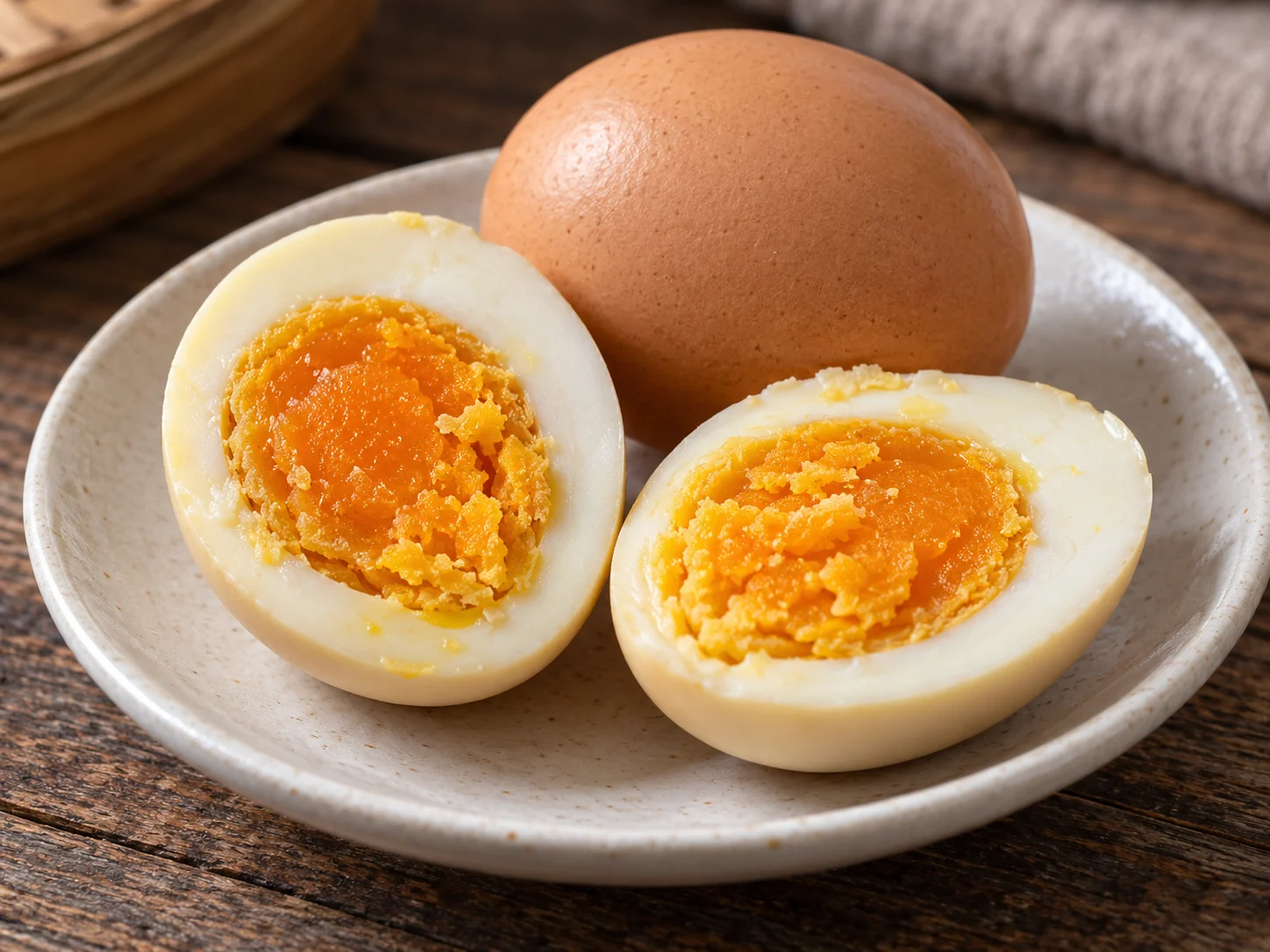
At the table
Check that the egg is cooked, peel away the shell and eat small pieces with plain rice, congee or another lightly seasoned staple. The salty flavour works best as an accompaniment.
Contains egg and sesame, so it is not vegan. Check whether the sesame paste contains peanuts and whether other seasonings add allergens. Curing does not replace thorough cooking: eat only cooked eggs, and follow the package’s cooking, storage and use-by directions. Refrigerate opened or freshly cooked eggs promptly. Do not assume every version is low in salt, and do not eat the curing coating or shell.
Sesame-paste immersion and sesame-residue coating are different local methods. Saltiness, spices and yolk oiliness vary by producer. Similar preparations using duck, goose or quail eggs are different products; this entry is for chicken eggs.
GET TO KNOW THE DISH
What goes into it?
Explore some key ingredients below. Preparations may use additional seasonings and ingredients.
Sesame-paste immersion and sesame-residue coating are different local methods. Saltiness, spices and yolk oiliness vary by producer. Similar preparations using duck, goose or quail eggs are different products; this entry is for chicken eggs.
Typical ingredients
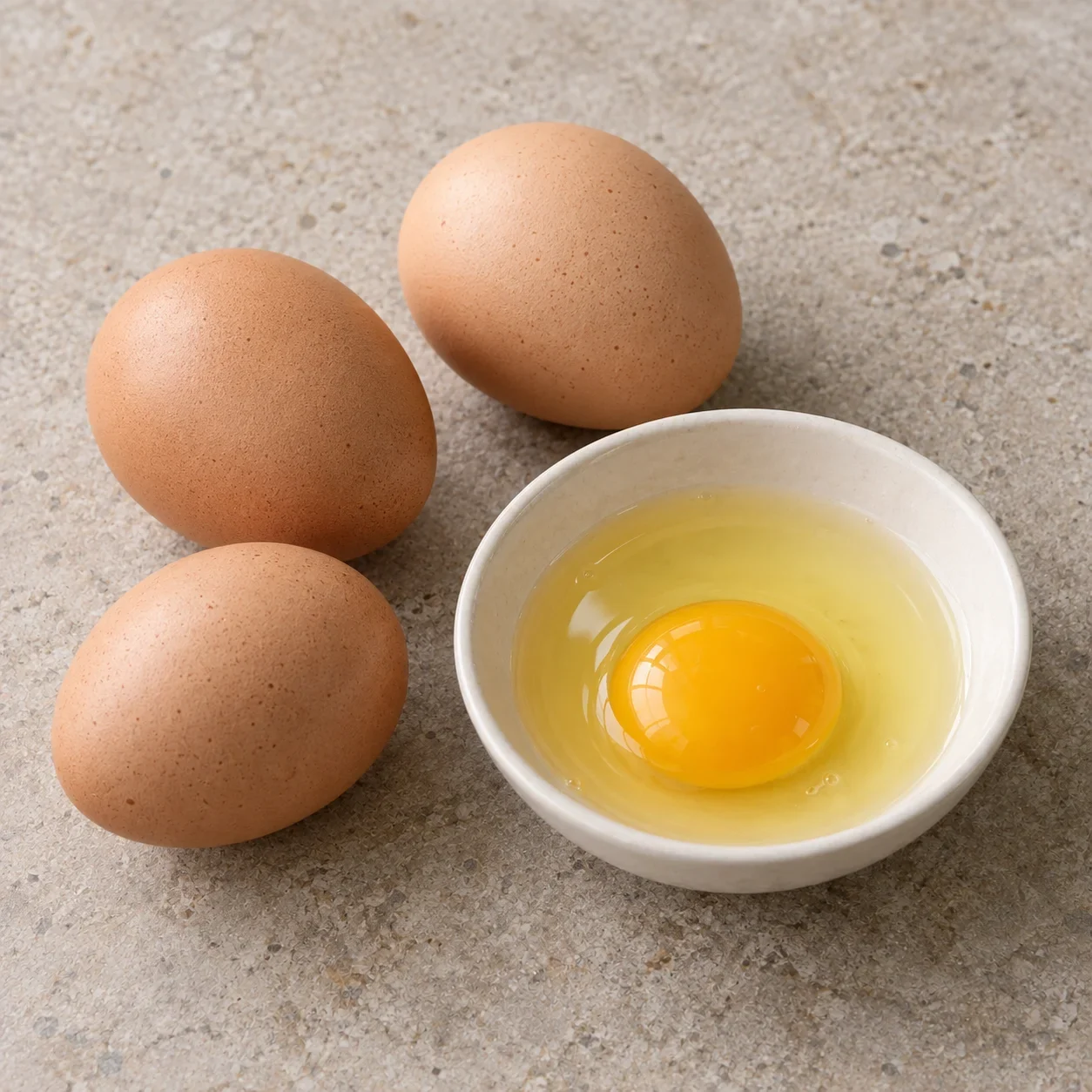
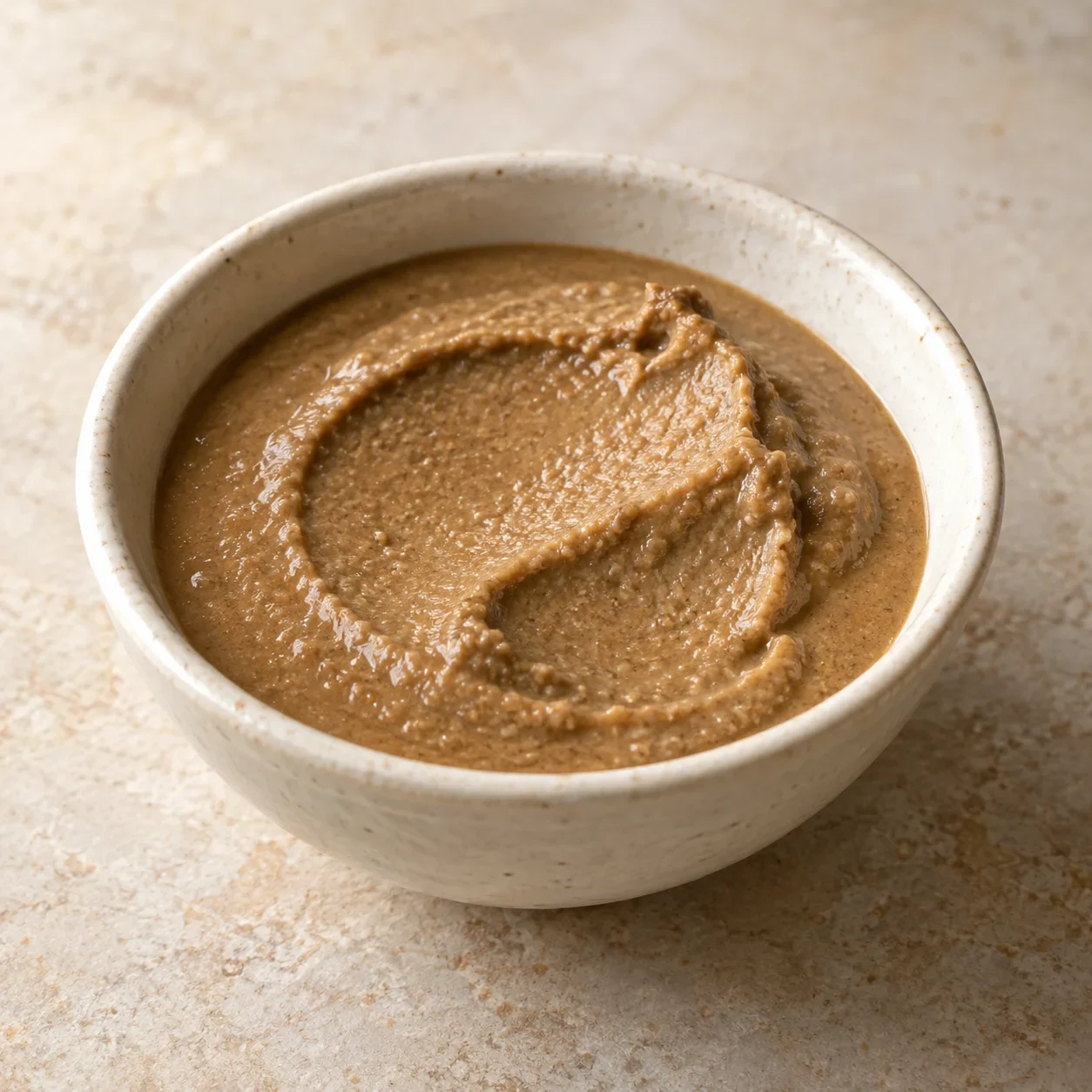
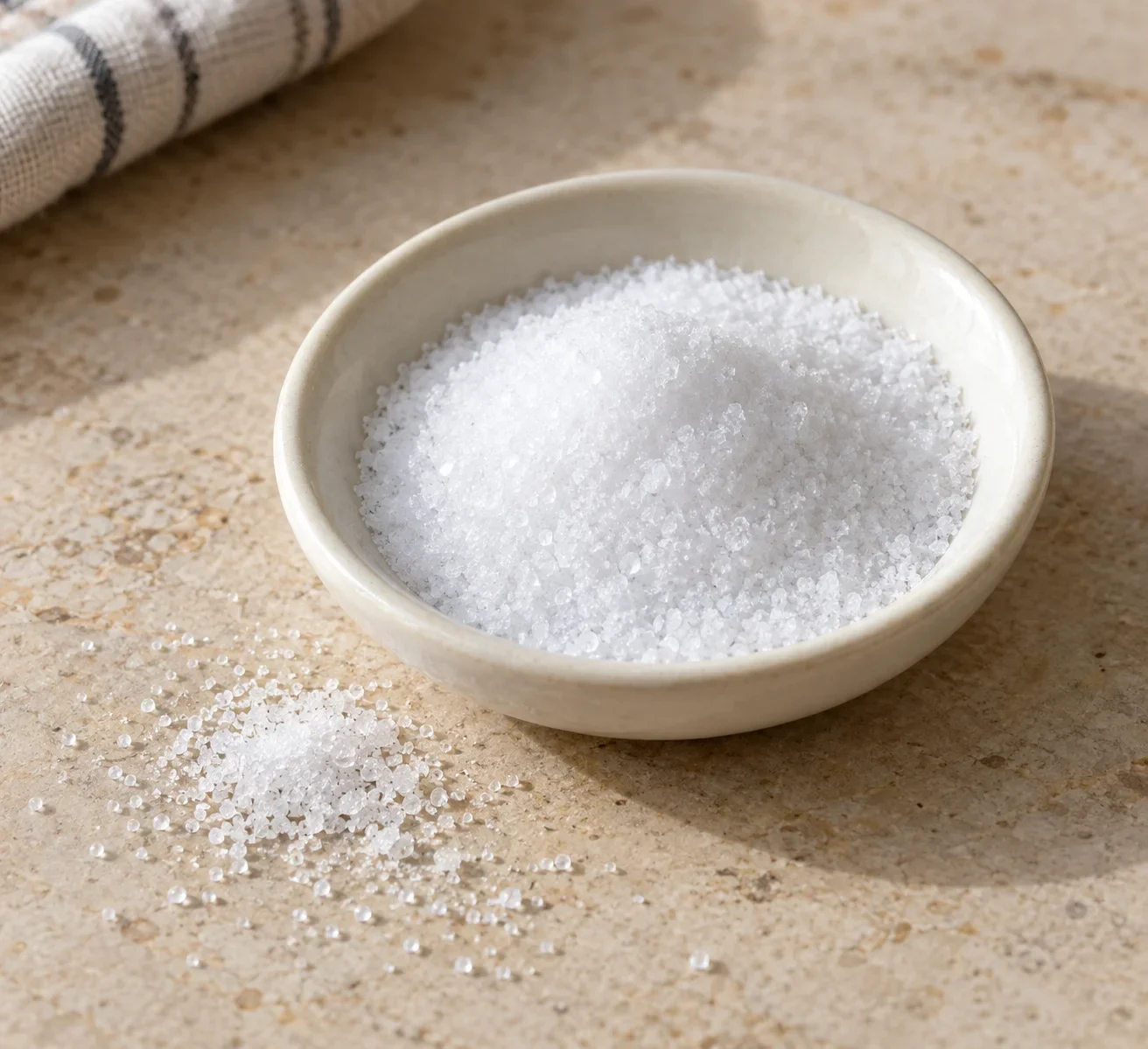
Recipes vary by restaurant.
How does it taste?
Salty and egg-rich, with a sesame aroma. Some versions add aromatic spices, but the basic sesame-cured egg has no chilli heat.
- Chili heat
- Texture
- The cooked white is firm yet tender. The golden to orange yolk is dense and crumbly, sometimes with a little oiliness; it should not be confused with a raw, runny yolk.
- How it’s made
- Whole shell-on chicken eggs are cured in a salted sesame-paste mixture and then cooked thoroughly by boiling or steaming. A separate local method coats the eggs in curing mud made with sesame-oil press residue, salt and red clay. The coating and shell are removed before eating.
Sesame-paste immersion and sesame-residue coating are different local methods. Saltiness, spices and yolk oiliness vary by producer. Similar preparations using duck, goose or quail eggs are different products; this entry is for chicken eggs.
A CONNECTION TO PLACE
Origin & regional roots
Associated with Tianjin.
About this regional connection
Tianjin: TianjinDaily20260530 and TonightNews20260904 specificallyidentifyJizhou.
Ask if they have it first
请问你们有麻酱鸡蛋吗?
Do you have this item?
A LITTLE SOMETHING TO READ
Story & history
A Jizhou farmhouse breakfast favourite
In Jizhou, sesame-cured eggs are served at farmhouse breakfasts and sold as a local food souvenir. Sesame-based curing gives this familiar egg a distinctive identity, with both family-style methods and packaged products found in the region.