
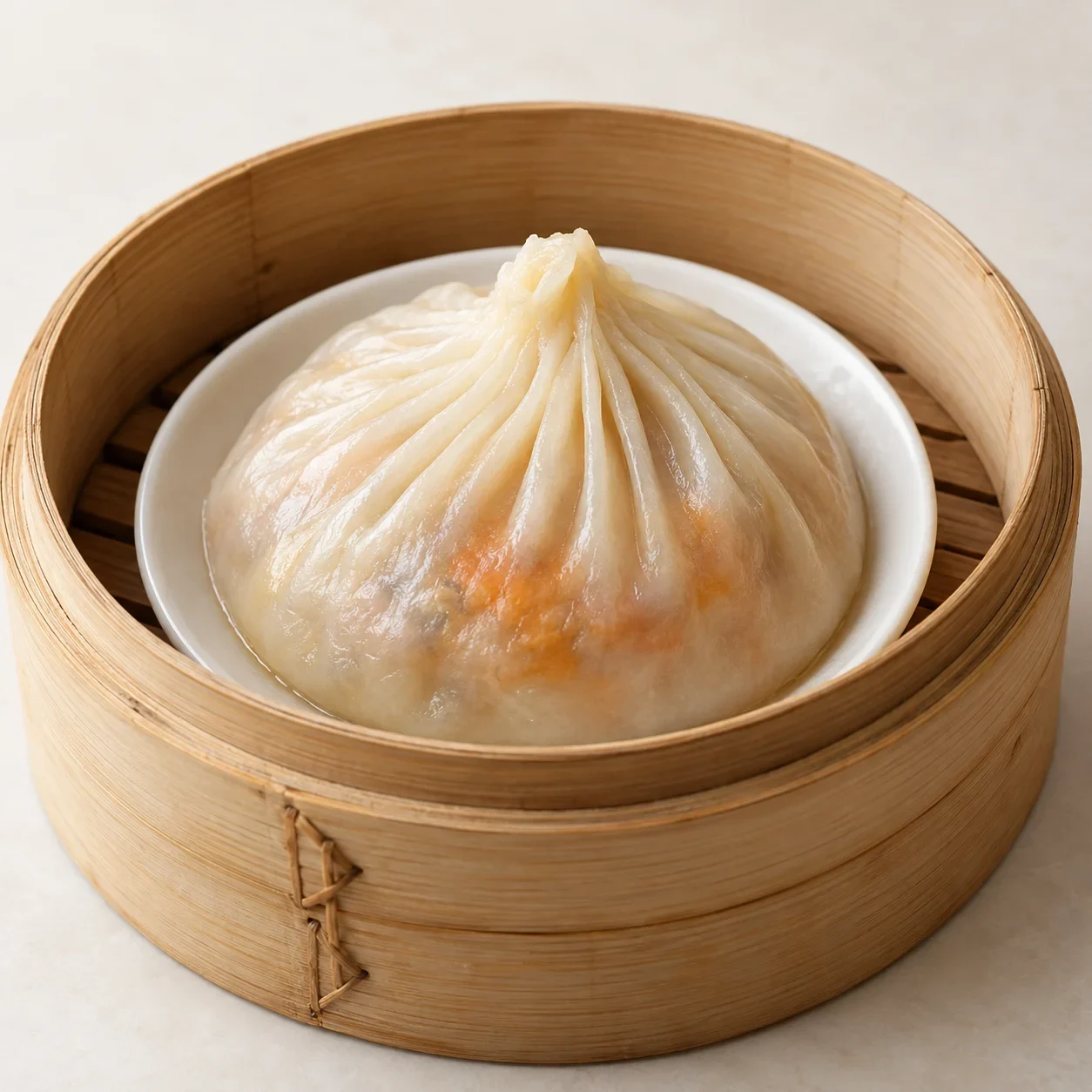
At the table
Keep the bun on its plate. Make a small opening, let steam escape and cautiously sip or spoon out the soup before eating the wrapper and filling. Ginger and vinegar are common accompaniments.
The trapped soup can scald; do not bite straight into a freshly steamed bun. Contains wheat, crab, pork and chicken. Other seasonings and allergens vary by recipe, so check with the kitchen if needed.
Crab, pork-skin broth and chicken make this version neither vegetarian nor vegan. The representative filling has chili heat 0; separately added chili sauces may change the heat. Filling proportions and size vary by maker.
GET TO KNOW THE DISH
What goes into it?
Explore some key ingredients below. Preparations may use additional seasonings and ingredients.
Pleat counts and bun size vary by shop; some fillings emphasize crab roe more heavily. Eating etiquette (‘open a window, then drink the soup’) is widely taught to first-timers.
Typical ingredients
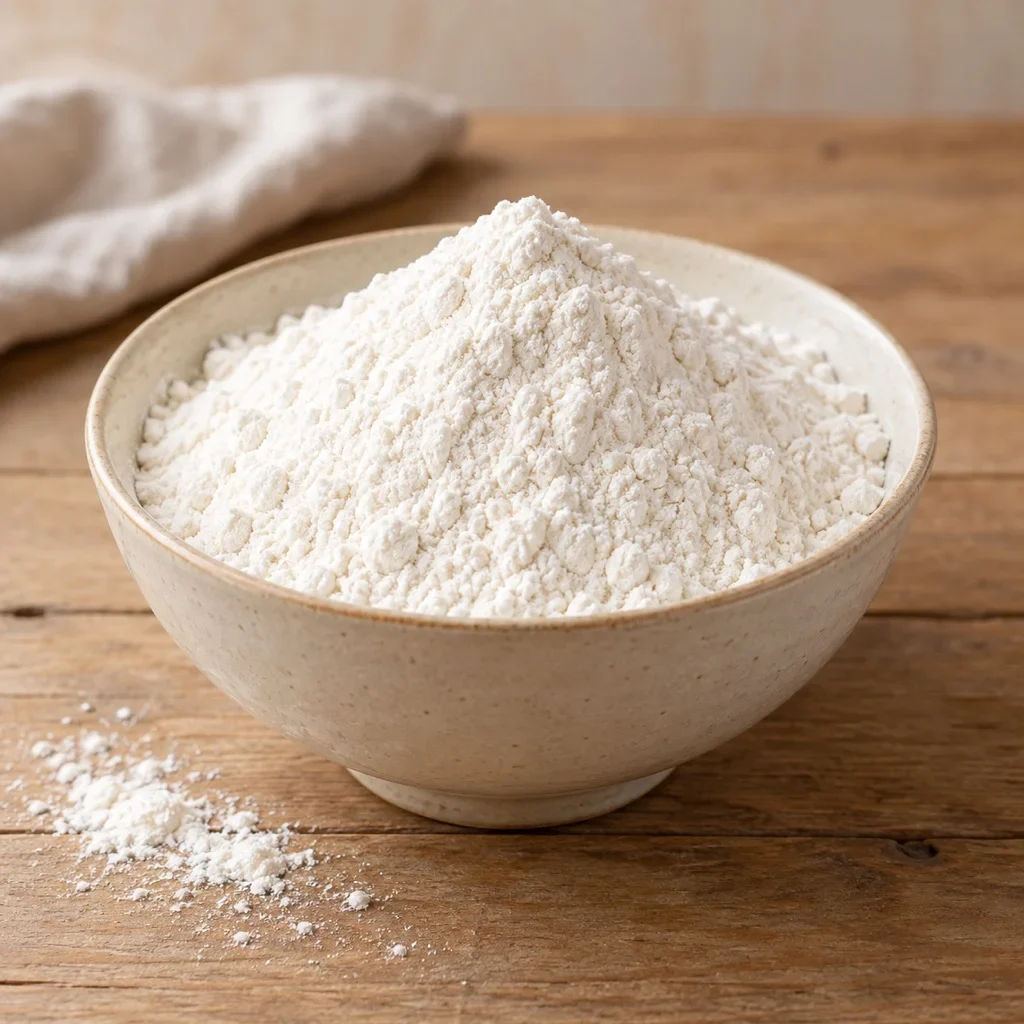
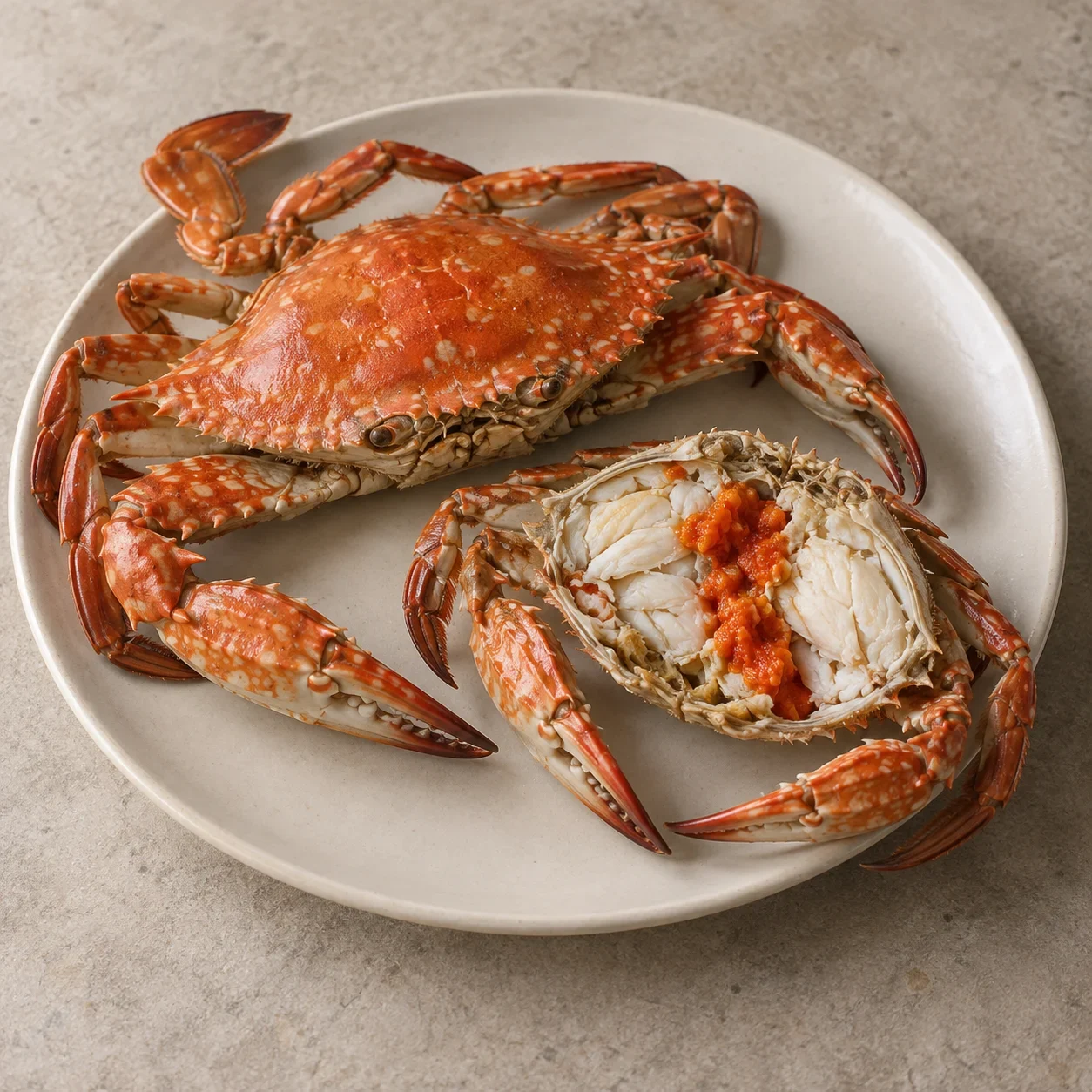
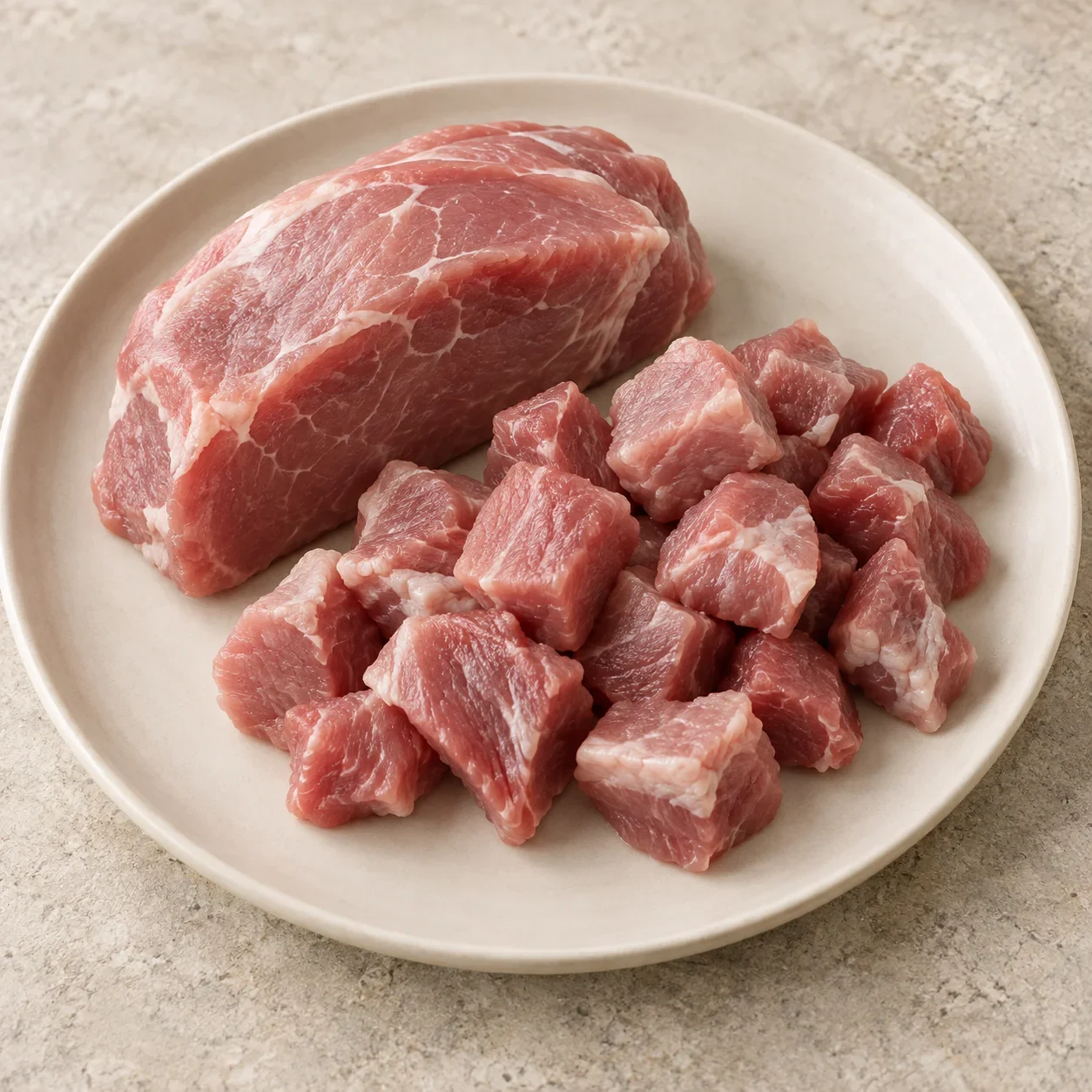
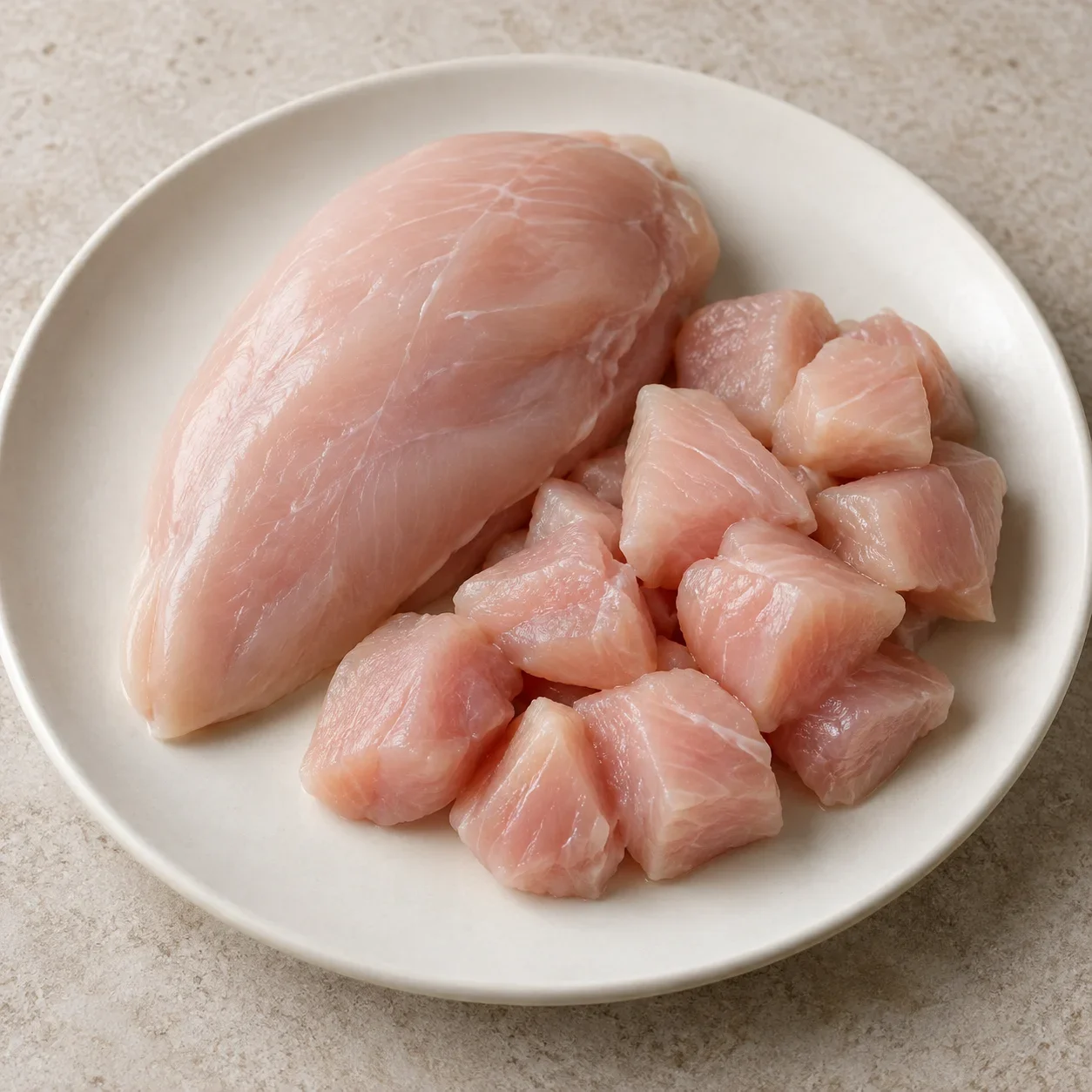
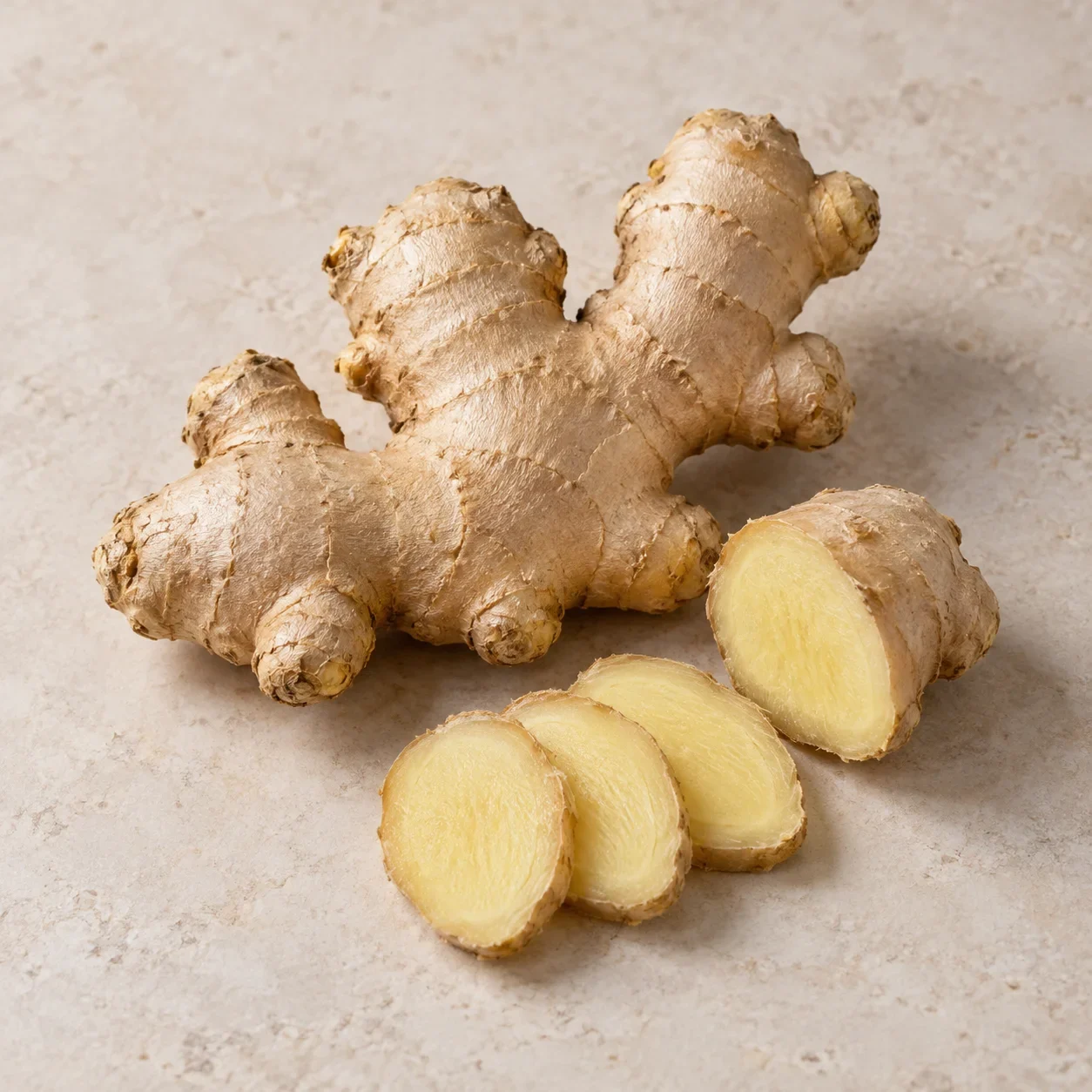

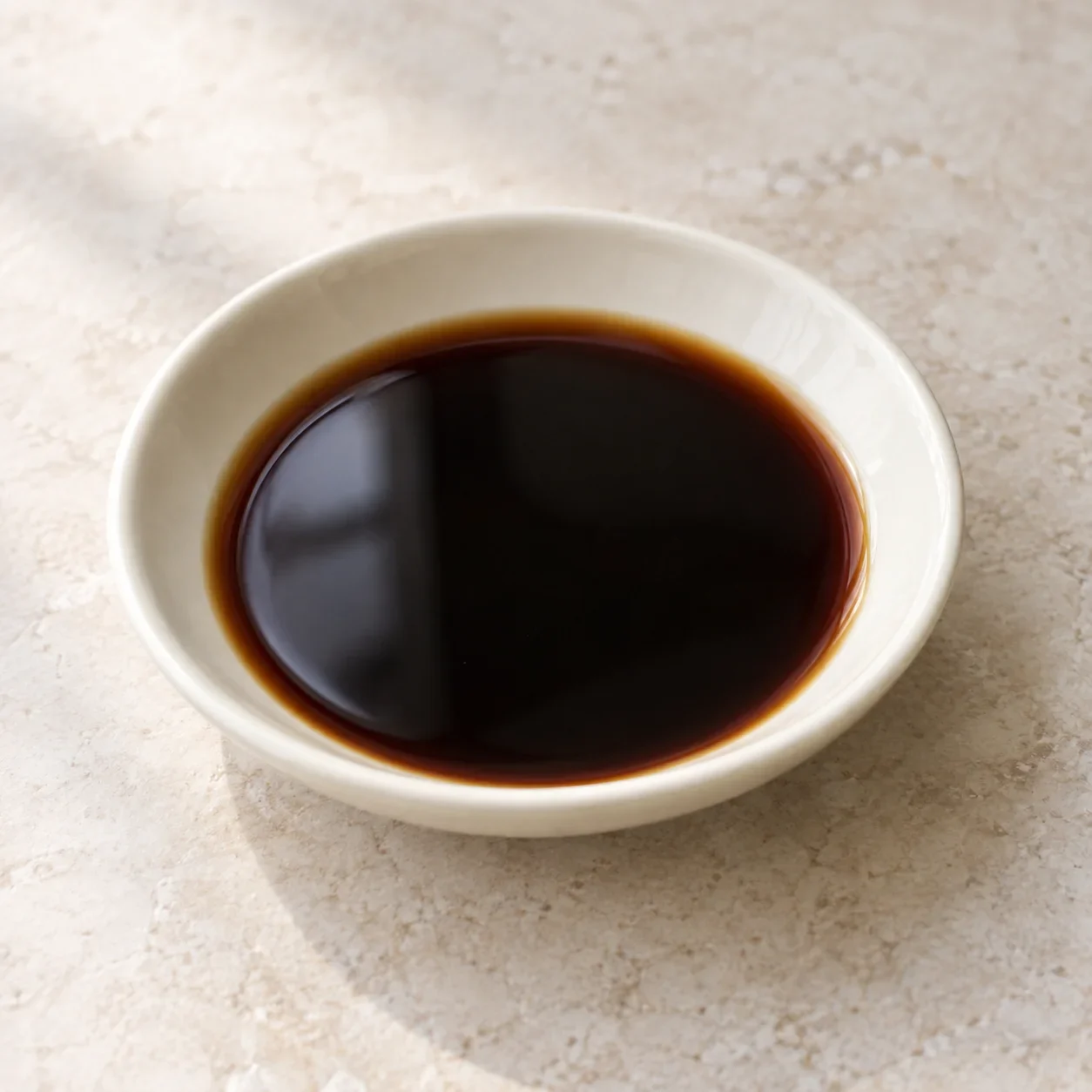
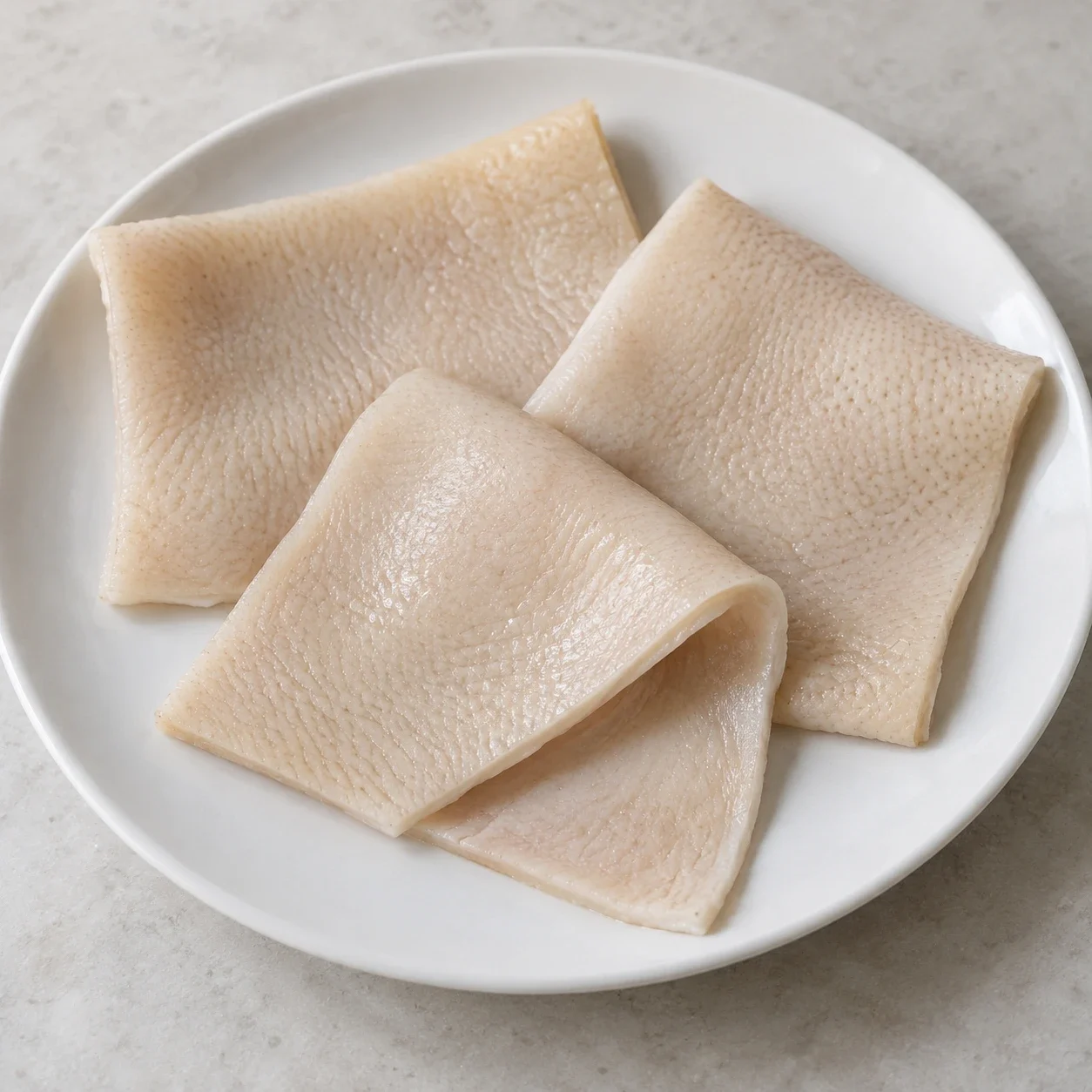
In some versions
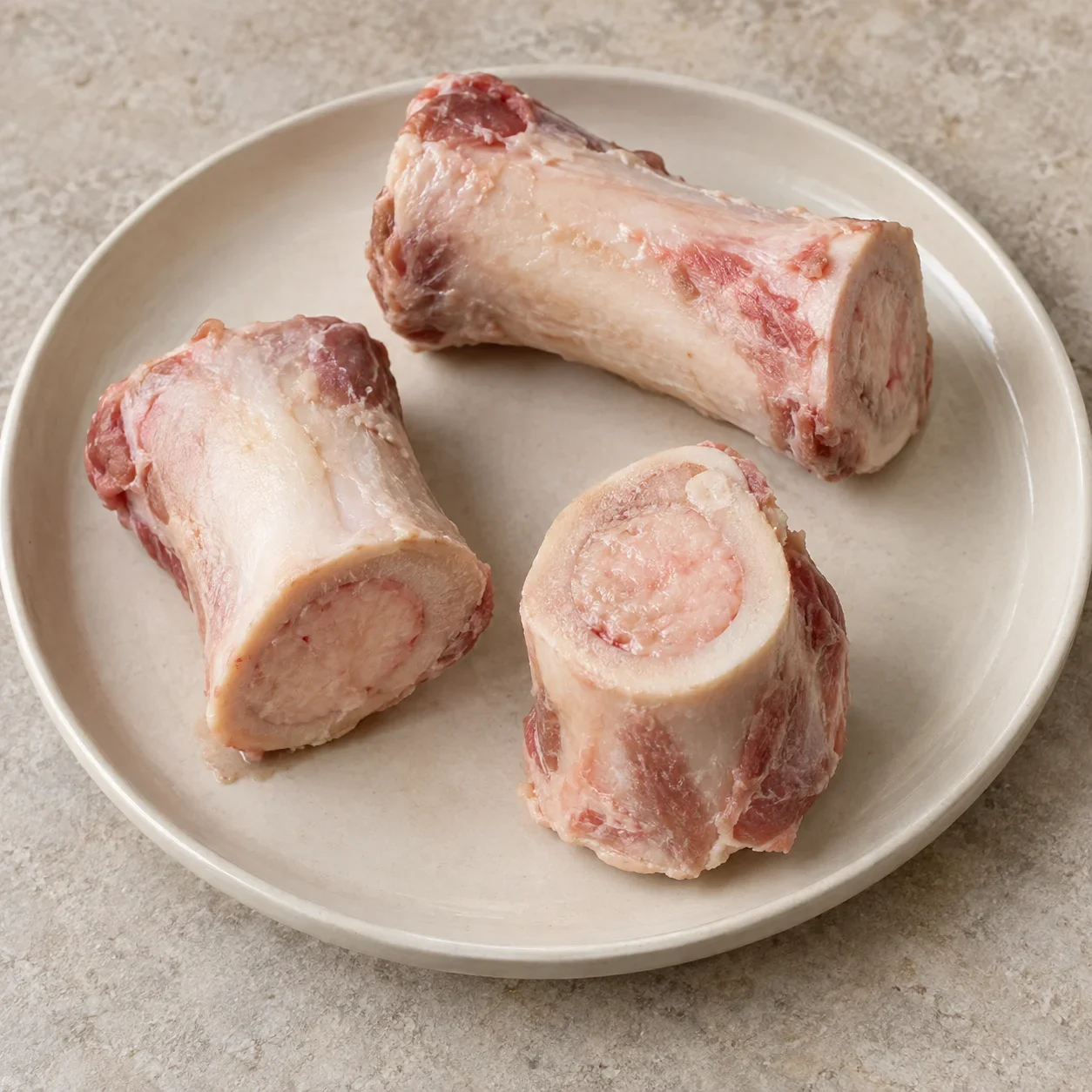
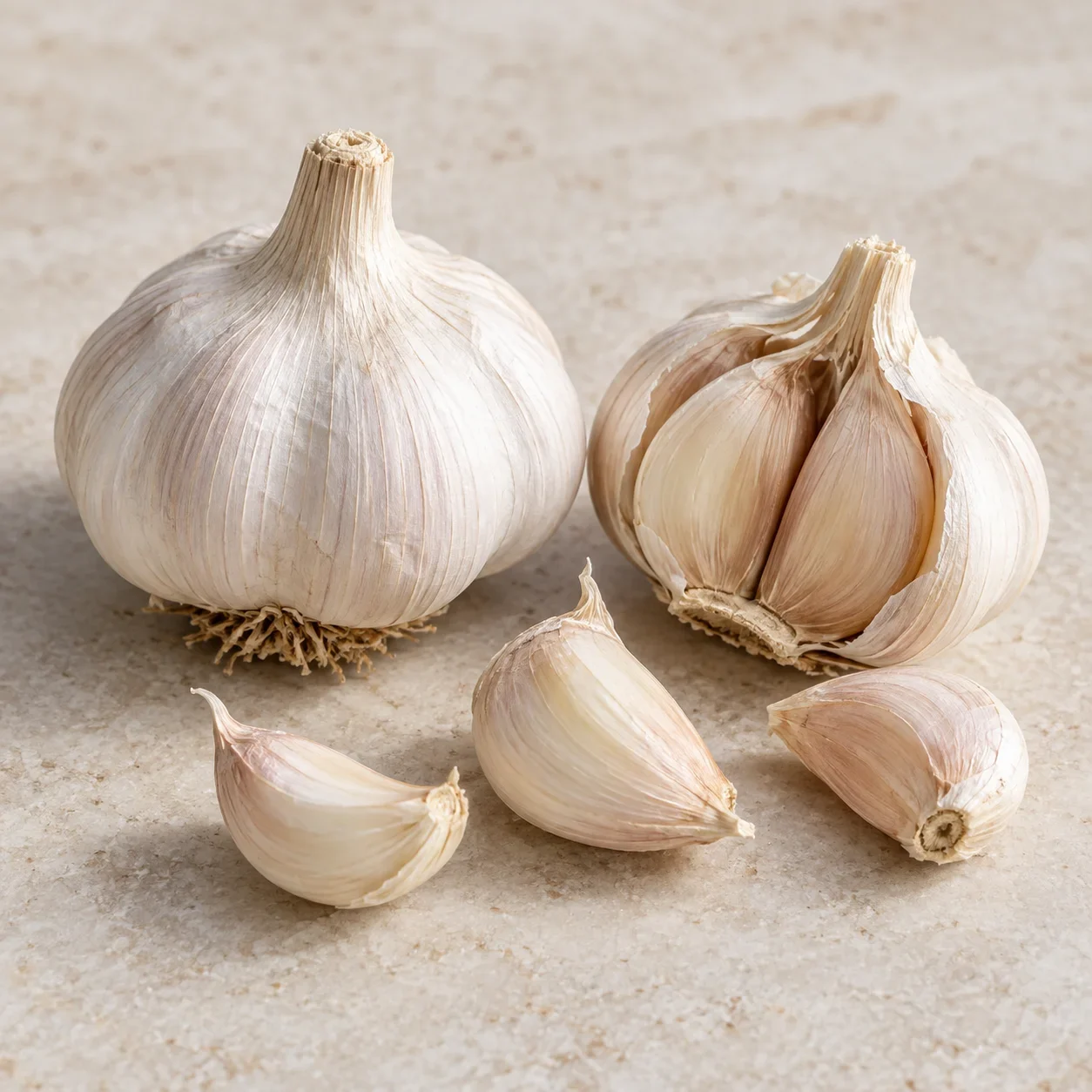
Recipes vary by restaurant.
How does it taste?
Savory, crab-fragrant and rich without feeling greasy when well made; ginger-vinegar cuts the fat.
- Chili heat
- Texture
- Paper-thin yet elastic wrapper; hot liquid soup inside with soft meat and crab bits.
- How it’s made
- Pork skin and chicken are simmered into a rich stock that sets as aspic when cooled, then mixed with minced pork and crab. Thin wrappers are pleated tightly and steamed over high heat until the aspic melts into soup.
Pleat counts and bun size vary by shop; some fillings emphasize crab roe more heavily. Eating etiquette (‘open a window, then drink the soup’) is widely taught to first-timers.
A CONNECTION TO PLACE
Origin & regional roots
Associated with Jiangsu.
About this regional connection
Jiangsu: Associated with Jingjiang, Jiangsu; provincial ICH craft listing reported for the dumpling skill; not an exclusive-origin claim for every crab soup dumpling.
Ask if they have it first
请问你们有靖江蟹黄汤包吗?
Do you have this item?
A LITTLE SOMETHING TO READ
Story & history
A soup bun for a leisurely gathering
This account describes a tradition or story, rather than an established historical fact.
In Jingjiang, crab-roe soup buns are part of early-tea meals and festive gatherings with family or guests. Their delicate pleats keep a generous amount of broth inside a thin wrapper. The local soup-first eating ritual gives this handmade specialty its leisurely rhythm: open a small hole, allow cooling, enjoy the soup, then eat the skin and filling.