
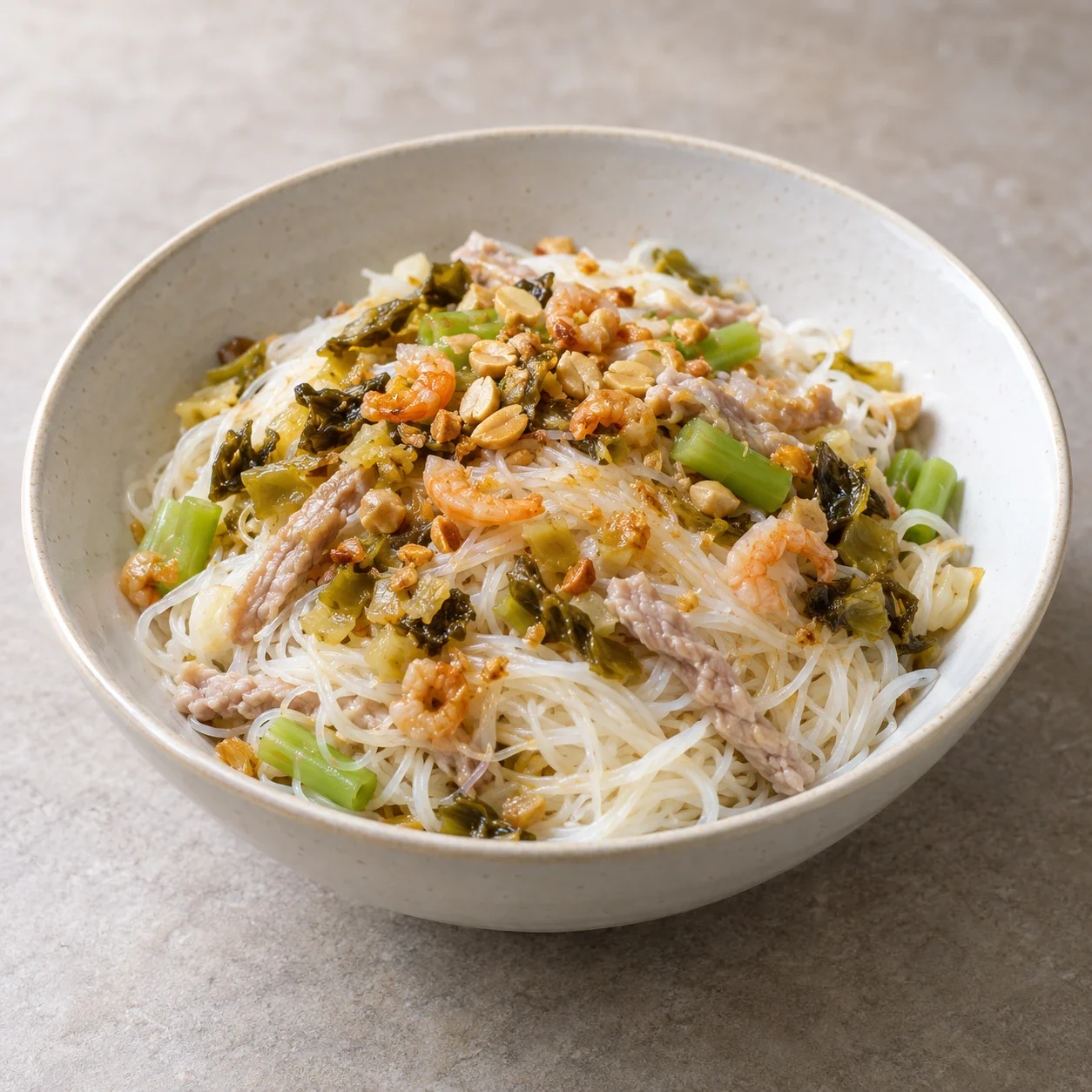
At the table
Mix the toppings and garlic oil through the noodles before eating with chopsticks. Ask “辣椒另放,可以吗?” (Can the chili be served separately?) before it is added.
Contains pork, shrimp and peanuts in this version. Check the sauce for soy or wheat and ask about other toppings if you have dietary restrictions.
Ask “里面有哪些配料?” (What toppings are in it?). Removing visible meat does not remove shrimp or ingredients already mixed into the dressing.
GET TO KNOW THE DISH
What goes into it?
Explore some key ingredients below. Preparations may use additional seasonings and ingredients.
Topping combinations and sauce amounts vary. Soy sauce may be used; chili is optional. Other local versions can be served warm or with more broth.
Typical ingredients
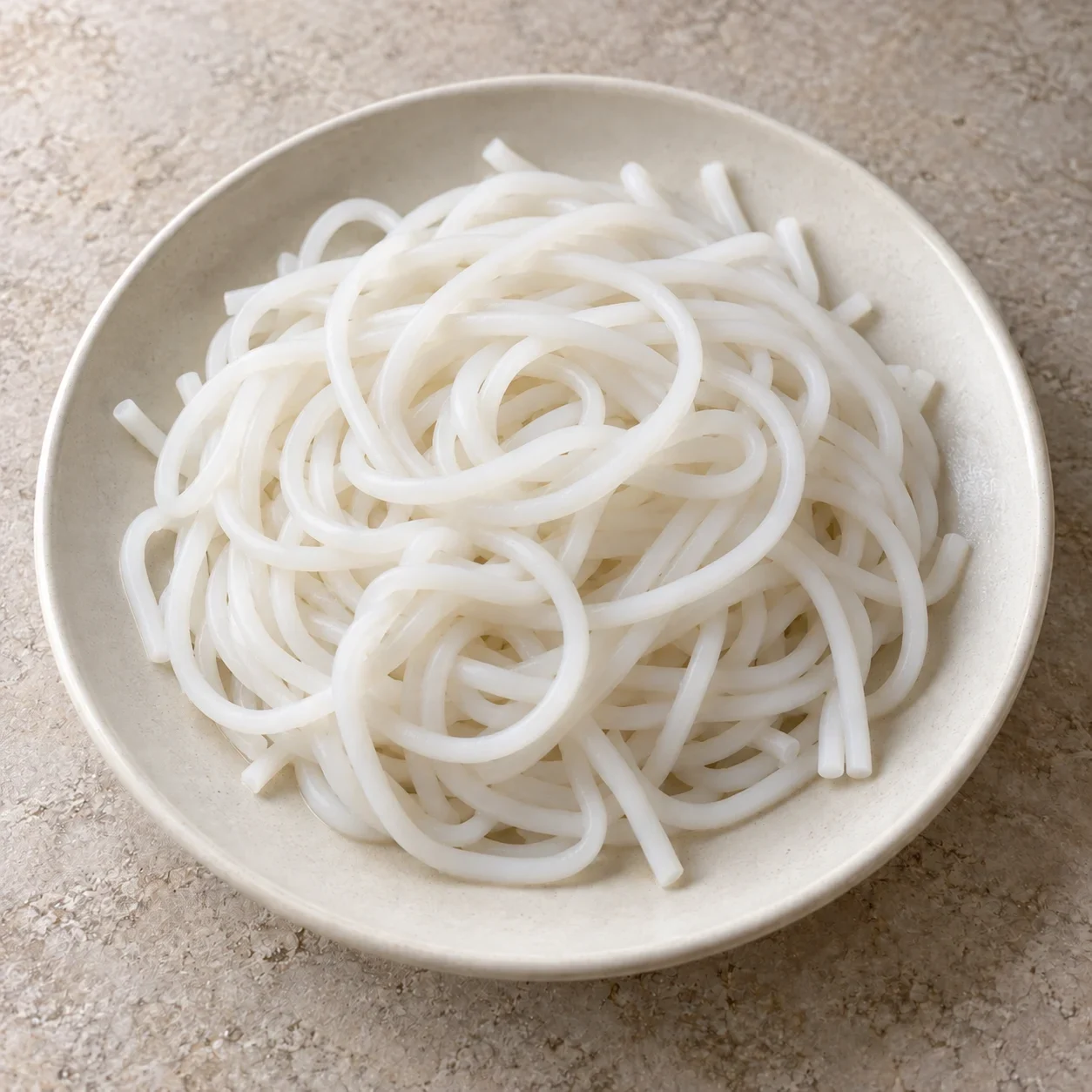
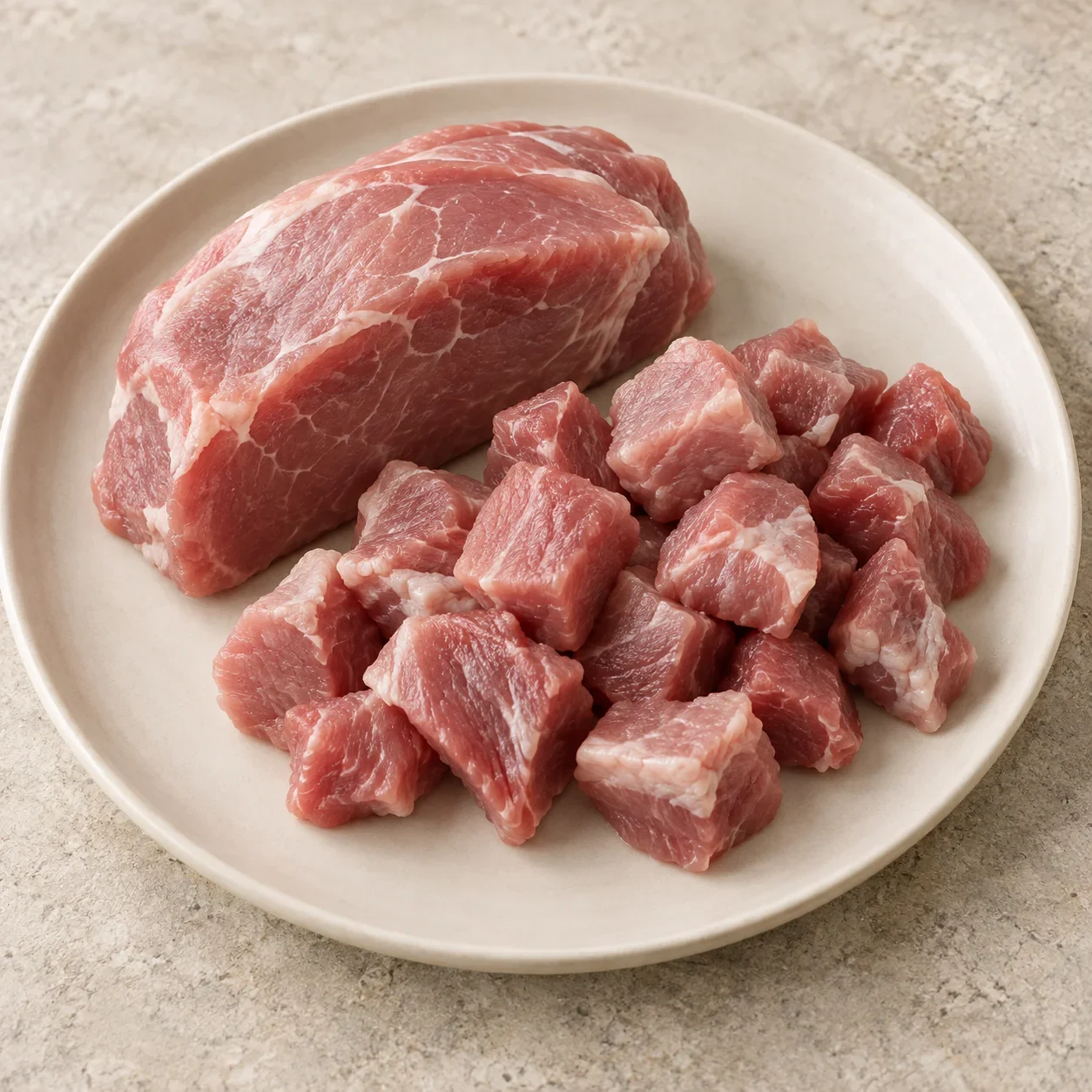
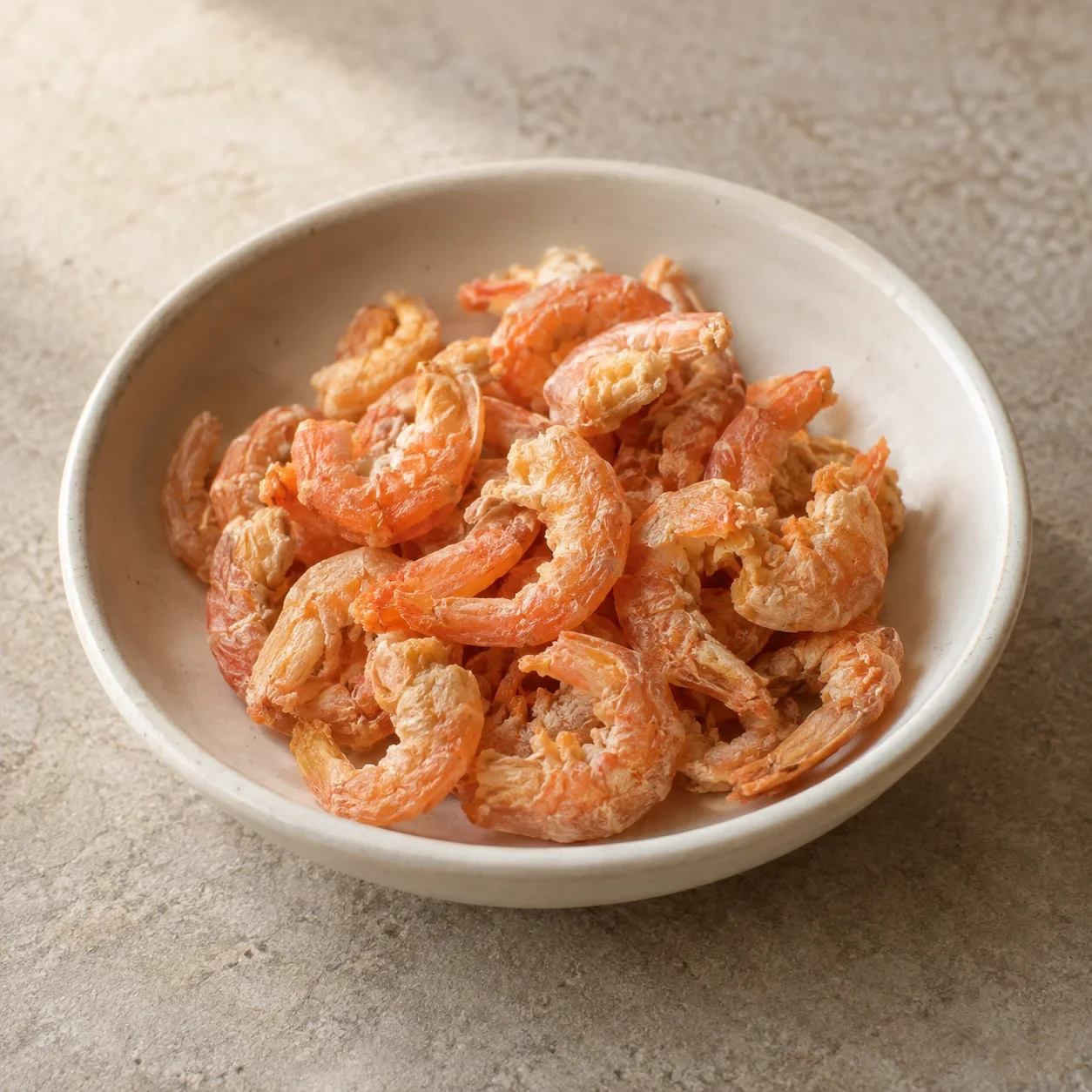
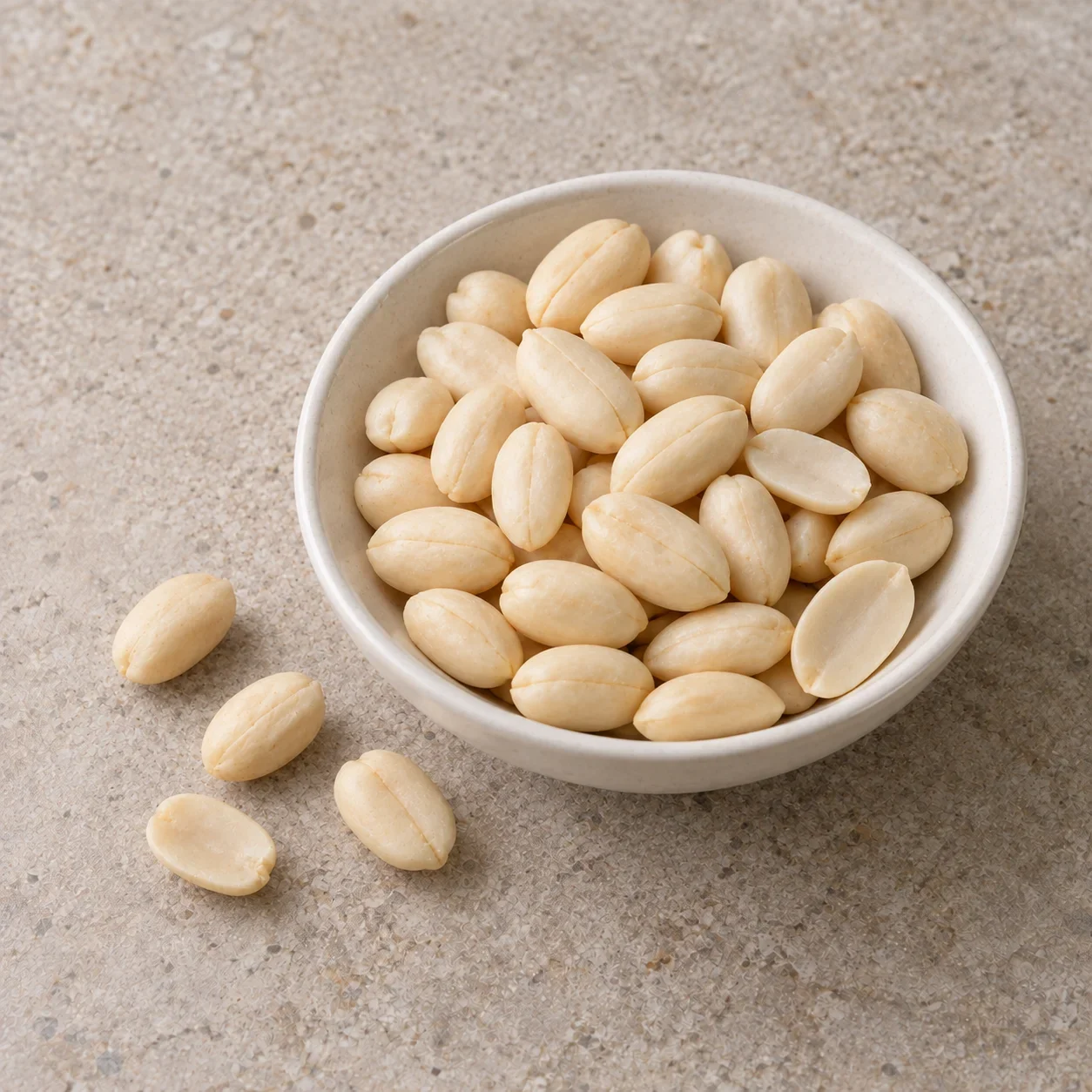
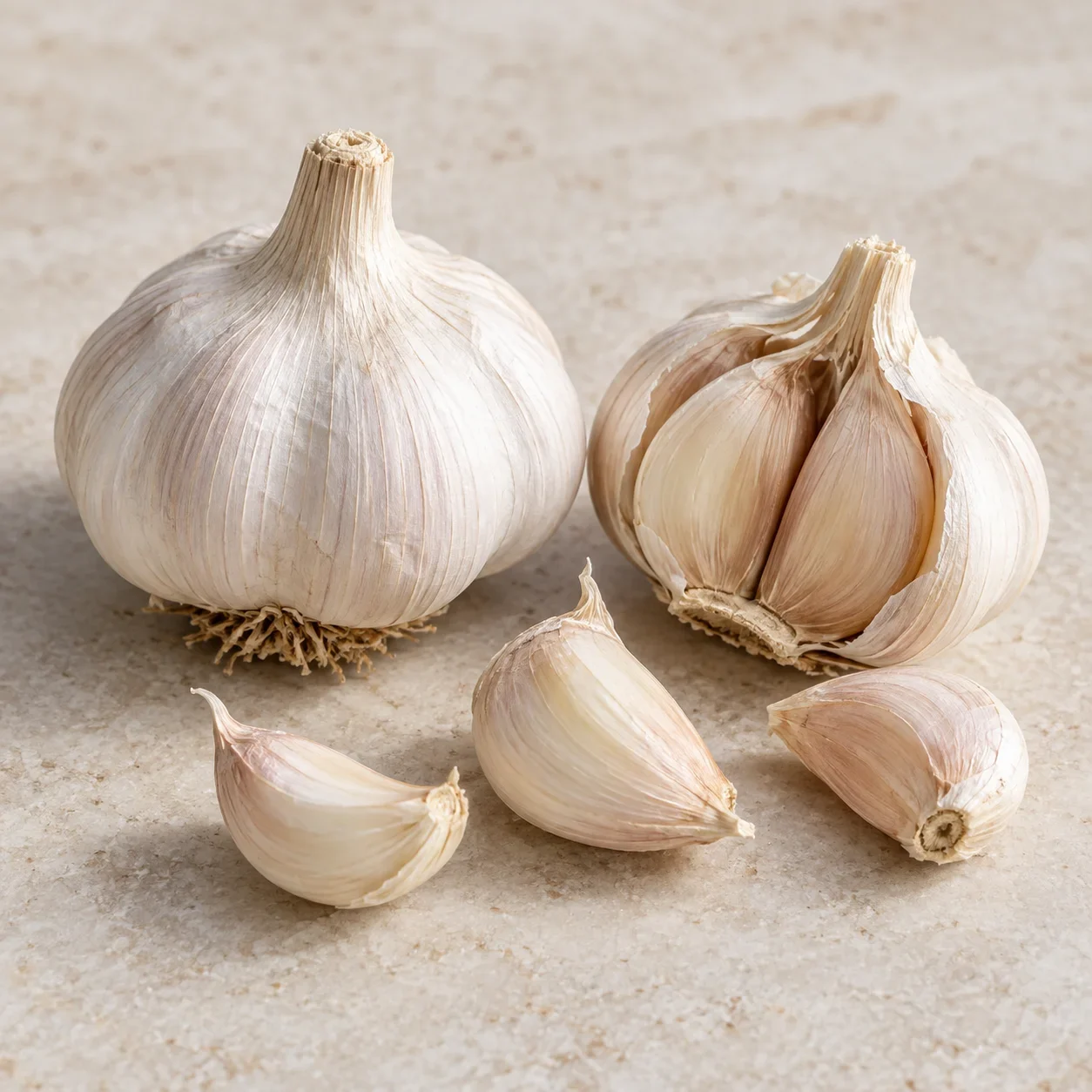
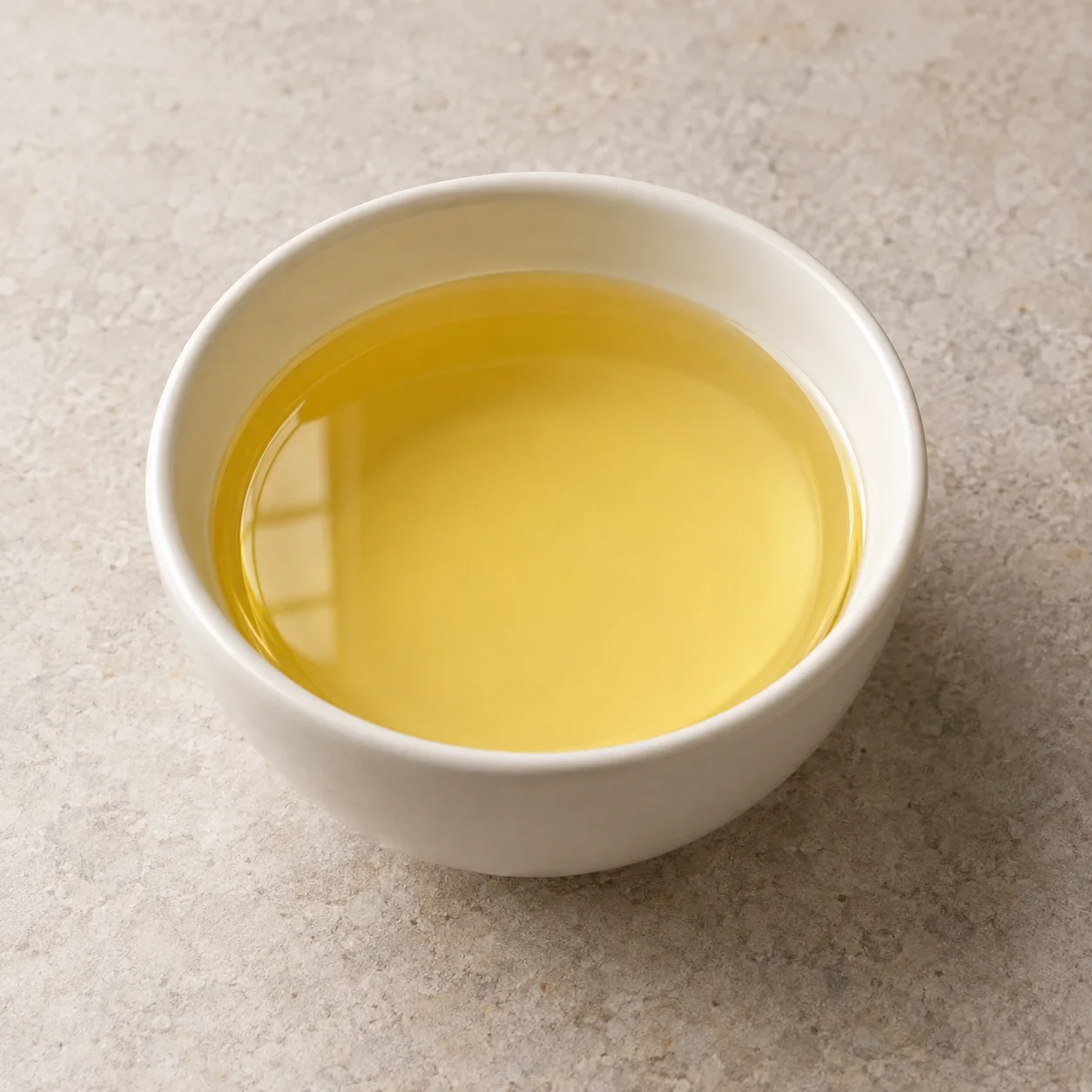
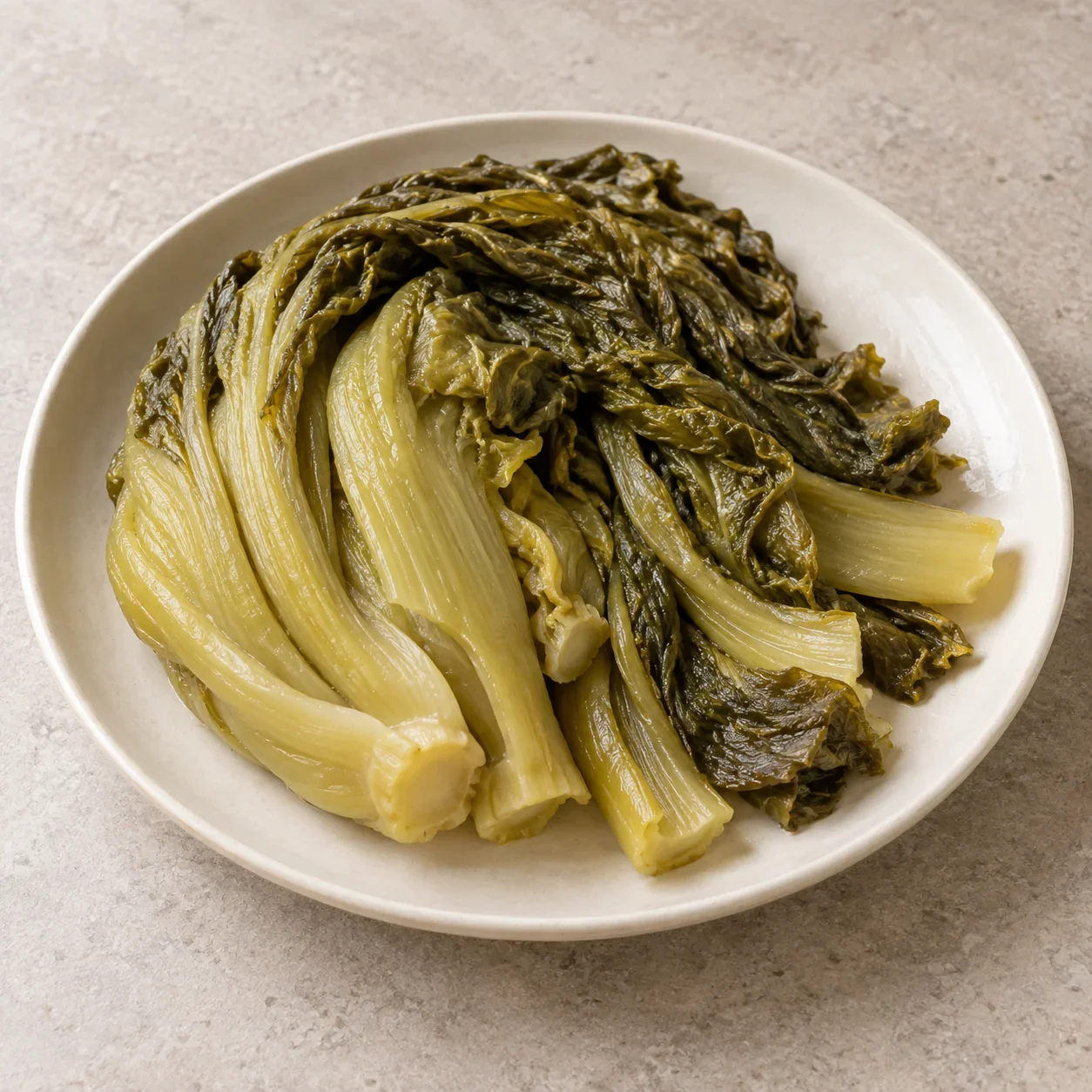
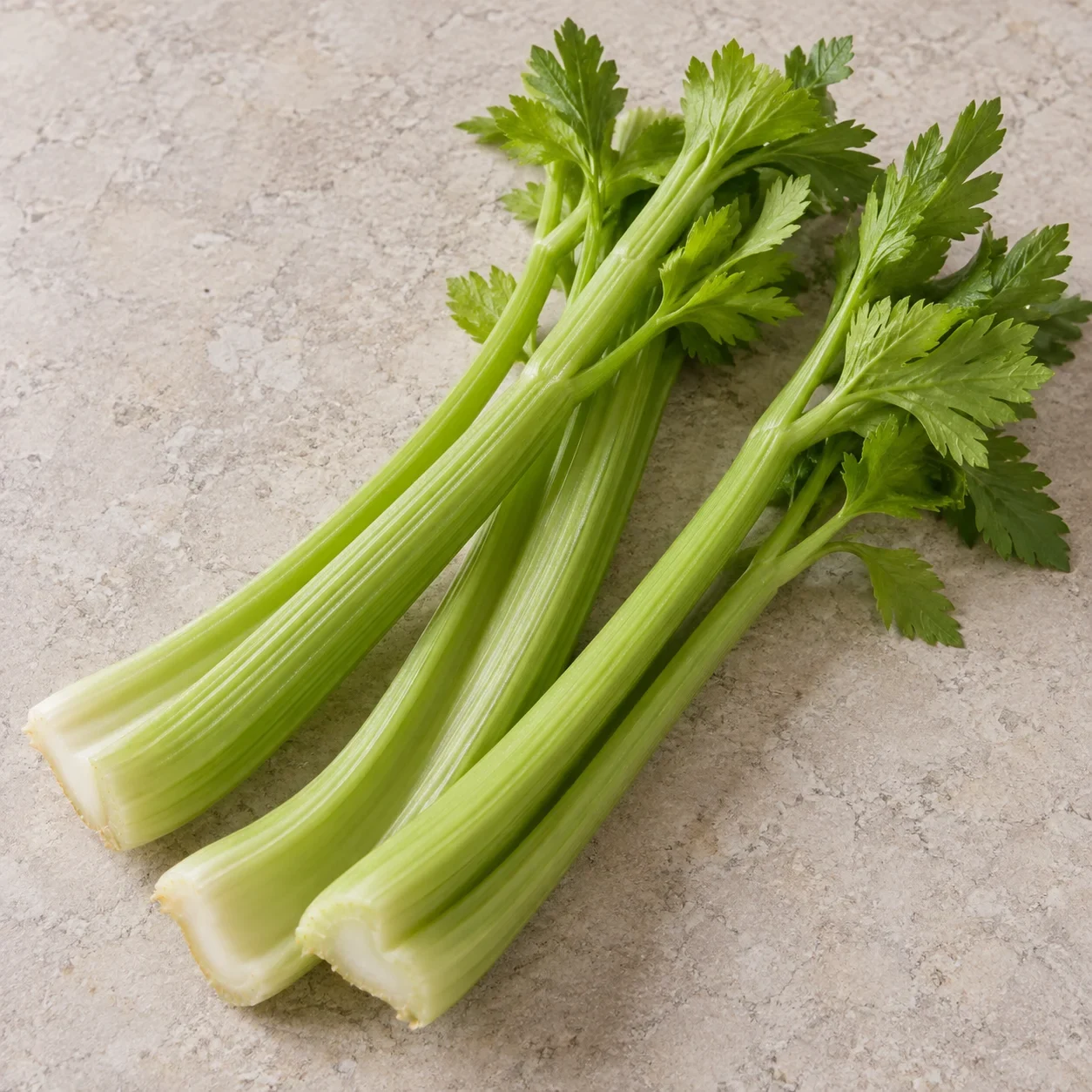
In some versions
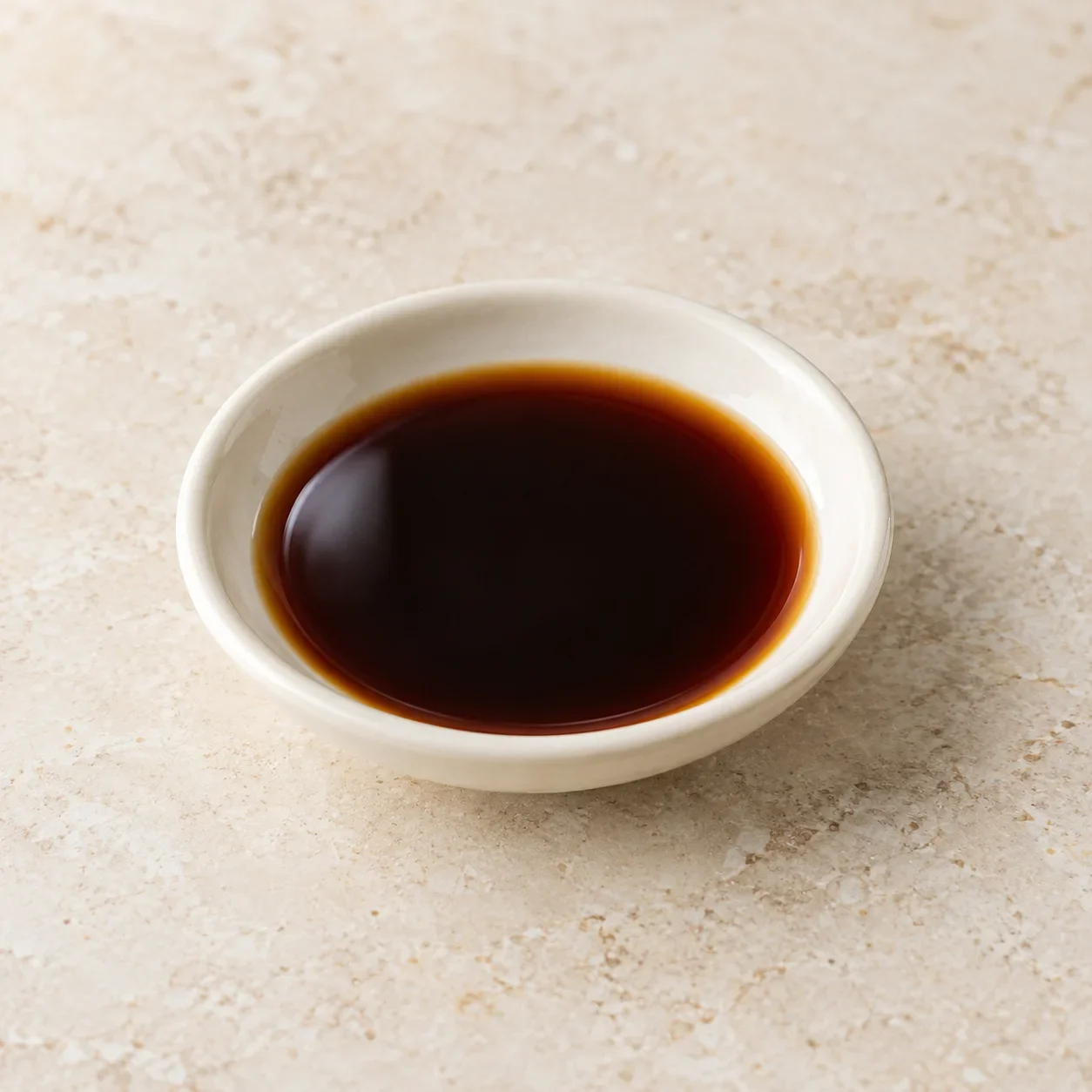

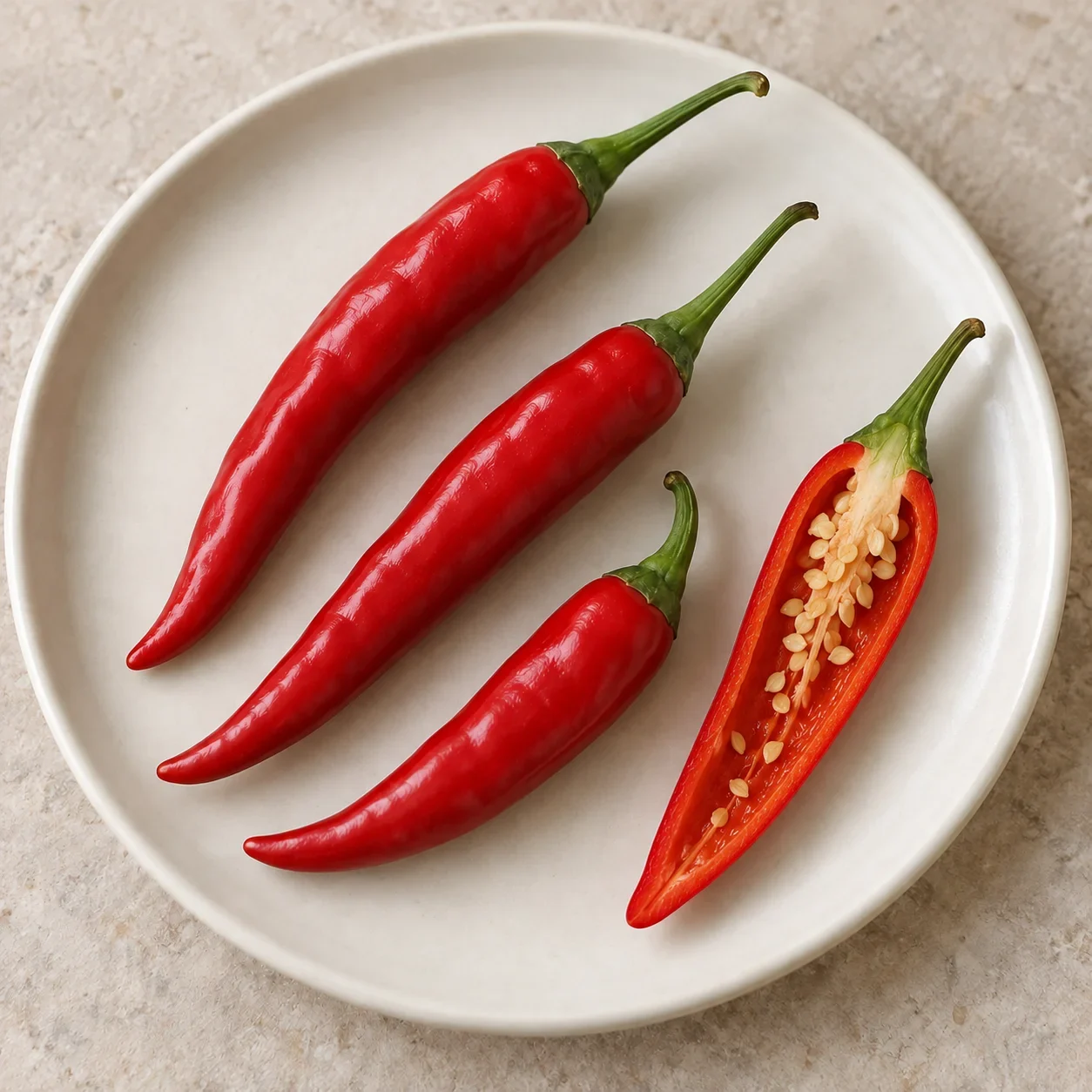
Recipes vary by restaurant.
How does it taste?
Garlicky and savory, with nutty peanuts and a little sourness from pickled greens.
- Chili heat
- Texture
- Soft, fine rice strands contrast with crunchy peanuts and vegetables.
- How it’s made
- Rice is soaked, ground and worked into a dough, pressed into boiling water and cooled. Cooked noodles are mixed with prepared toppings, garlic oil and seasoning.
Topping combinations and sauce amounts vary. Soy sauce may be used; chili is optional. Other local versions can be served warm or with more broth.
A CONNECTION TO PLACE
Origin & regional roots
Associated with Hainan.
Ask if they have it first
请问你们有儋州米烂吗?
Do you have this item?
A LITTLE SOMETHING TO READ
Story & history
A rice-noodle breakfast in Danzhou
This account describes a tradition or story, rather than an established historical fact.
Mi lan is associated with Danzhou, including Changpo. Rice preparation and the final mixing of toppings are central to this local breakfast; the name does not mean spoiled food.