
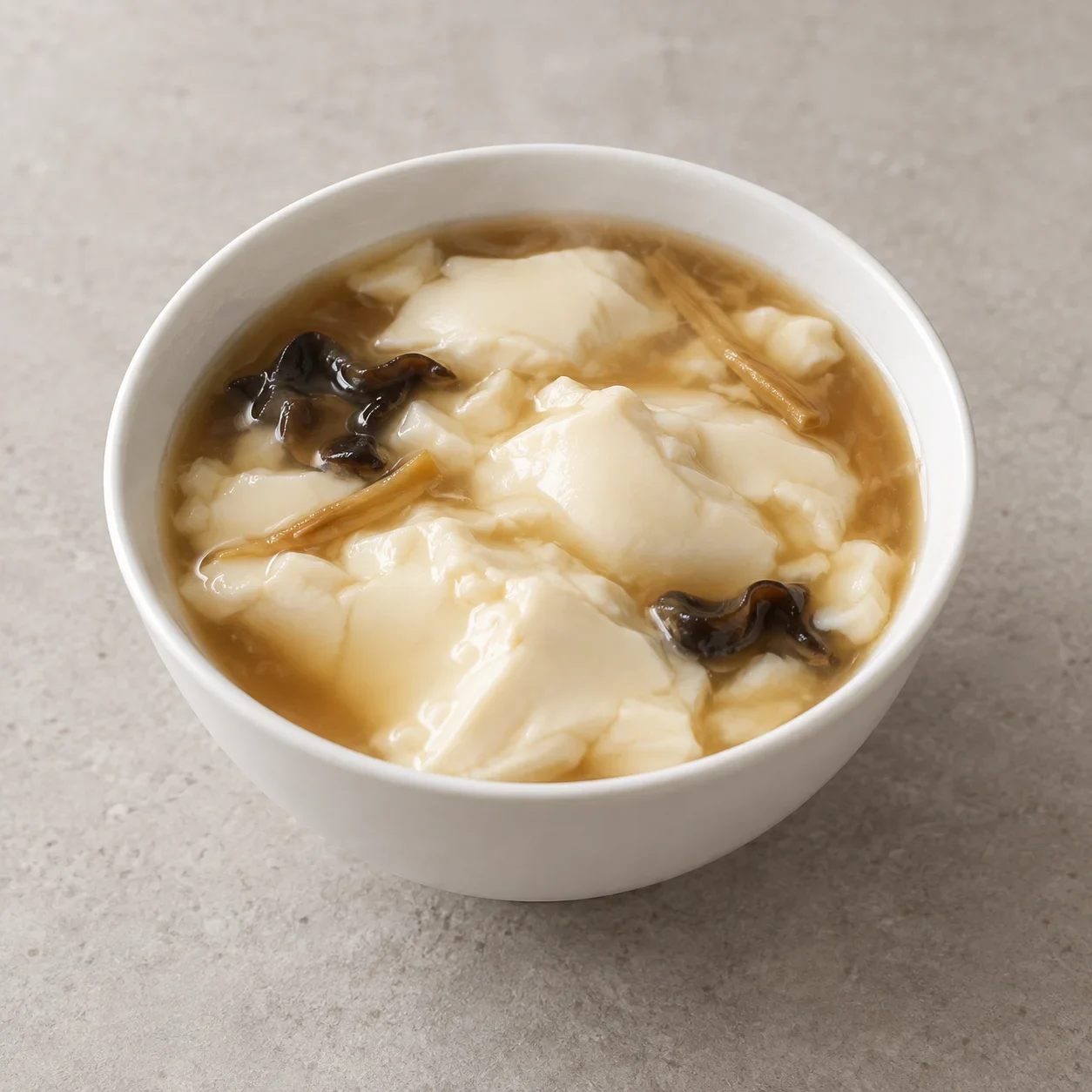
At the table
Eat with a spoon while warm. “请来一碗豆腐脑,不加辣。” asks for one bowl without added chili.
This version uses soy, egg, peanut oil and sesame oil; soy sauce may contain wheat. Confirm ingredients for allergies. Let the hot gravy cool before eating.
GET TO KNOW THE DISH
What goes into it?
Explore some key ingredients below. Preparations may use additional seasonings and ingredients.
Gravies and condiments vary. This egg version is not vegan; ask about stock, oils and seasonings before choosing for a vegetarian diet.
Typical ingredients
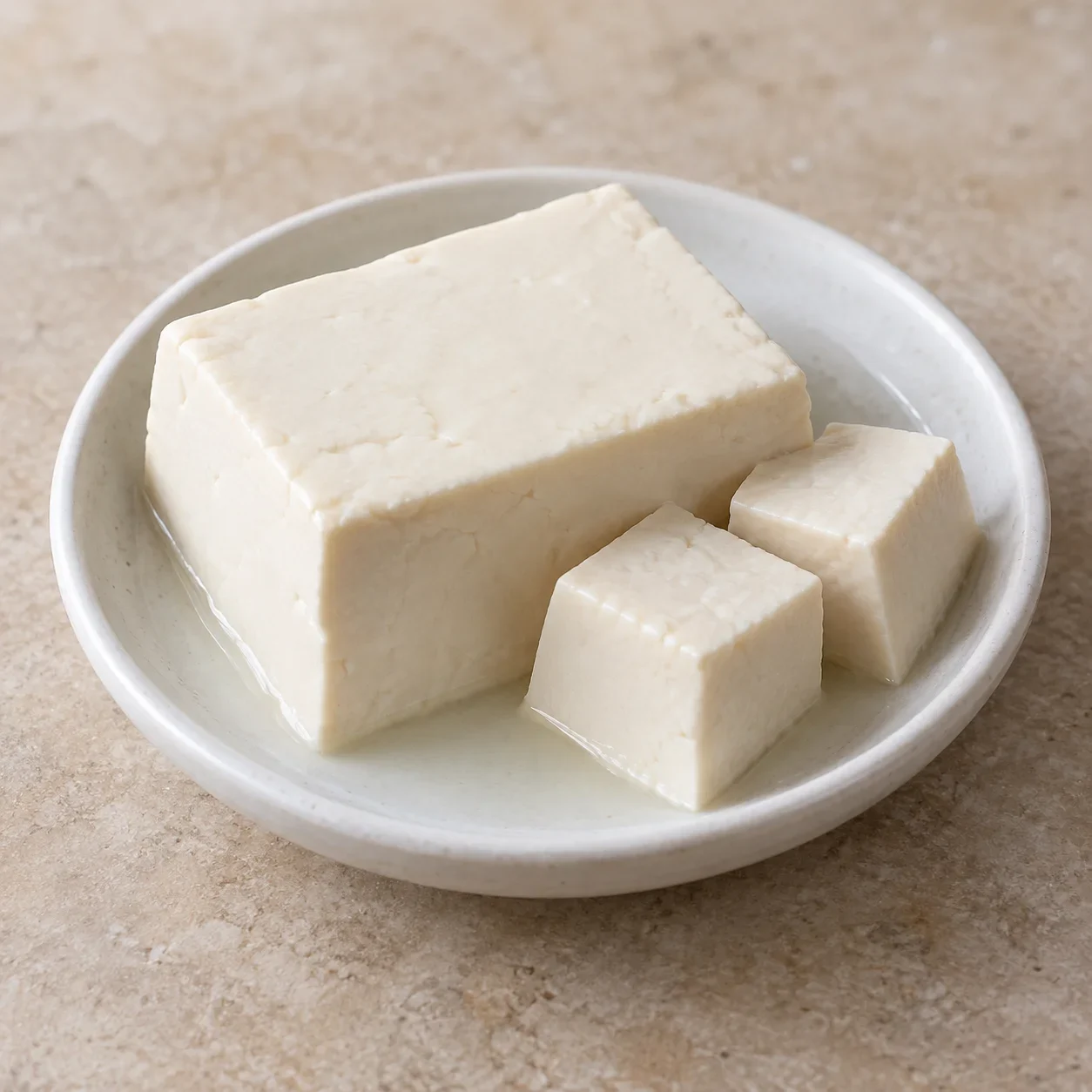
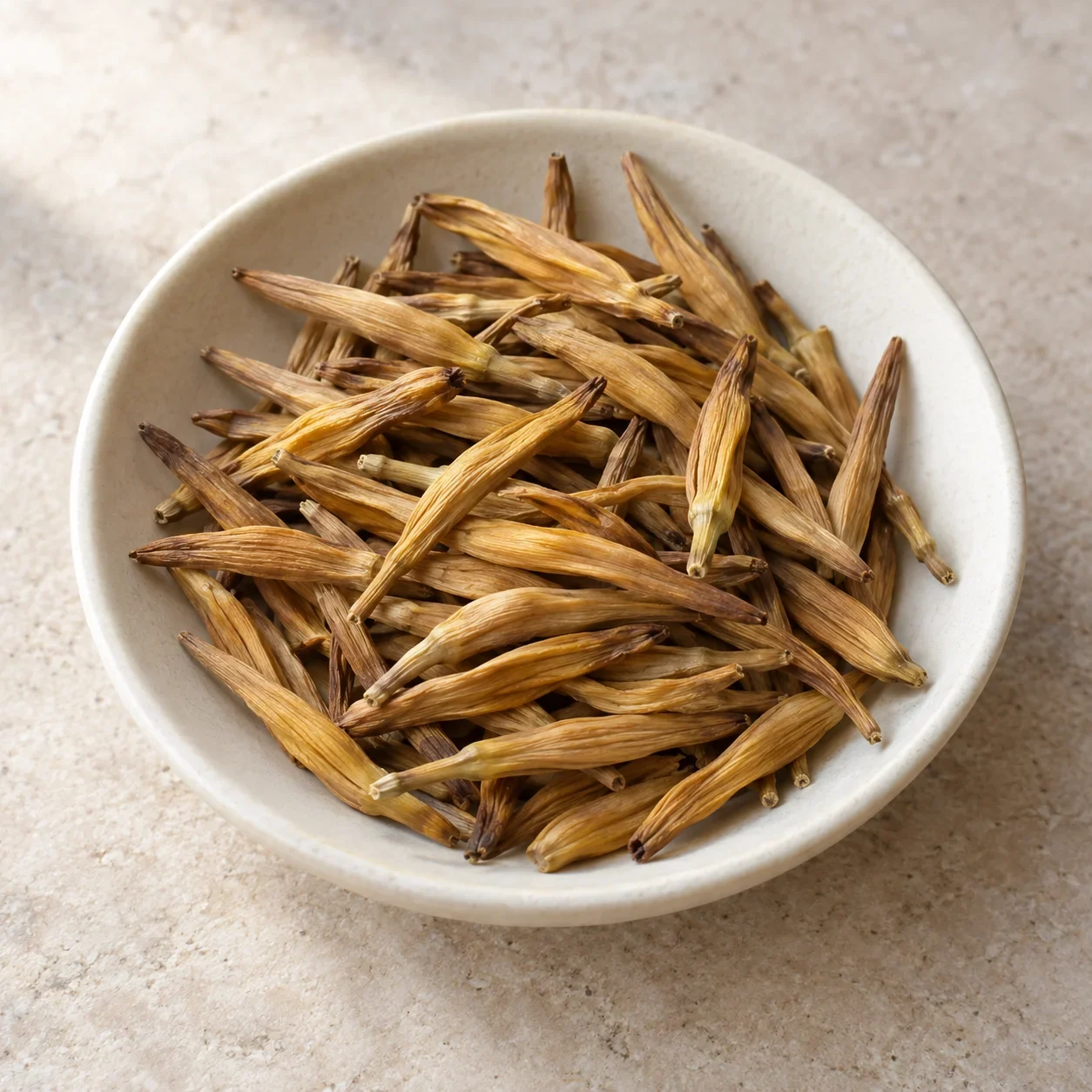
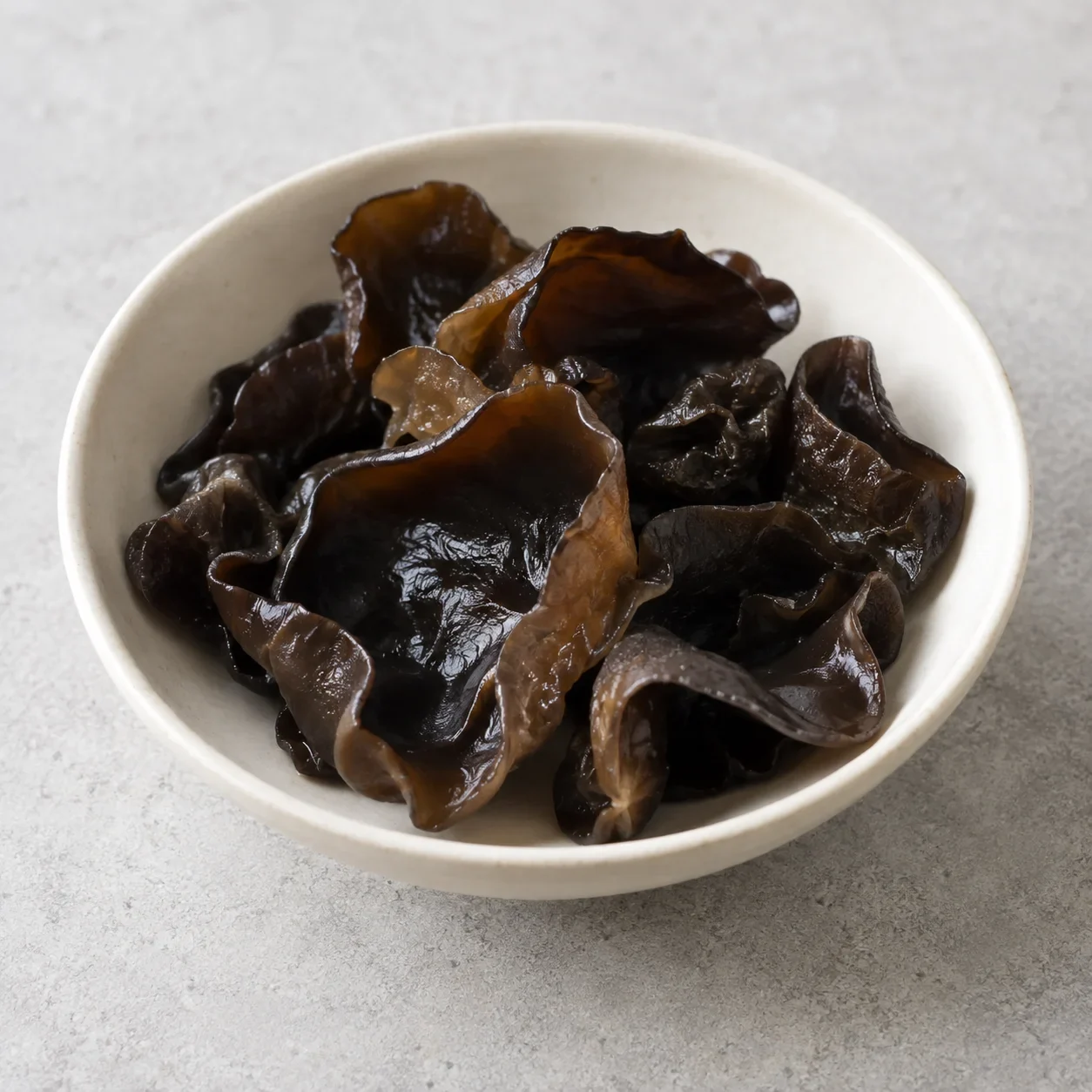
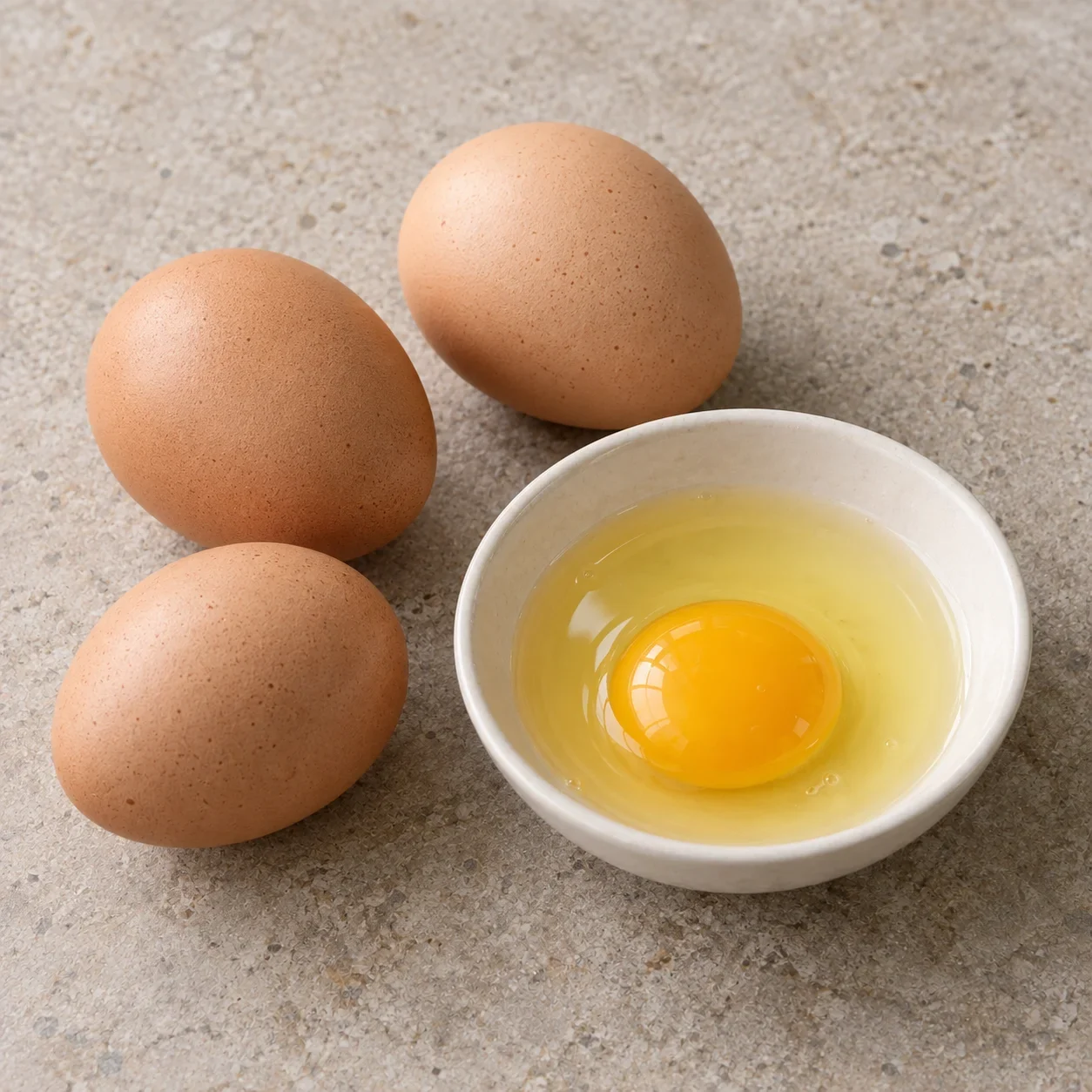
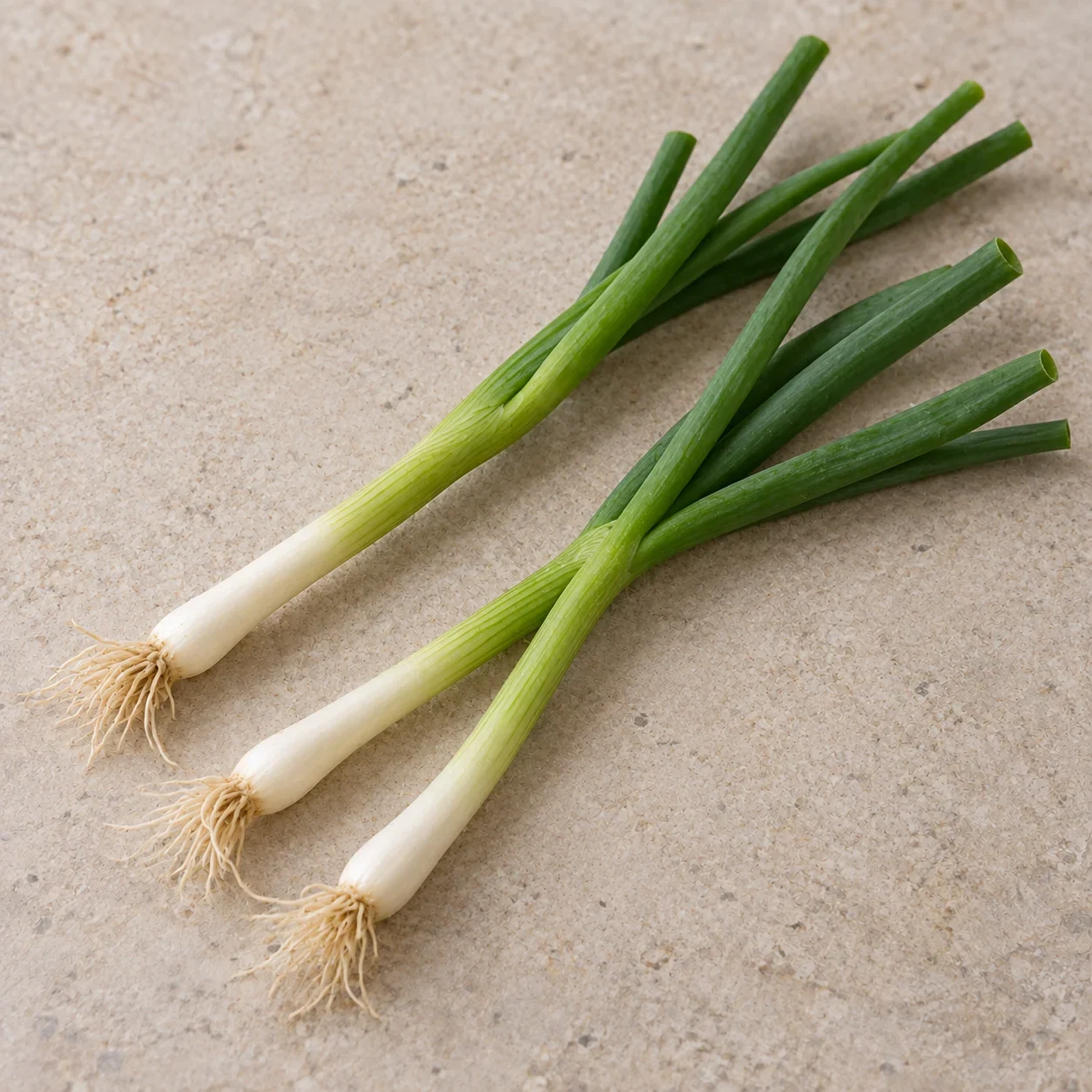
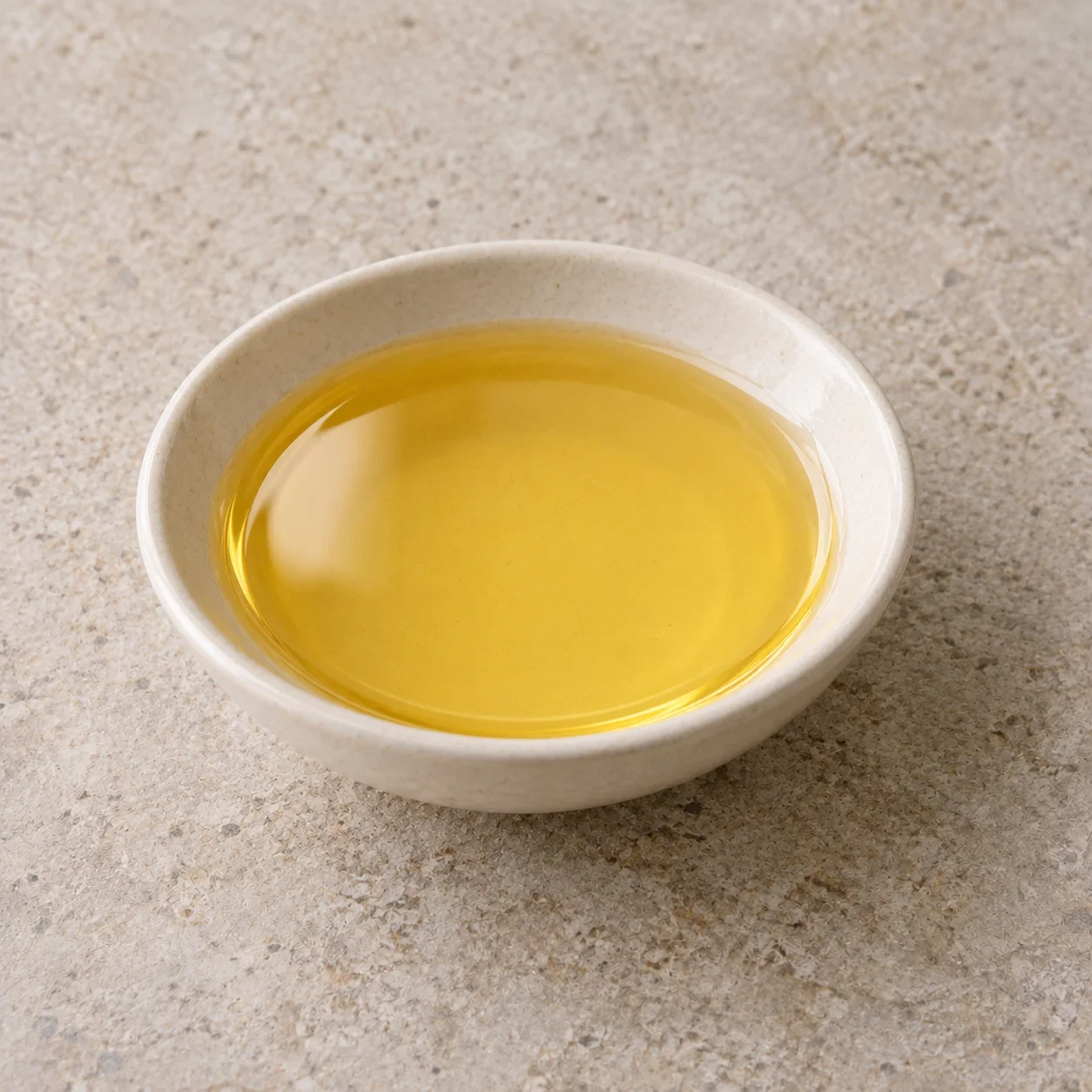
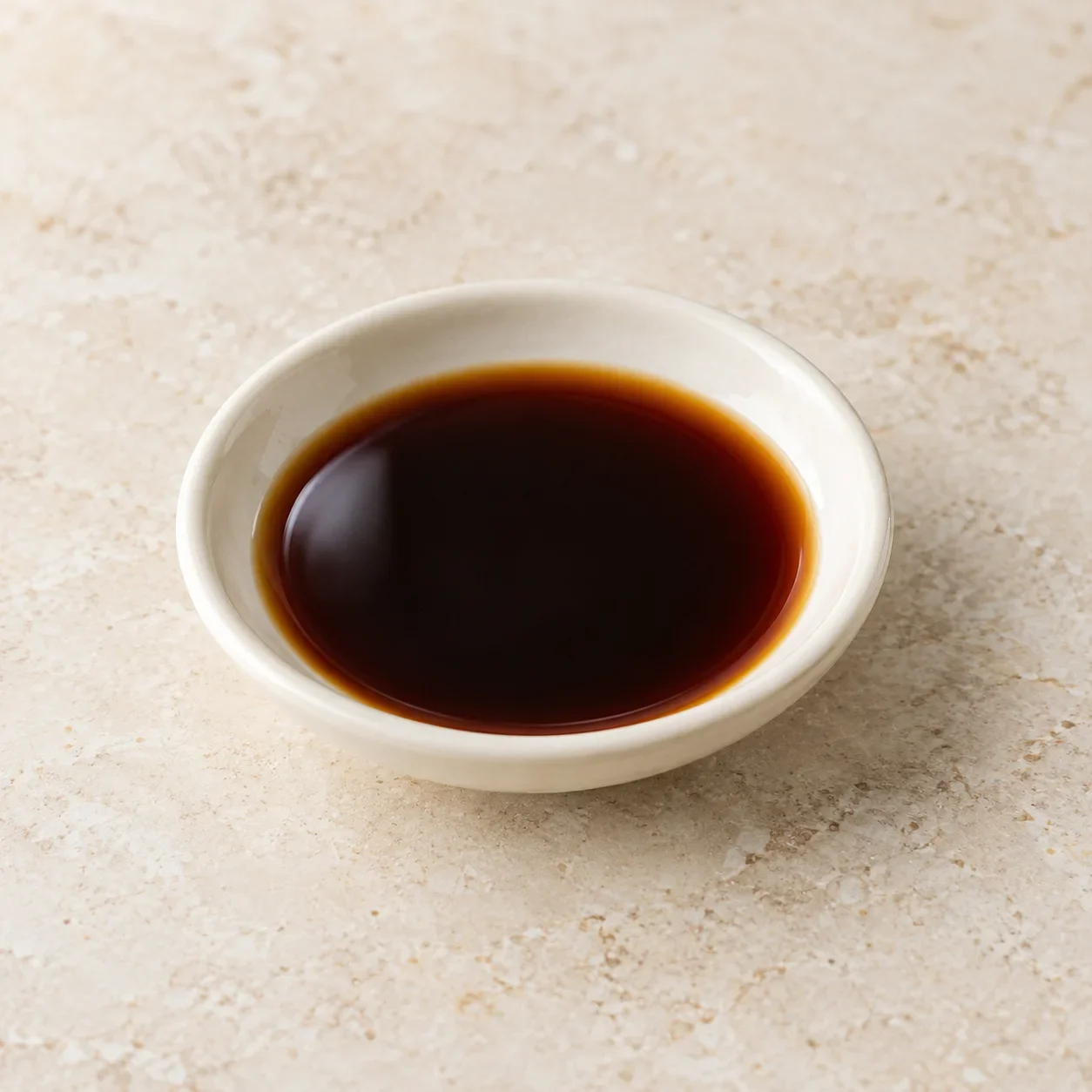

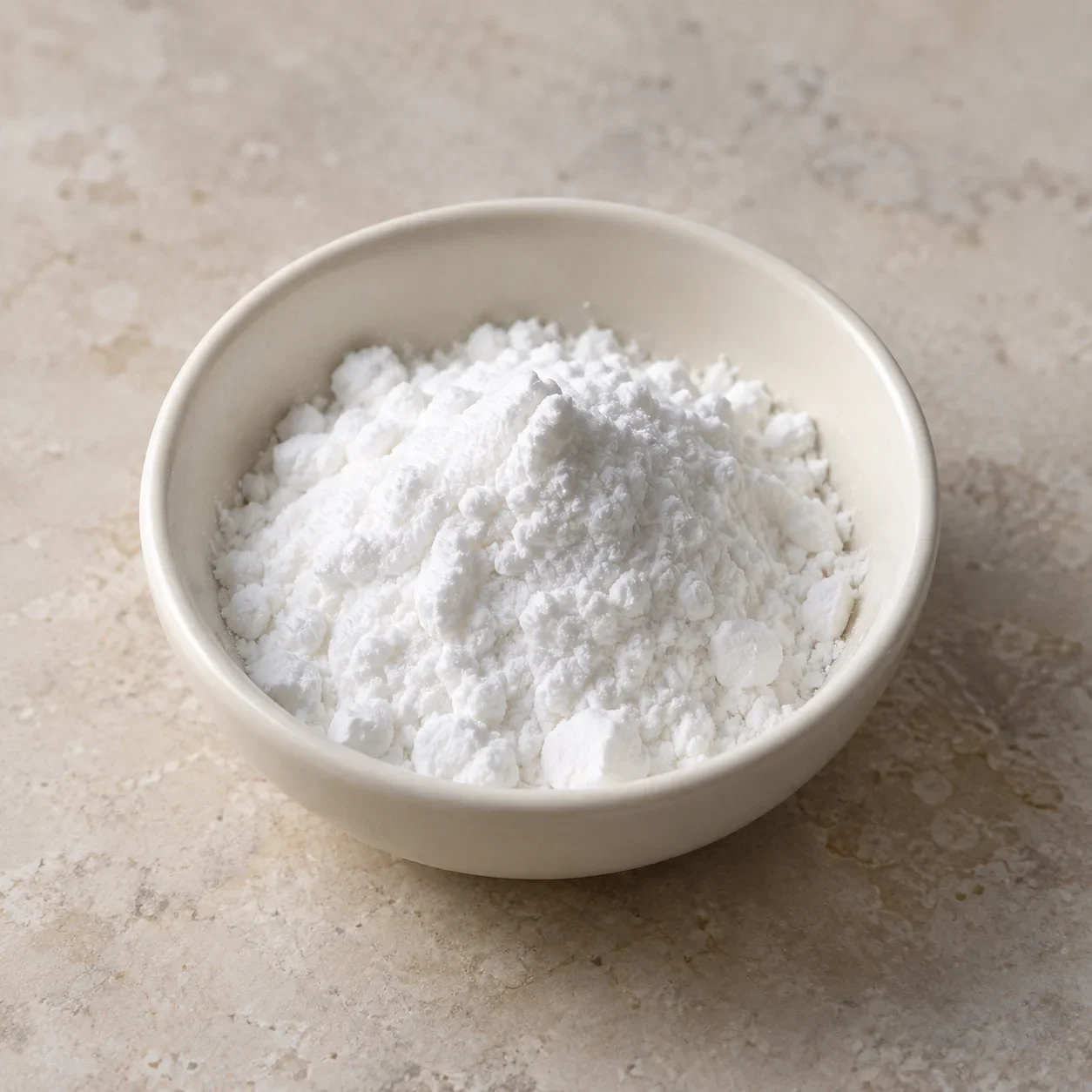
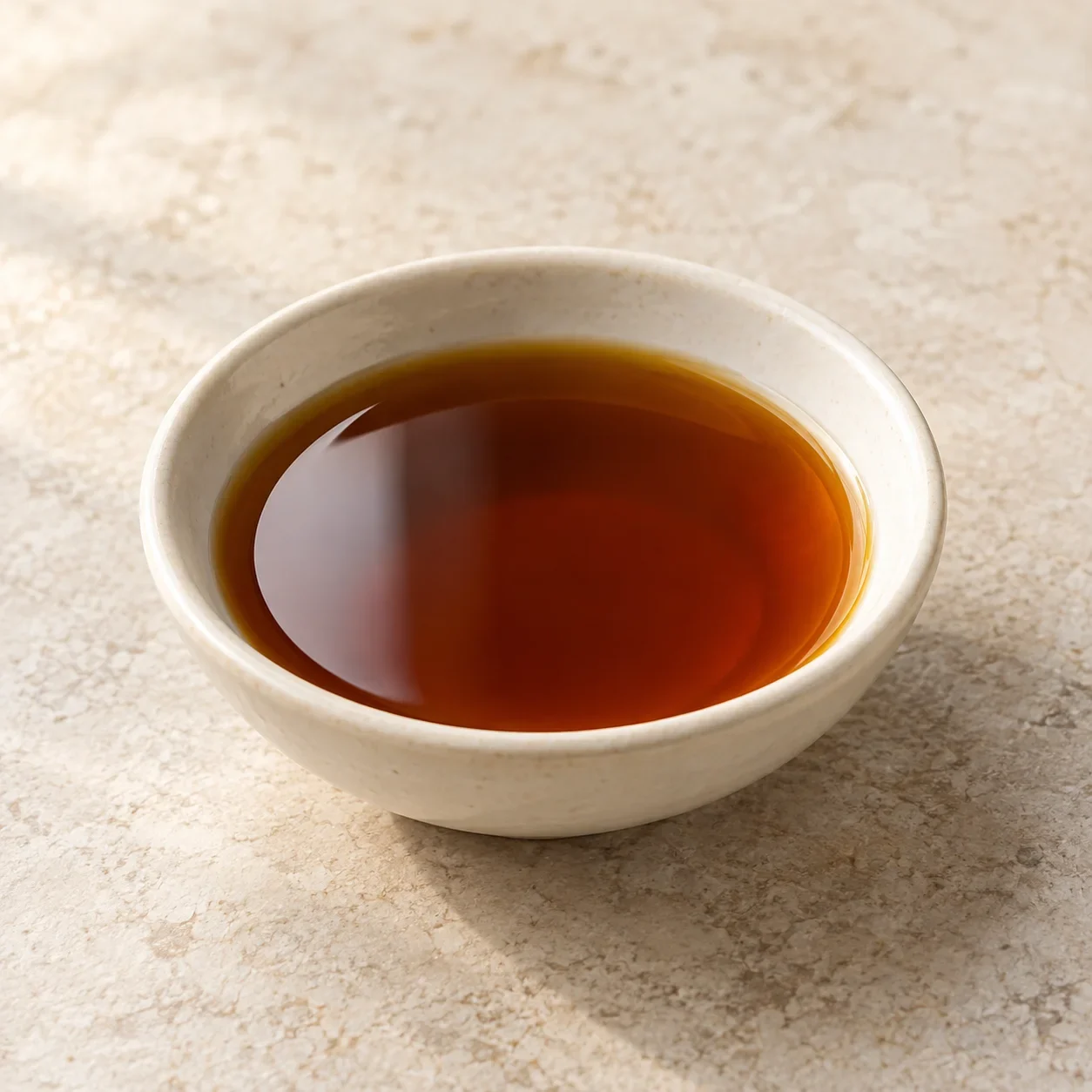
Recipes vary by restaurant.
How does it taste?
Savory and mild before any chili condiment; sesame oil adds aroma.
- Chili heat
- Texture
- Silky tofu, thickened gravy and tender egg ribbons, with lightly chewy wood-ear fungus.
- How it’s made
- Warm the soft tofu separately. Cook scallion, soaked daylily buds and wood-ear fungus with peanut oil and water; season with soy sauce and salt, thicken with starch, stir in egg and finish with sesame oil.
Gravies and condiments vary. This egg version is not vegan; ask about stock, oils and seasonings before choosing for a vegetarian diet.
A CONNECTION TO PLACE
Origin & regional roots
Associated with Beijing.
About this regional connection
Beijing: A Dongcheng Tourism article describes the savory serving as part of Beijing eating habits; this supports an association, not exclusive origin or a complete regional taxonomy.
Ask if they have it first
请问你们有豆腐脑吗?
Do you have this item?
A LITTLE SOMETHING TO READ
Story & history
A savory Beijing breakfast
This account describes a tradition or story, rather than an established historical fact.
In Beijing, doufunao can be a warm savory breakfast. The name literally means “tofu brain,” describing its delicate curds rather than an animal ingredient; the gravy determines the rest of the bowl.