
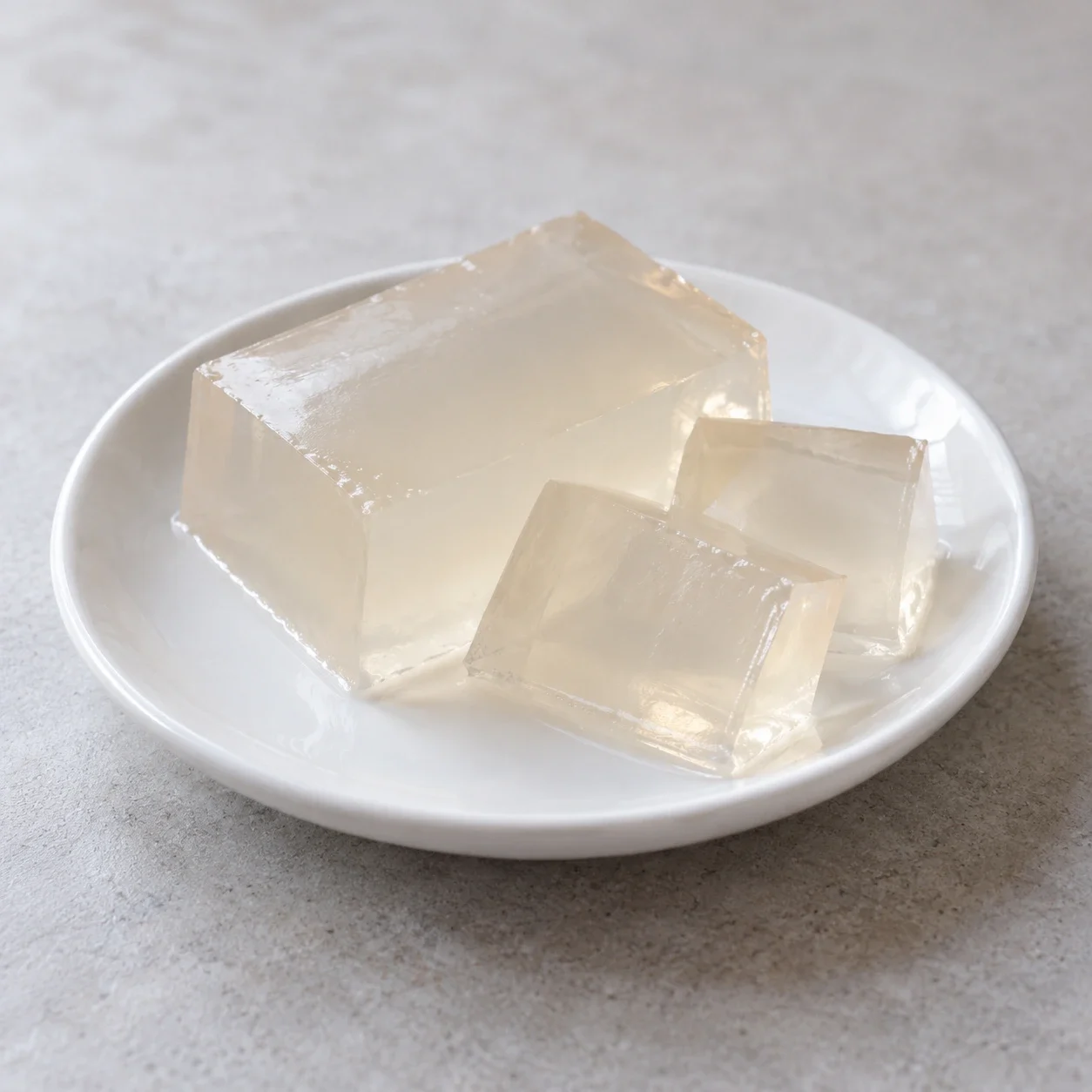
At the table
Use a spoon to break off small pieces. Cups and sliced blocks are both served; the jelly is ready to eat, with no wrapper to peel away.
Some versions contain egg or dairy. Ask which version is served; a clear appearance alone does not establish the full ingredients.
The plain agar-and-sugar version contains no chili. Added ingredients vary by maker.
GET TO KNOW THE DISH
What goes into it?
Explore some key ingredients below. Preparations may use additional seasonings and ingredients.
Egg ribbons, milk and coconut milk belong to different versions, not one required combination. Fruity versions also exist.
Typical ingredients
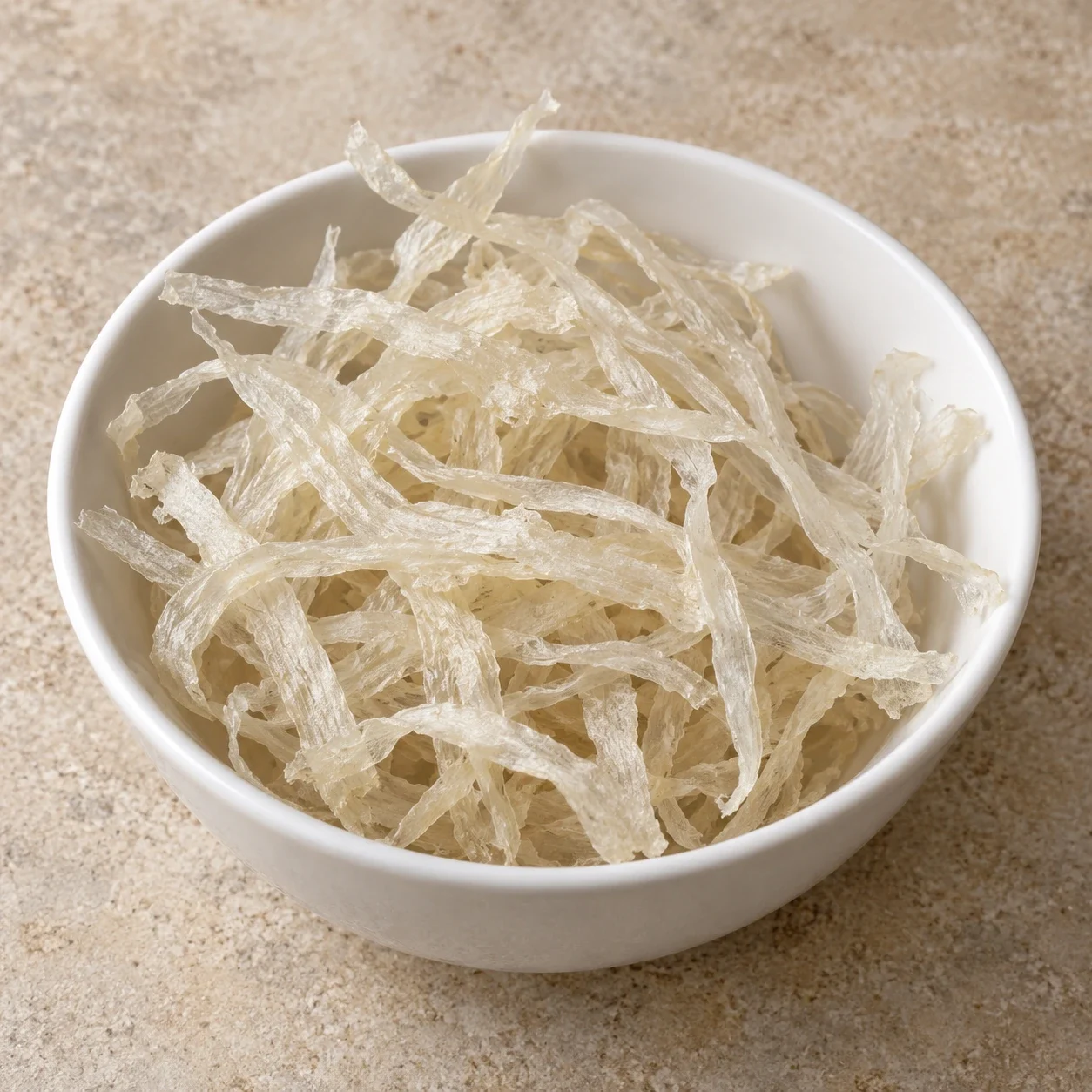
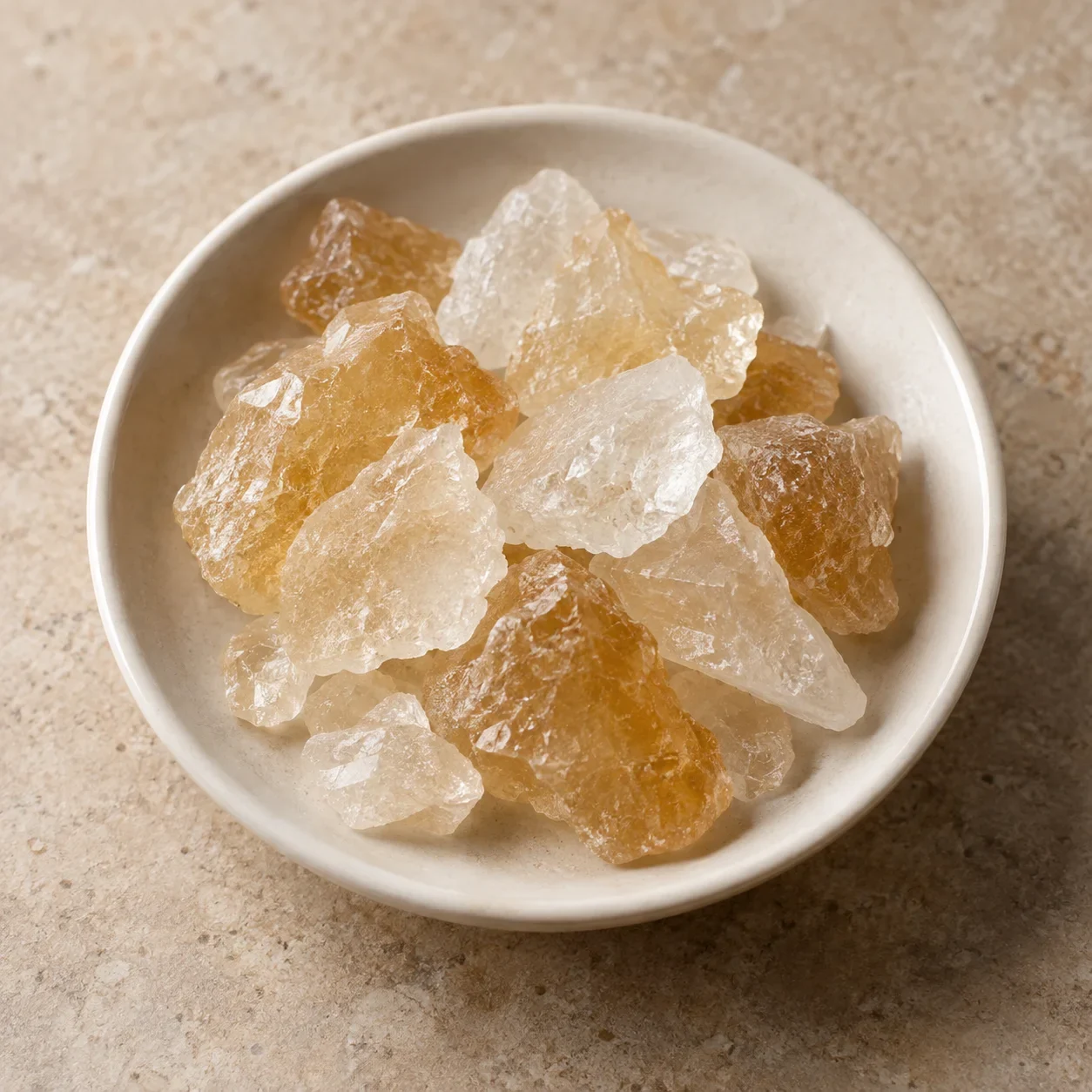
In some versions
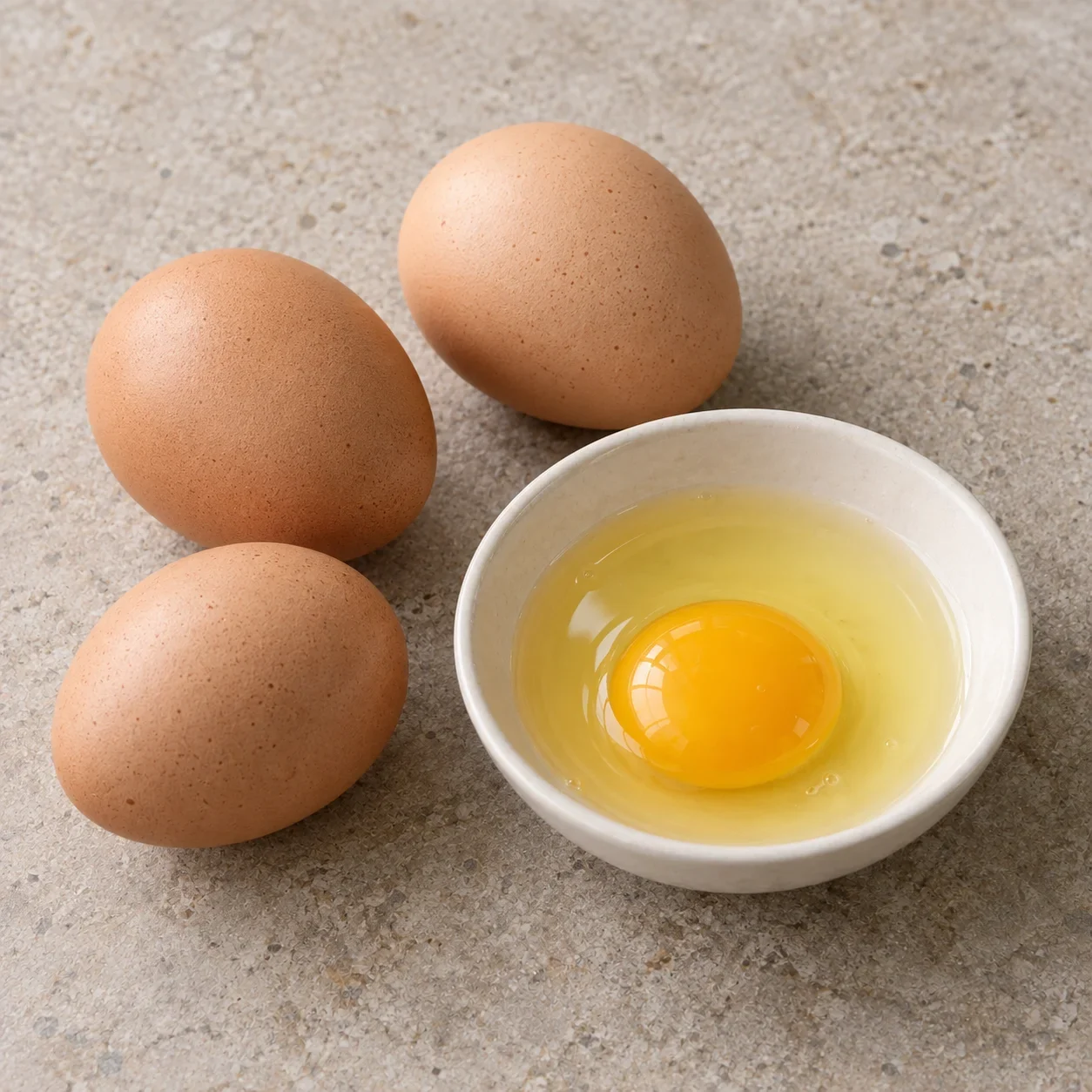
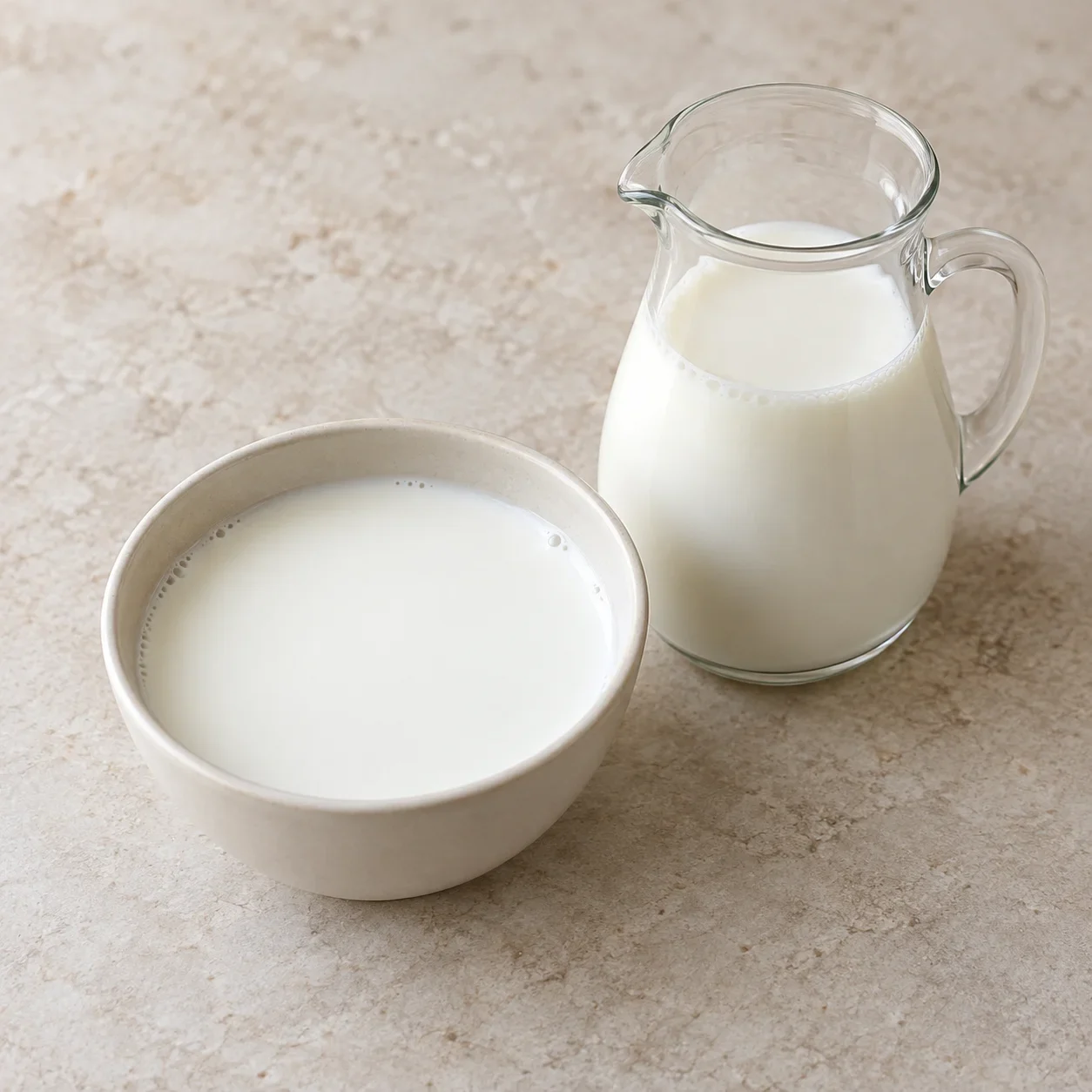
Recipes vary by restaurant.
How does it taste?
Gently sweet in the plain version; sweetness and added flavors vary.
- Chili heat
- Texture
- Smooth and firm, breaking cleanly under a spoon rather than stretching like a gummy sweet.
- How it’s made
- Agar and sugar are dissolved in hot water, poured into a mold and cooled until set.
Egg ribbons, milk and coconut milk belong to different versions, not one required combination. Fruity versions also exist.
A CONNECTION TO PLACE
Origin & regional roots
Associated with Macau.
About this regional connection
Macau: Local sweet, not exclusive origin.
Ask if they have it first
请问你们有大菜糕吗?
Do you have this item?
A LITTLE SOMETHING TO READ
Story & history
A cool Macau sweet
This account describes a tradition or story, rather than an established historical fact.
Known as 大菜糕, this sweet is familiar in Macau and Hong Kong. Despite the word “cake”, it is a set jelly rather than a baked flour cake; 大菜 refers to its seaweed-derived gelling ingredient.