
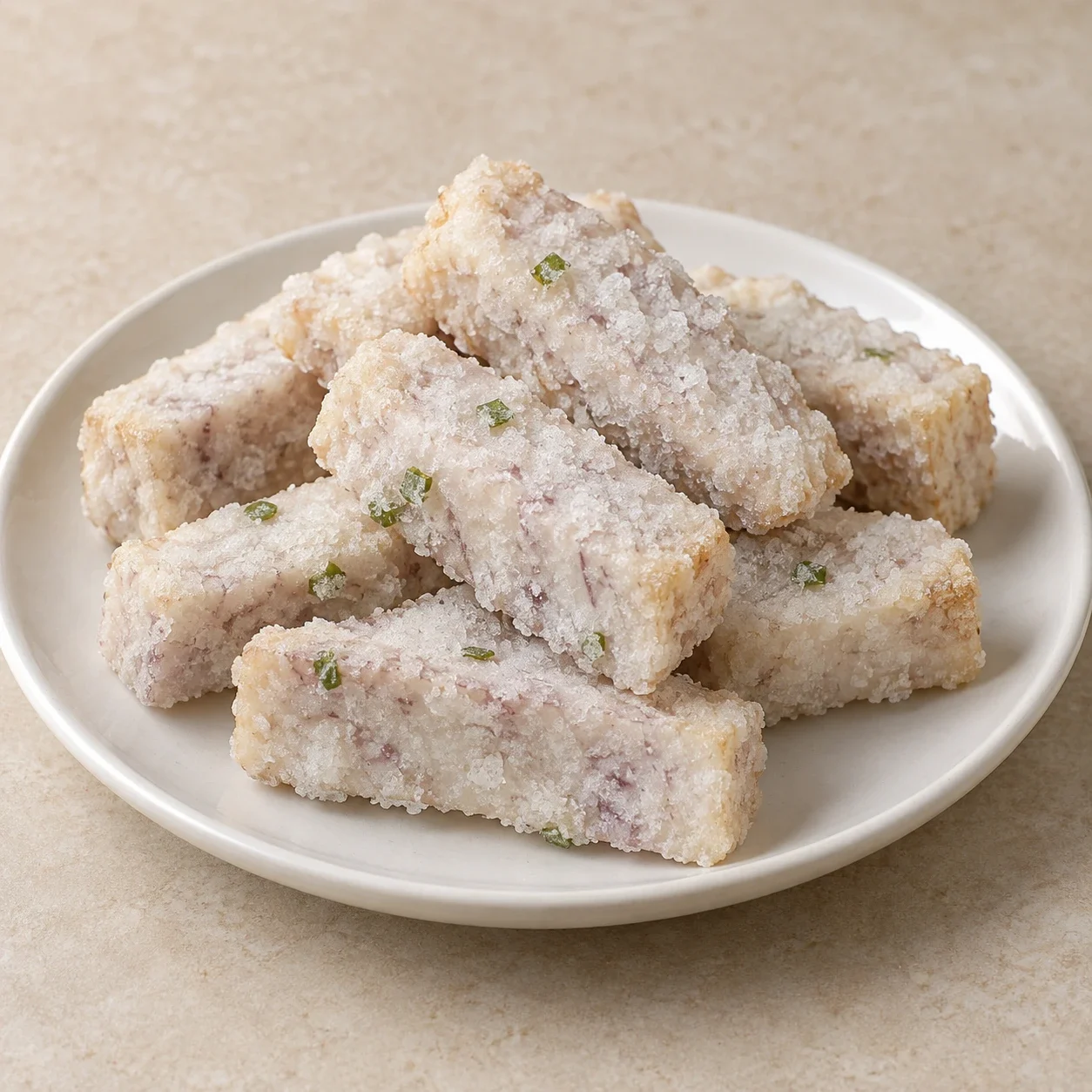
At the table
Pick up one piece with chopsticks and bite through the sugar crust. Share the plate; let a hot piece cool before eating.
Freshly cooked pieces may be hot. Ask about frying fat and any added toppings if you avoid particular ingredients.
This version uses taro, sugar, scallion and cooking oil. The oil is not specified as plant-based; a sweet vegetable dish is not automatically vegetarian or vegan.
GET TO KNOW THE DISH
What goes into it?
Explore some key ingredients below. Preparations may use additional seasonings and ingredients.
Frying fat varies; some Chaozhou preparations use pork lard. Other toppings vary. Fan sha has a dry sugar crust, unlike taro served in syrup.
Typical ingredients
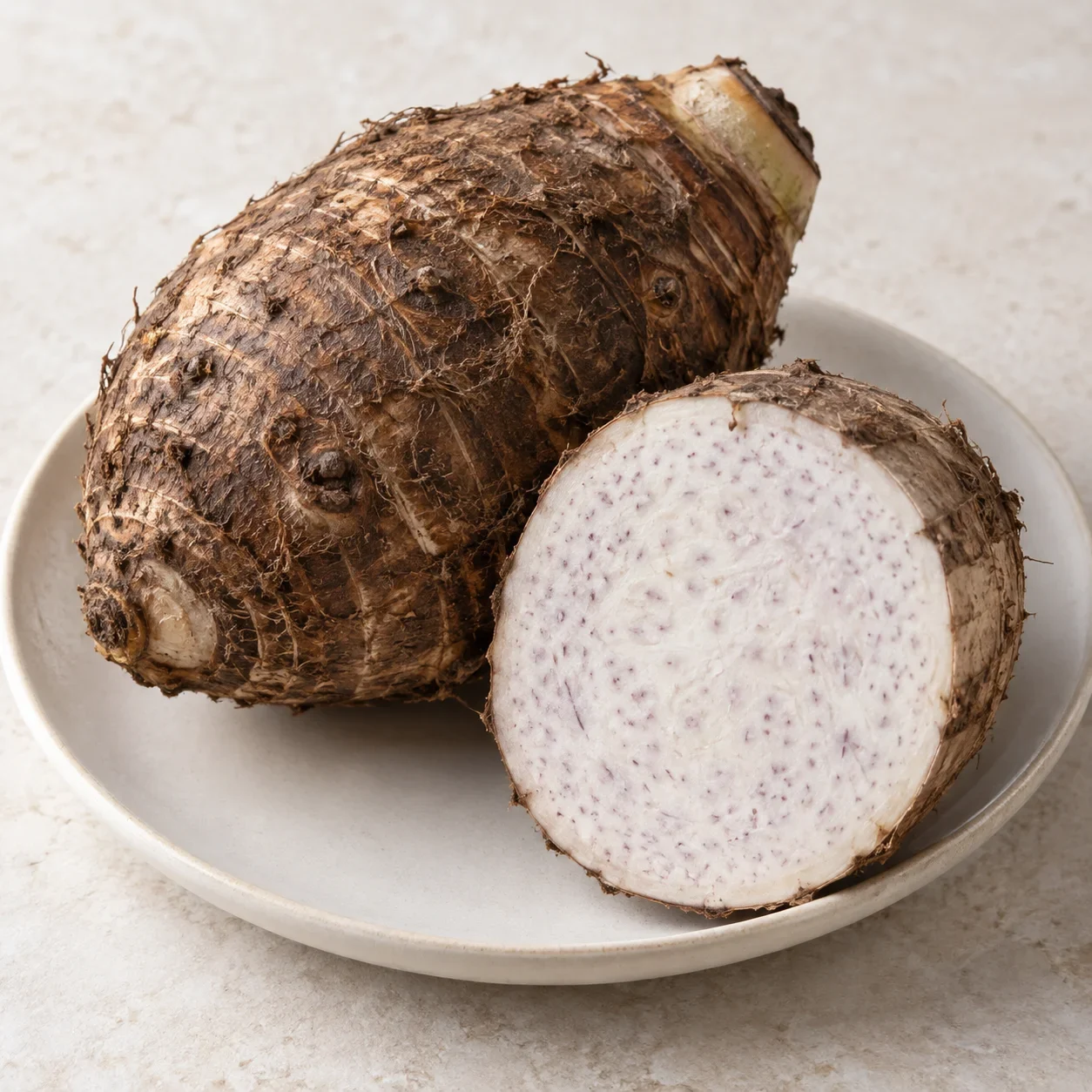



In some versions
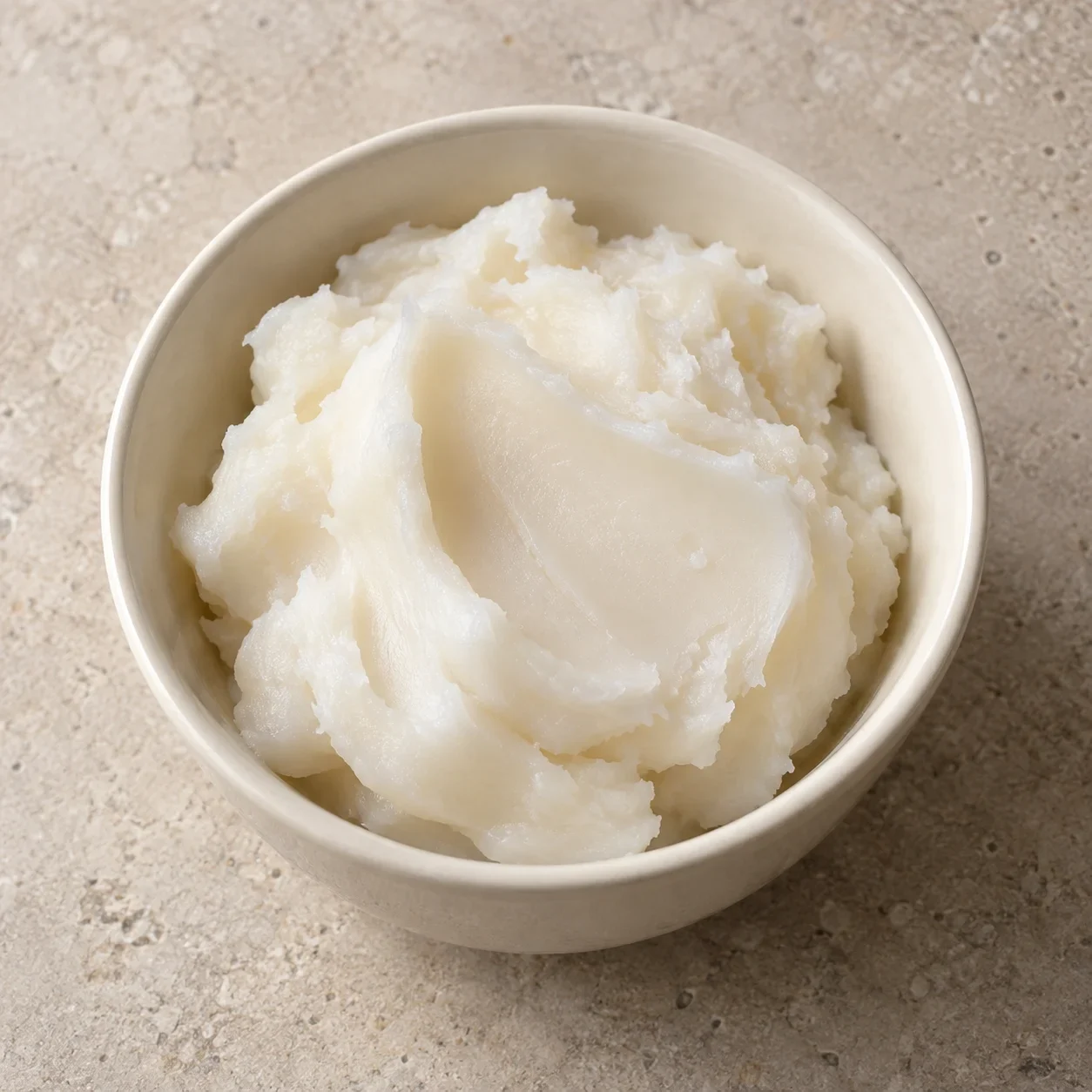
Recipes vary by restaurant.
How does it taste?
Sweet sugar crust, mild taro and a little scallion aroma.
- Chili heat
- Texture
- The finished pieces have a dry, crisp, sandy-looking white sugar shell around a soft, floury taro center. Cut size and the thickness of the coating can vary.
- How it’s made
- Fry solid taro batons, then toss with cooked sugar syrup and chopped scallion while cooling until the sugar crystallizes.
Frying fat varies; some Chaozhou preparations use pork lard. Other toppings vary. Fan sha has a dry sugar crust, unlike taro served in syrup.
A CONNECTION TO PLACE
Origin & regional roots
Associated with Guangdong.
About this regional connection
Guangdong: Chaozhou sugar-recrystallized fried taro.
Ask if they have it first
请问你们有反沙芋吗?
Do you have this item?
A LITTLE SOMETHING TO READ
Story & history
Sugar turning to frost
This account describes a tradition or story, rather than an established historical fact.
Fan sha refers to the syrup turning back into fine sugar crystals around fried taro. The dry coating and floury center make this a distinctive Chaozhou sweet.