
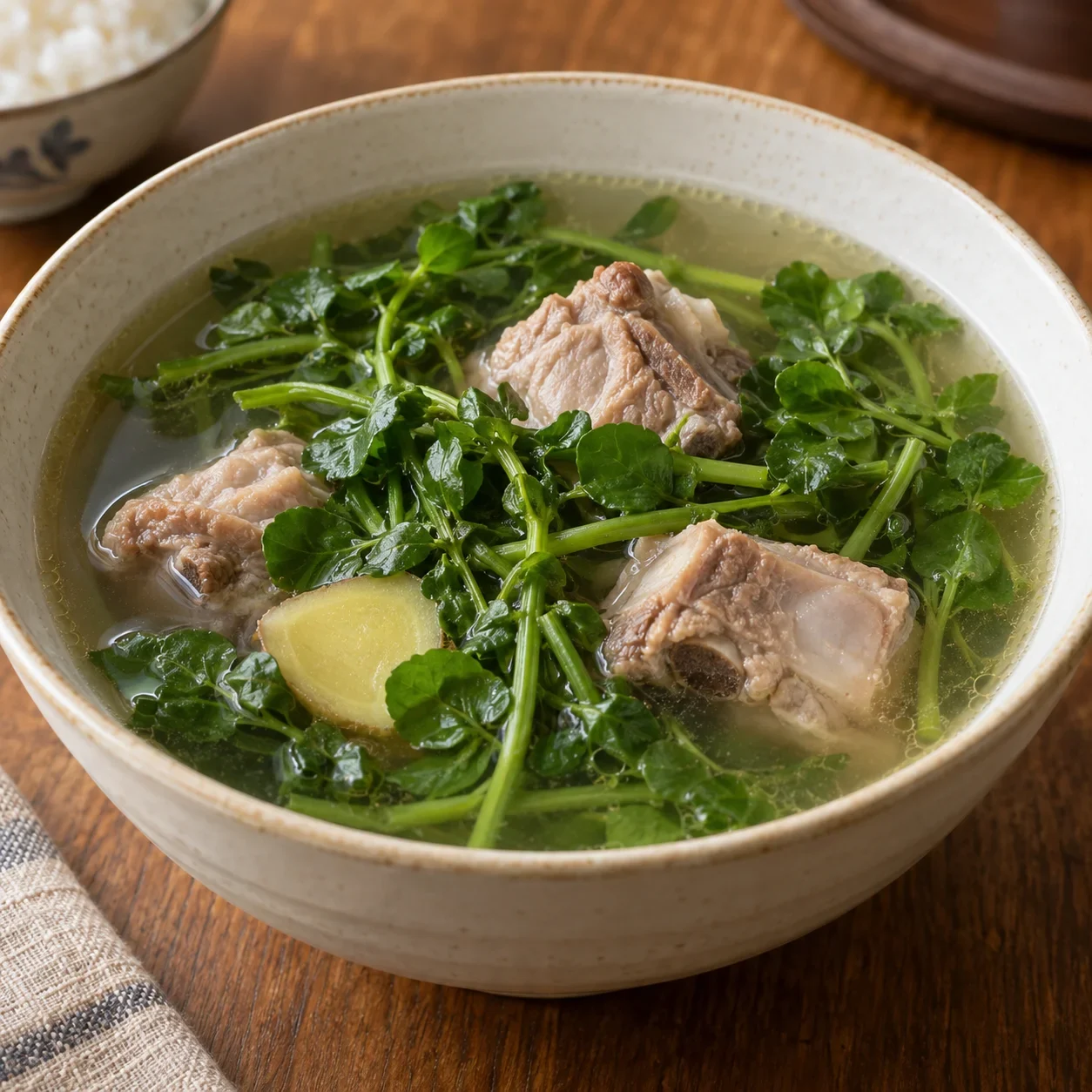
At the table
Sip the broth with a spoon and eat the greens and rib meat alongside rice. Remove bones and let hot soup cool. A little soy sauce may be served separately for the meat.
Contains pork and rib bones; small bone fragments may remain. Check each piece before eating or serving to children. Dipping sauces may contain soy or wheat; ask about other additions if you have allergies.
This pork-rib version is neither vegetarian nor vegan. Other versions use different stocks or additions. The representative soup has no chili; watercress, ginger and white pepper have a separate peppery bite. Added chili sauce can change the heat.
GET TO KNOW THE DISH
What goes into it?
Explore some key ingredients below. Preparations may use additional seasonings and ingredients.
The balance of greens and ribs varies. Salt and white pepper season this preparation; other versions may use a different soup base.
Typical ingredients
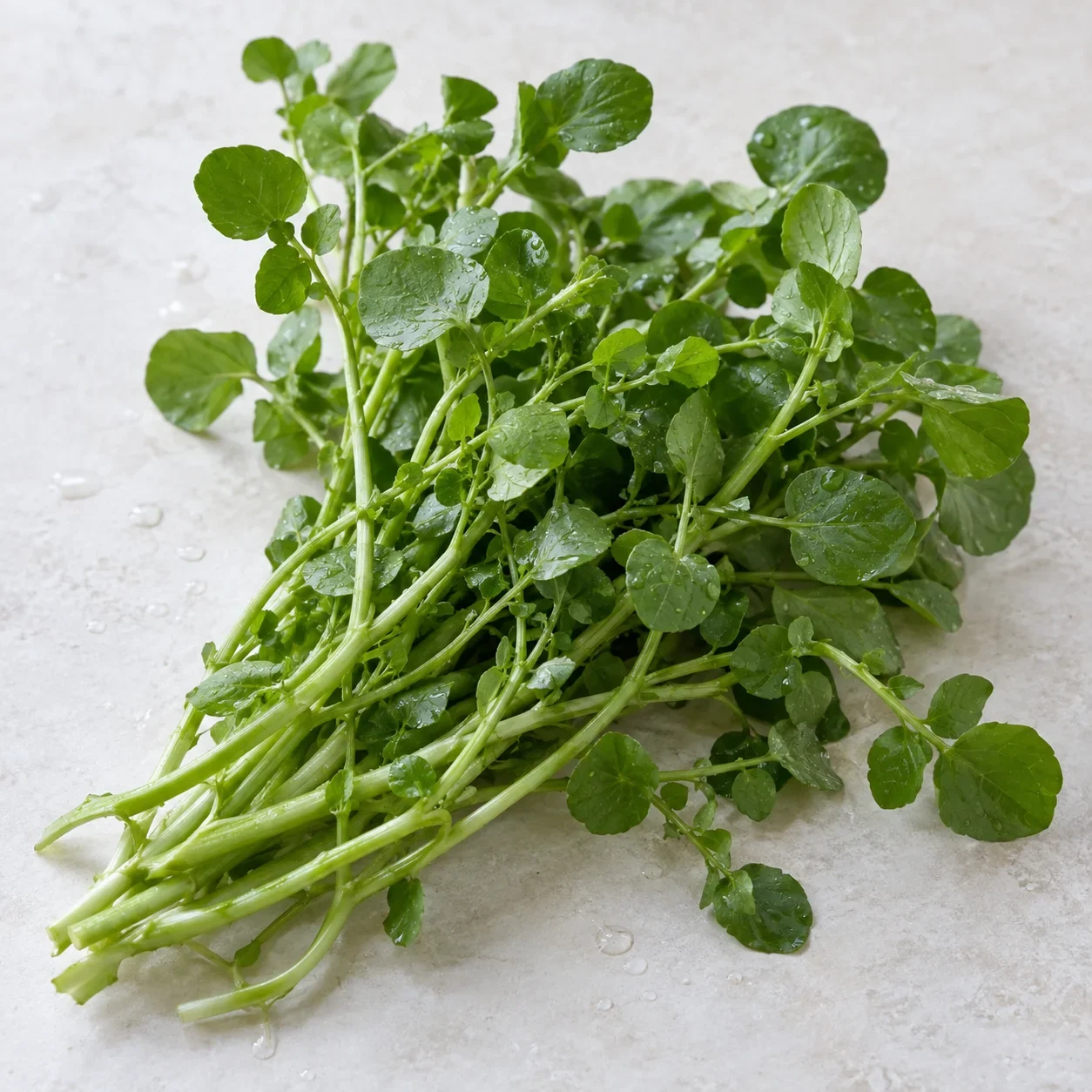
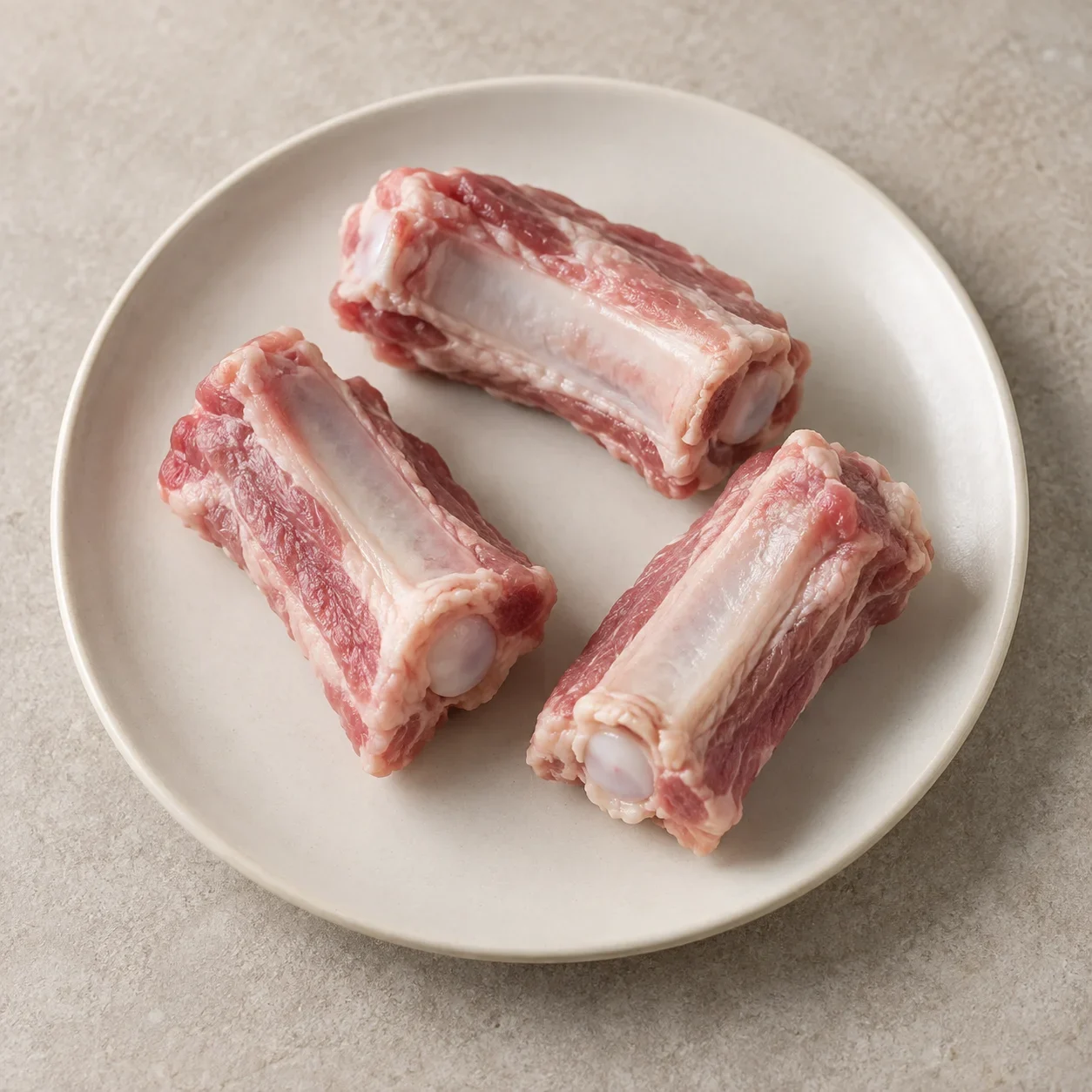
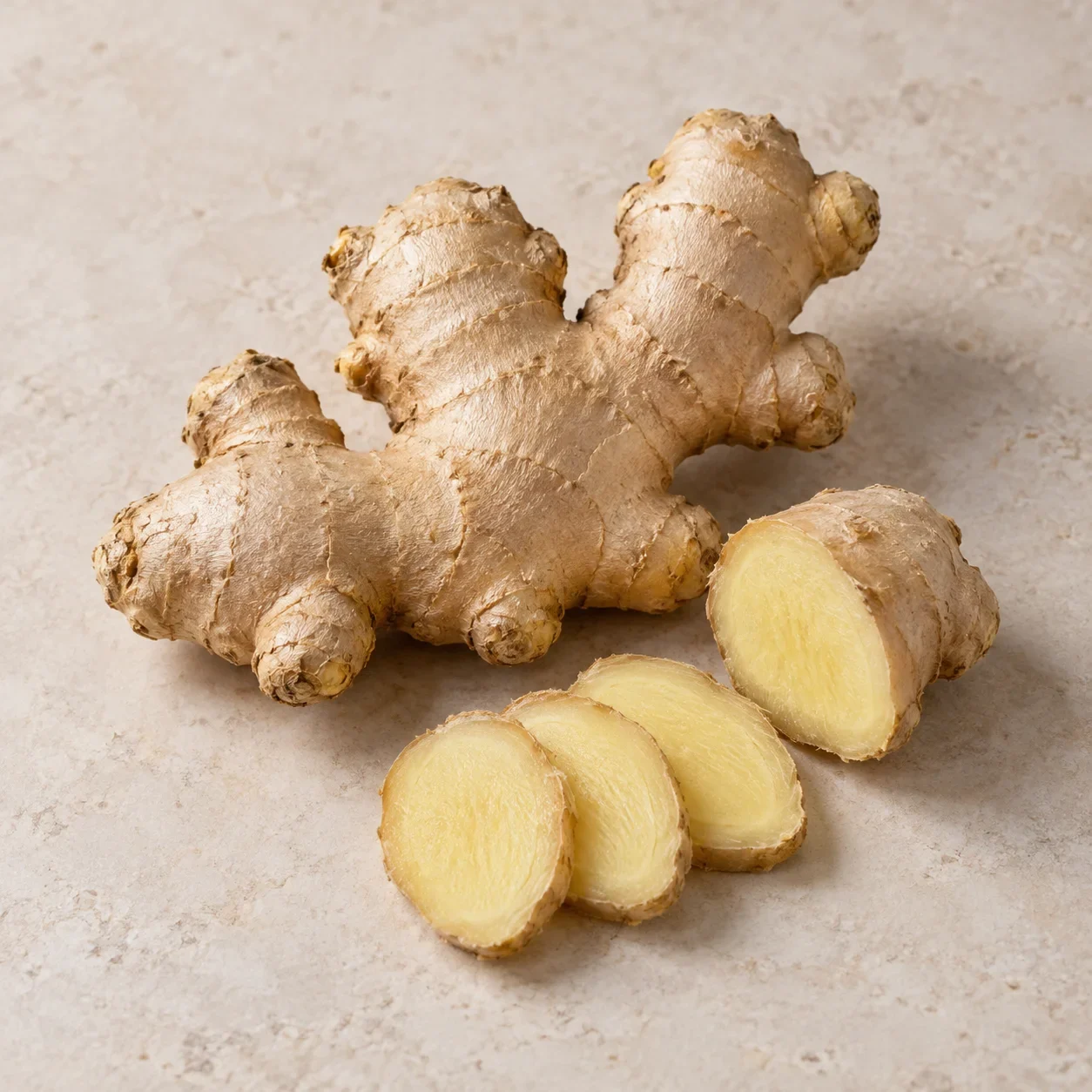

In some versions
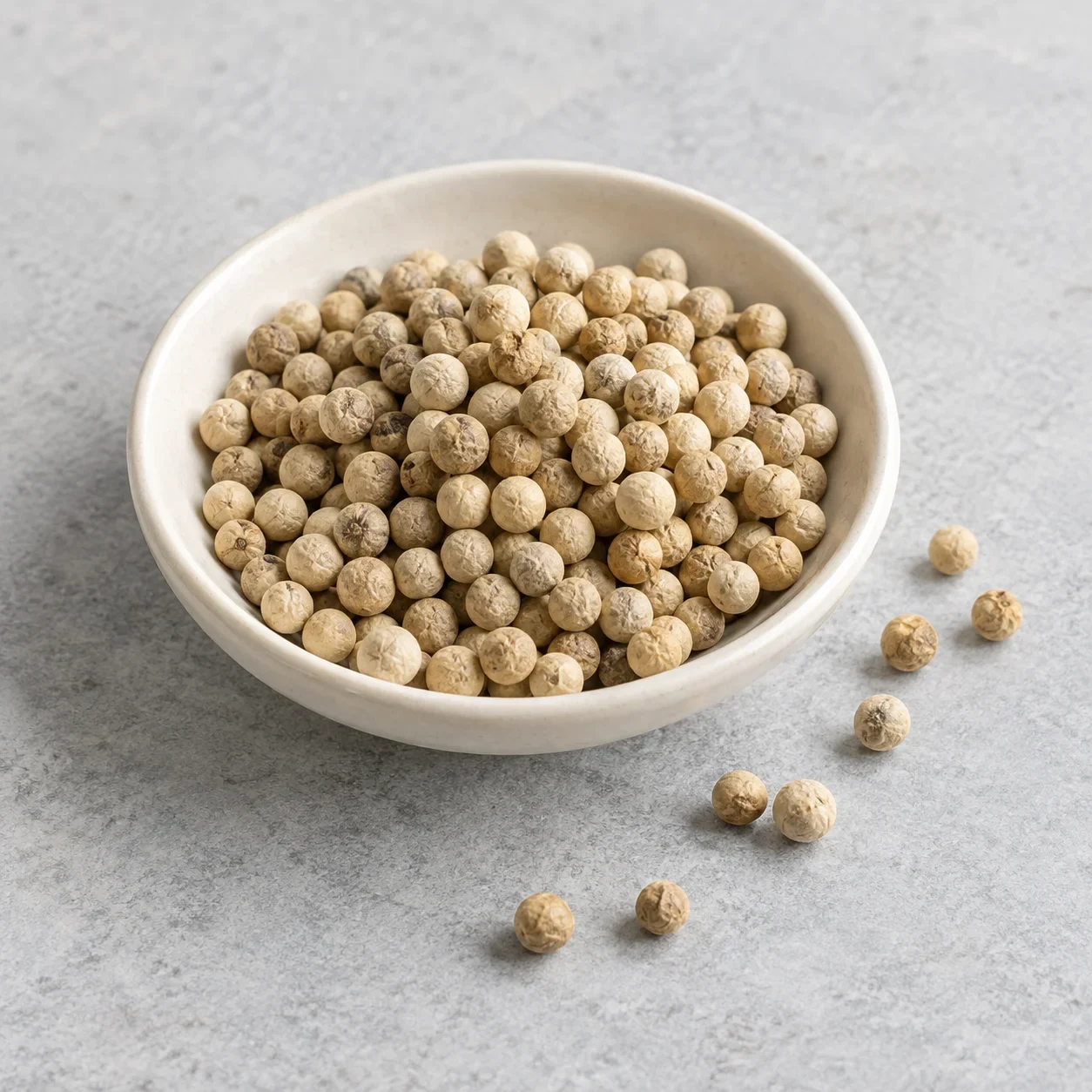
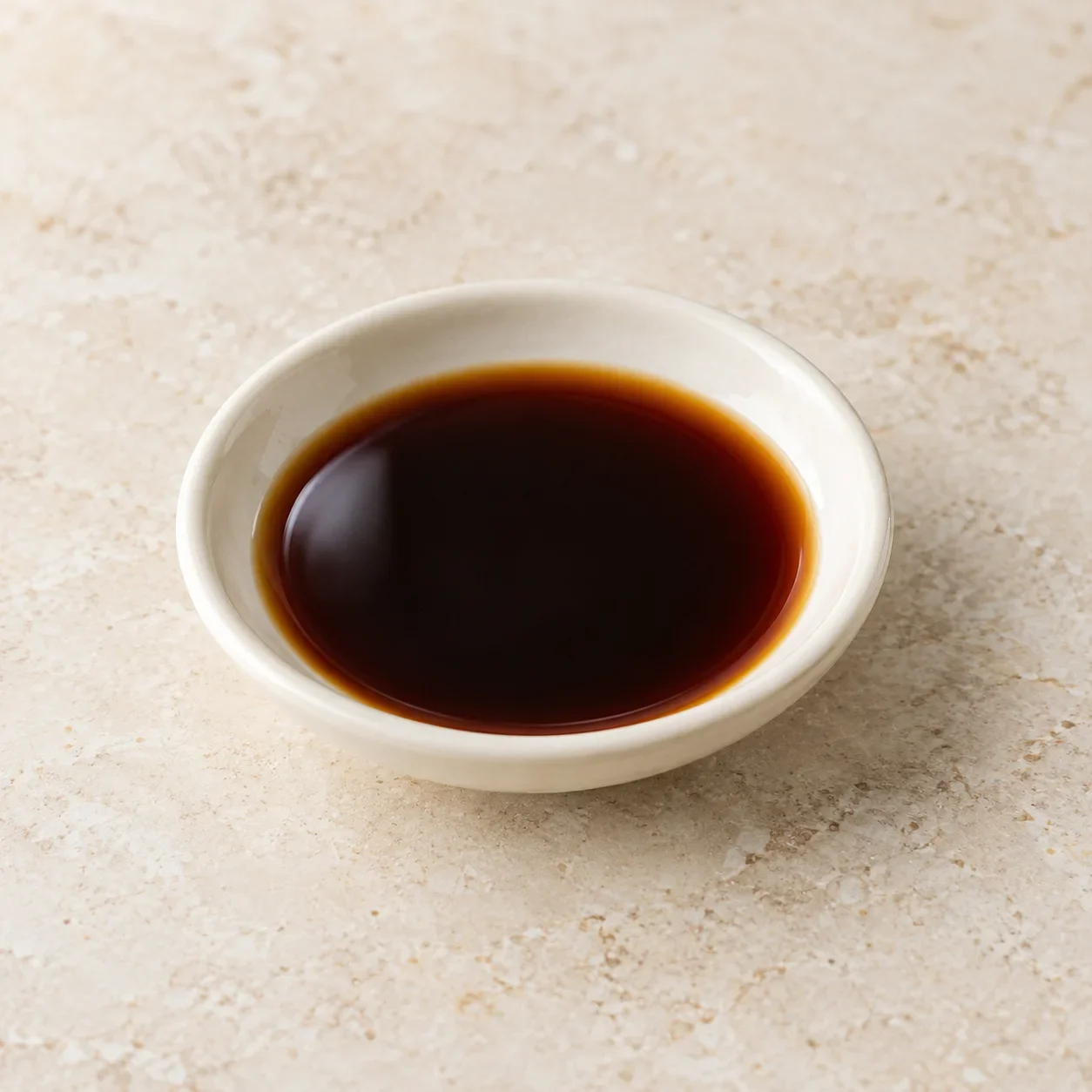
Recipes vary by restaurant.
How does it taste?
Mild pork broth with a fresh green, slightly peppery note.
- Chili heat
- Texture
- Soft greens and tender meat in a light broth.
- How it’s made
- Blanch the ribs, simmer them with ginger, then add watercress and cook until tender.
The balance of greens and ribs varies. Salt and white pepper season this preparation; other versions may use a different soup base.
A CONNECTION TO PLACE
Origin & regional roots
Associated with Guangdong.
About this regional connection
Guangdong: Guangdong regional association; not an exclusive origin claim.
Ask if they have it first
请问你们有西洋菜汤吗?
Do you have this item?
A LITTLE SOMETHING TO READ
Story & history
Watercress finds a home in Cantonese soup
Watercress soup is a familiar part of Cantonese home cooking and the tradition of slowly simmered soups. Pork ribs give the broth body, while the greens soften and lose some of their raw pepperiness. Both broth and solids are enjoyed: the tender rib meat can accompany rice, with a little dipping sauce served separately.