
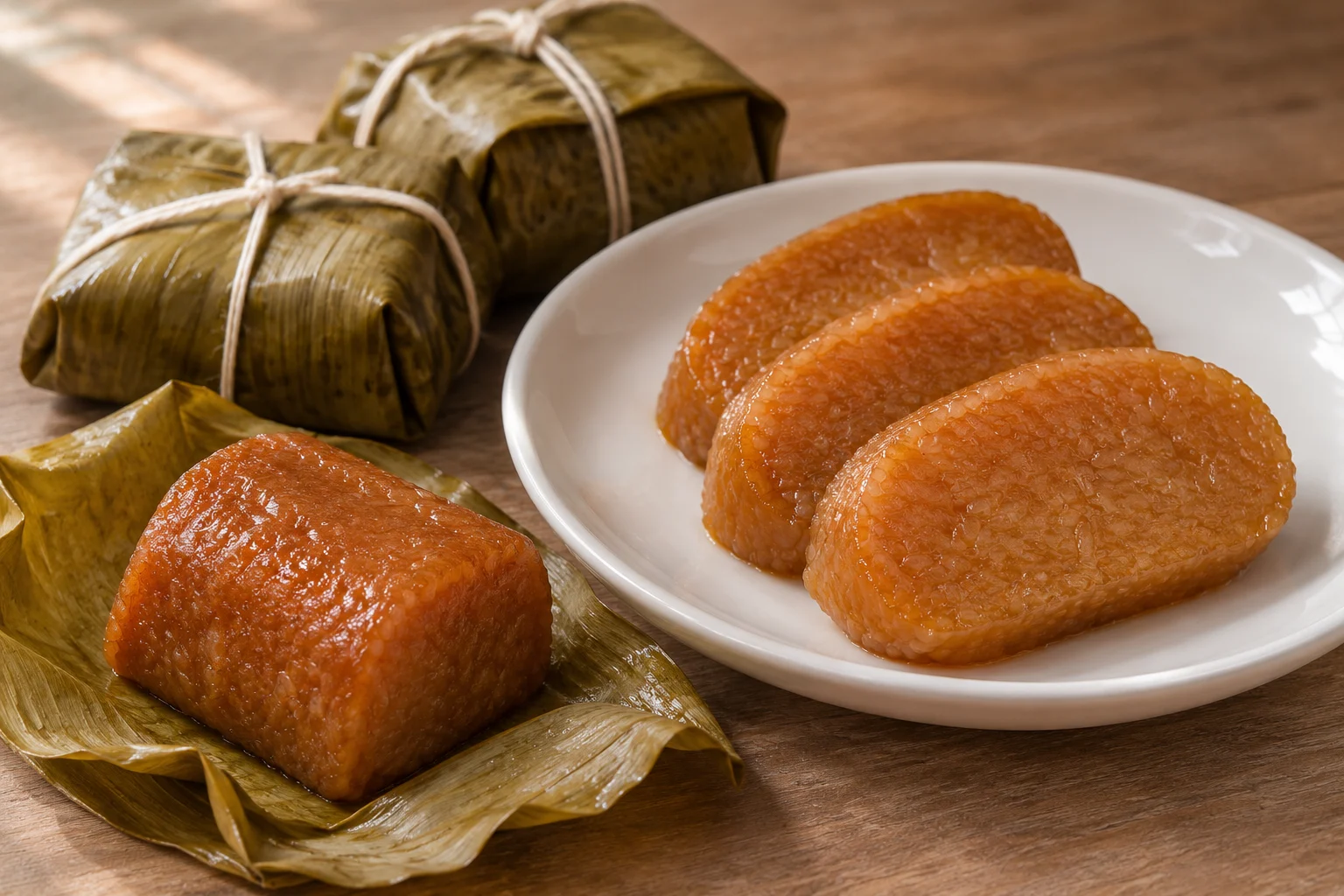
At the table
Remove the wrapping before eating. Try a small piece while warm; thicker cakes may be sliced for serving.
The documented preparation contains soybeans. Ingredients and shared equipment vary; ask about additions and cross-contact if you have an allergy or dietary restriction. Remove the wrapping and string before eating.
Wrappings, sweetness, grain proportions and colour vary by maker. The reported Qianxi preparation uses soybean-and-rice slurry; other regional huangba recipes may differ. Confirm the actual preparation with the seller.
GET TO KNOW THE DISH
What goes into it?
Explore some key ingredients below. Preparations may use additional seasonings and ingredients.
Wrappings, sweetness, grain proportions and colour vary by maker. The reported Qianxi preparation uses soybean-and-rice slurry; other regional huangba recipes may differ. Confirm the actual preparation with the seller.
Typical ingredients
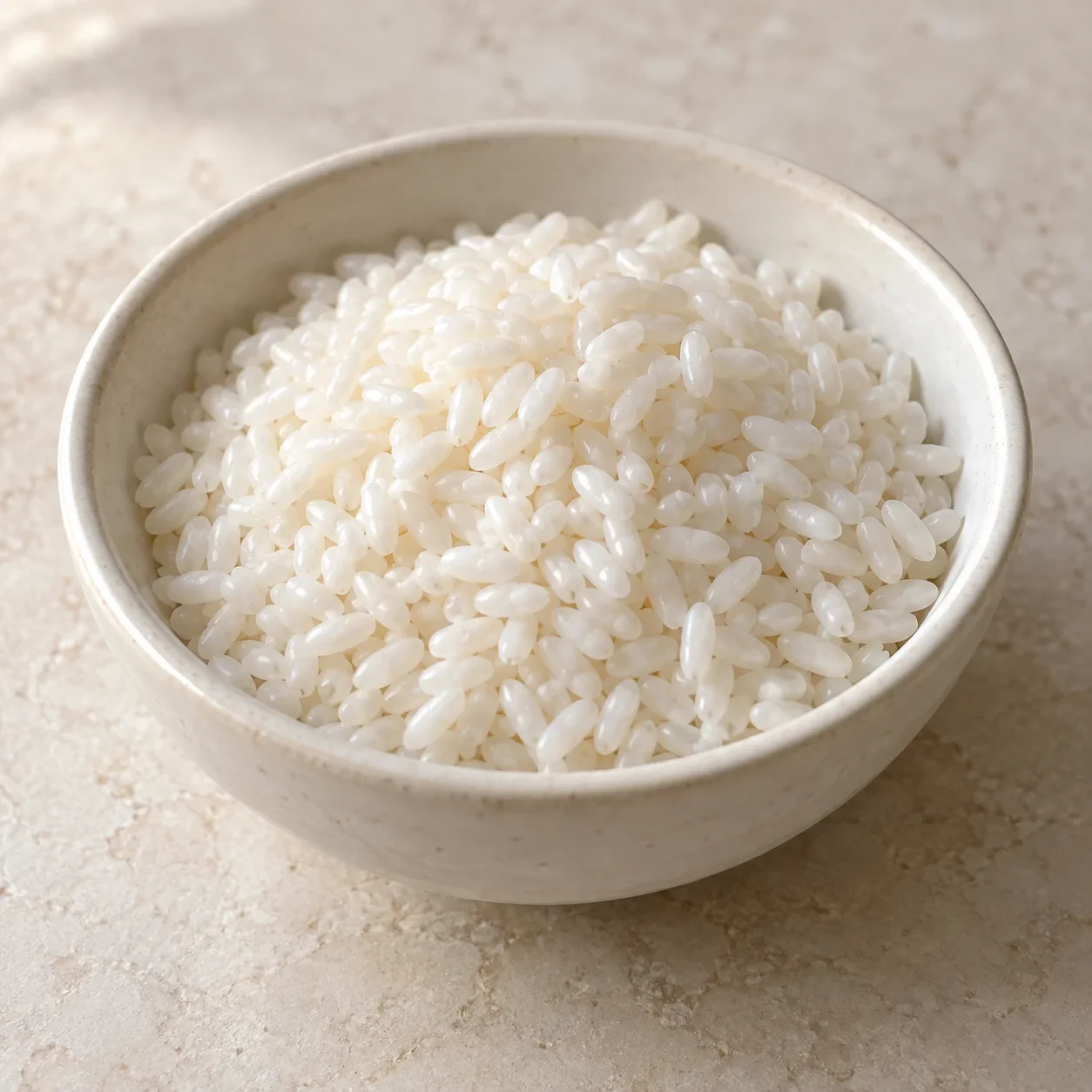
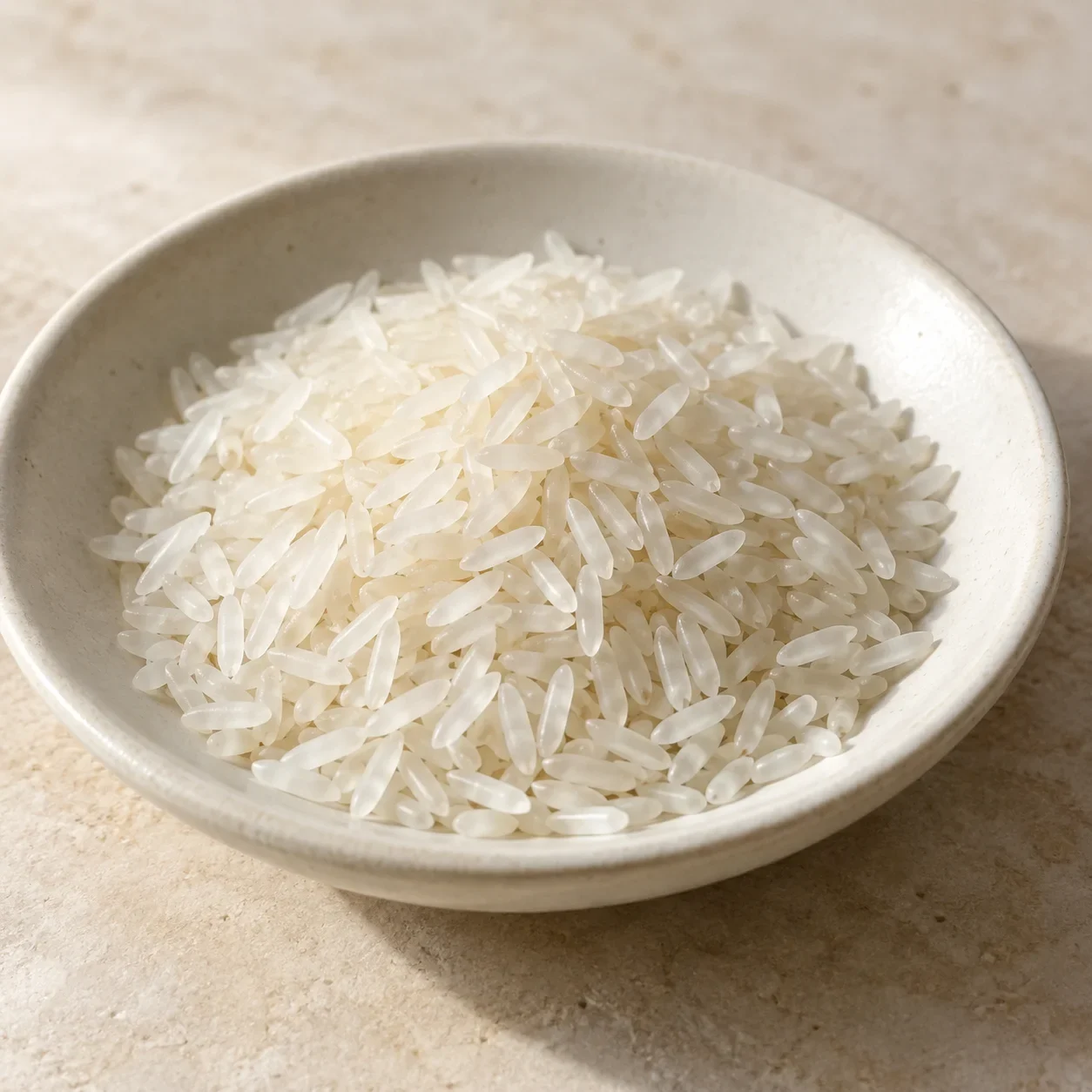
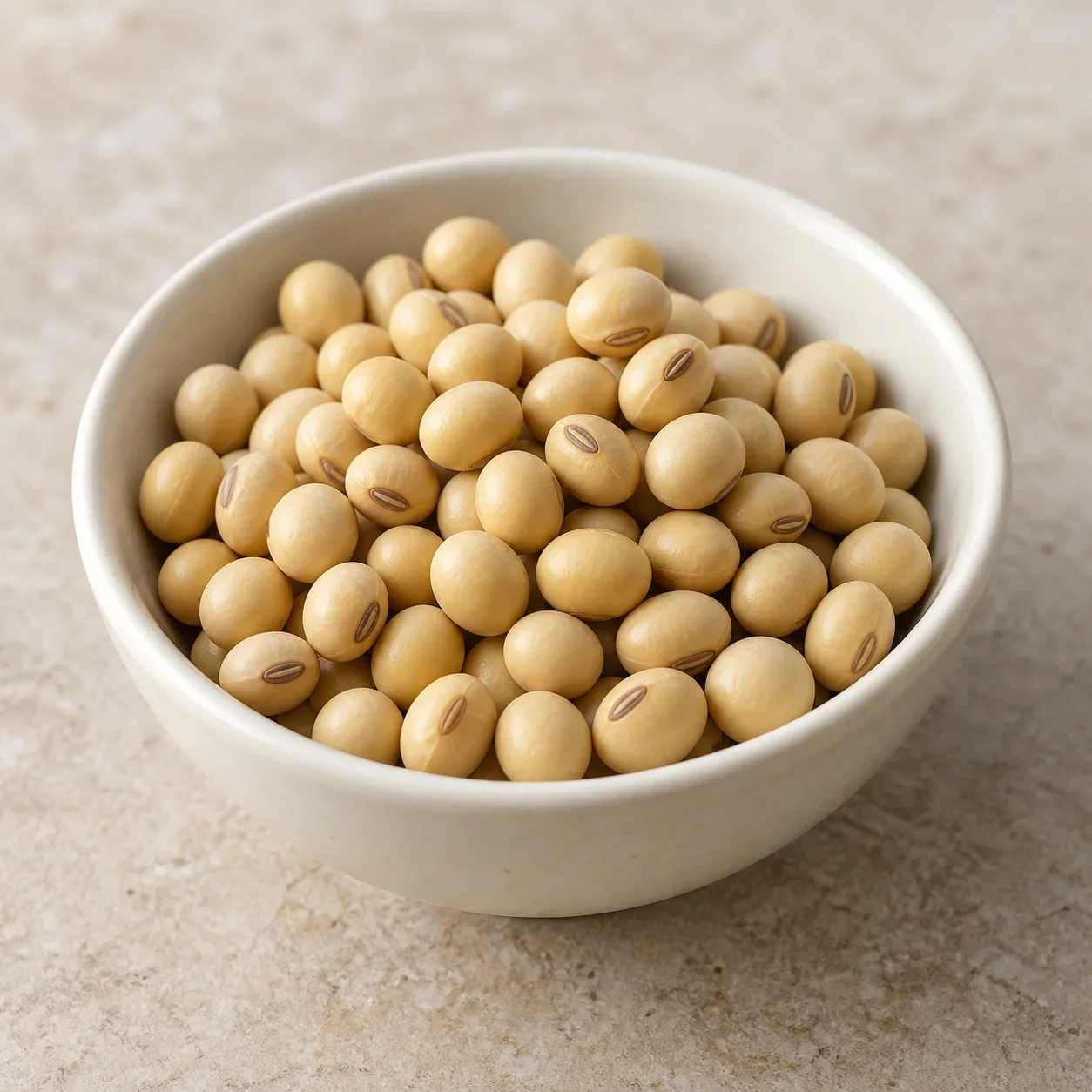

Recipes vary by restaurant.
How does it taste?
Sweet rice flavour with a mild soybean note and aroma from the cooked wrapping.
- Chili heat
- Texture
- Dense, sticky and soft when warm, with rice grains held in a cohesive cake.
- How it’s made
- Grind rice and soybeans together into a slurry. Mix it with partly steamed glutinous rice and sugar, shape portions, wrap in prepared corn husks or large leaves, and steam until cooked through.
Wrappings, sweetness, grain proportions and colour vary by maker. The reported Qianxi preparation uses soybean-and-rice slurry; other regional huangba recipes may differ. Confirm the actual preparation with the seller.
A CONNECTION TO PLACE
Origin & regional roots
Associated with Guizhou.
About this regional connection
Guizhou: Qianxi city, Guizhou; documented local soybean-and-rice slurry preparation.
Ask if they have it first
请问你们有黔西黄粑吗?
Do you have this item?
A LITTLE SOMETHING TO READ
Story & history
A Qianxi version of huangba
A 2024 account of Qianxi huangba describes mixing rice-and-soybean slurry with partly steamed glutinous rice before wrapping and steaming. This soybean component distinguishes the documented version from rice-only descriptions of some other regional huangba.