
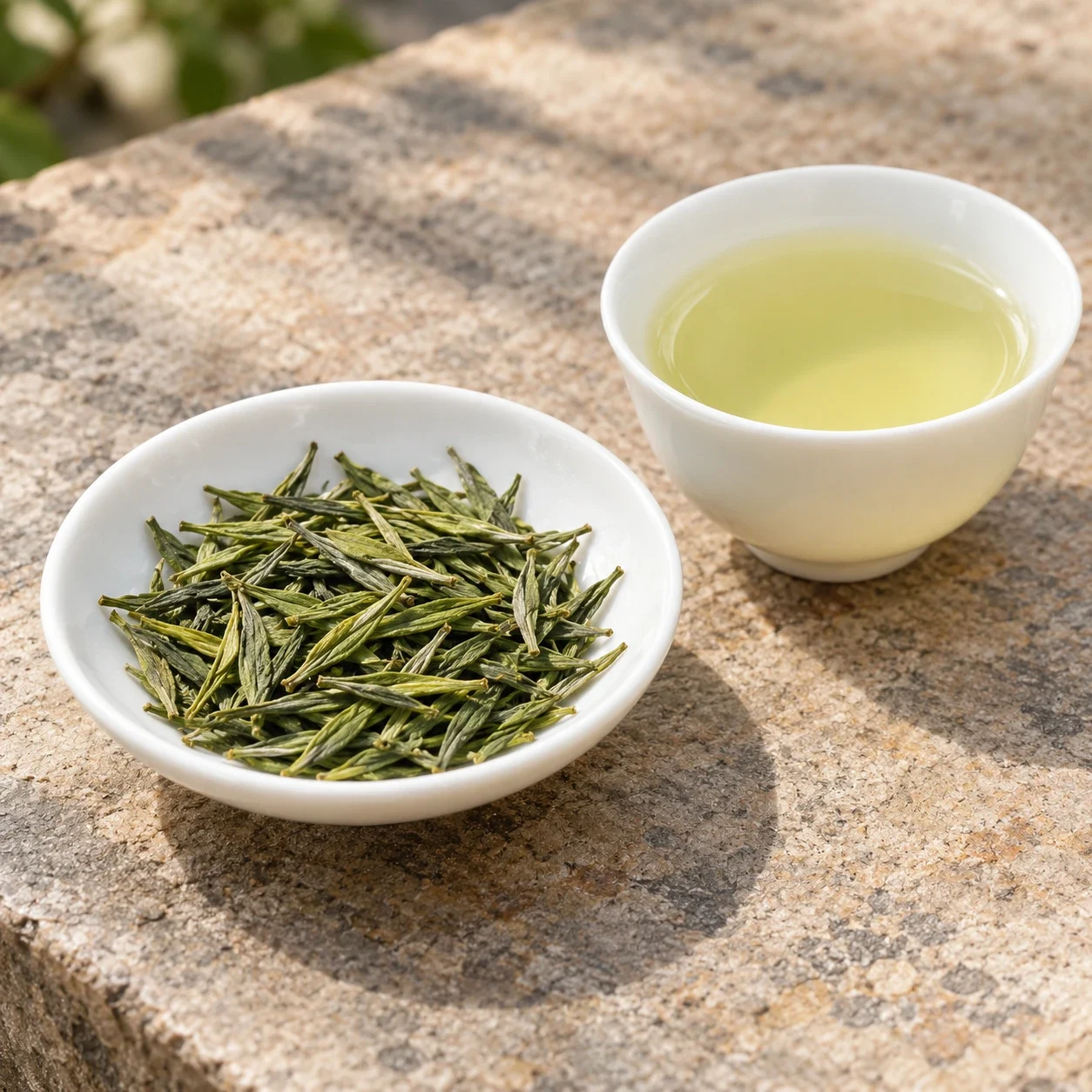
At the table
Let the tea cool slightly, then sip from the cup, leaving the leaves behind. If served in a pot or gaiwan, pour the infusion into a drinking cup; the leaves can be infused again.
Contains caffeine and may be served very hot. This is not a caffeine-free herbal drink.
The representative cup is plain, without added sugar, milk or honey. Leaf selection, processing and brewing strength affect its taste.
Know what you’re trying.
Plain brewed tea; no fixed serving size.
Ingredients
The named tea leaves and water.
Origin & regional roots
Sichuan
Associated with Sichuan.
About this regional connection
Sichuan: Wanyuan in the Daba Mountains.
Ask if they have it first
请问你们有巴山雀舌吗?
Do you have this item?
A LITTLE SOMETHING TO READ
Story & history
Bashan Queshe tea
This account describes a tradition or story, rather than an established historical fact.
The name Queshe, 'sparrow tongue', describes the slender leaf shape. This tea belongs to Wanyuan's tea-making tradition in the Daba Mountains.