
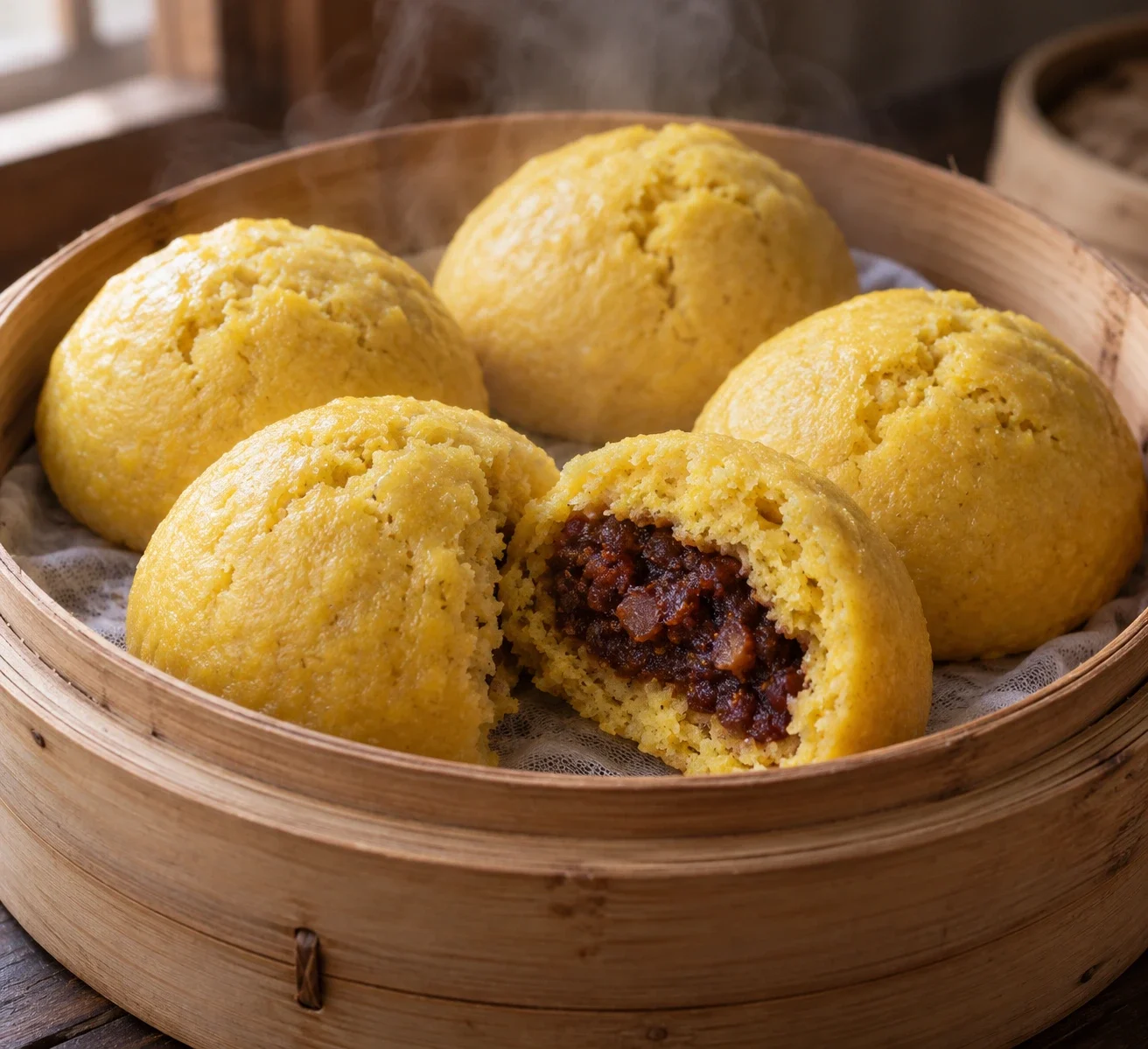
At the table
Break the bun open, let the filling cool and take manageable bites. Ask “里面是什么馅?” (“What is the filling?”).
Includes cowpeas. Wheat may be present in some doughs or starters. If avoiding wheat or seeking vegetarian or vegan food, confirm the grain blend, starter, filling and any added fat.
No chili is used in this described version. Added sugar, grain blends and fillings may differ; check the version before ordering.
GET TO KNOW THE DISH
What goes into it?
Explore some key ingredients below. Preparations may use additional seasonings and ingredients.
Filled and unfilled buns are both made. Some home versions add wheat flour and use baking yeast; grain blends and fillings depend on the maker.
Typical ingredients
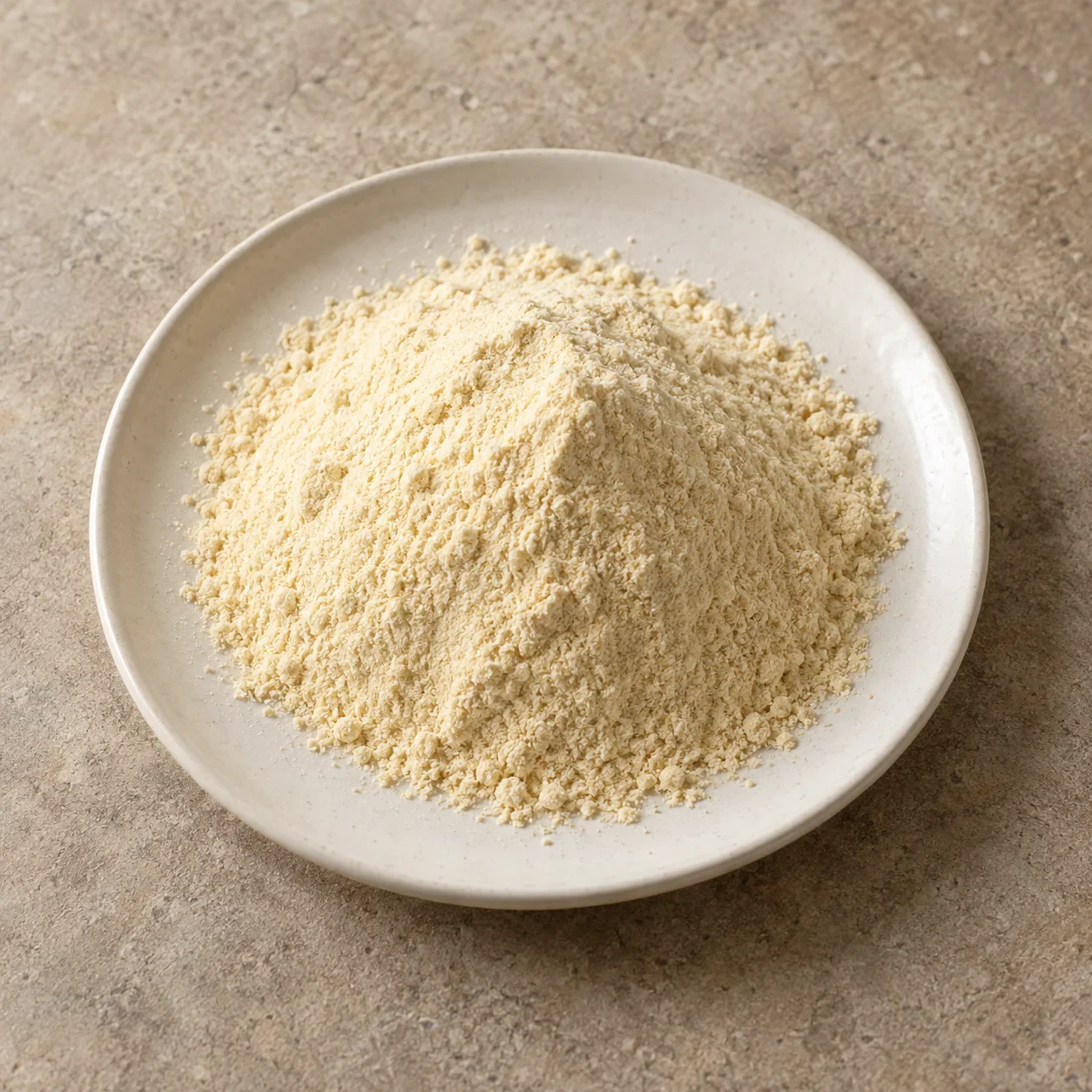
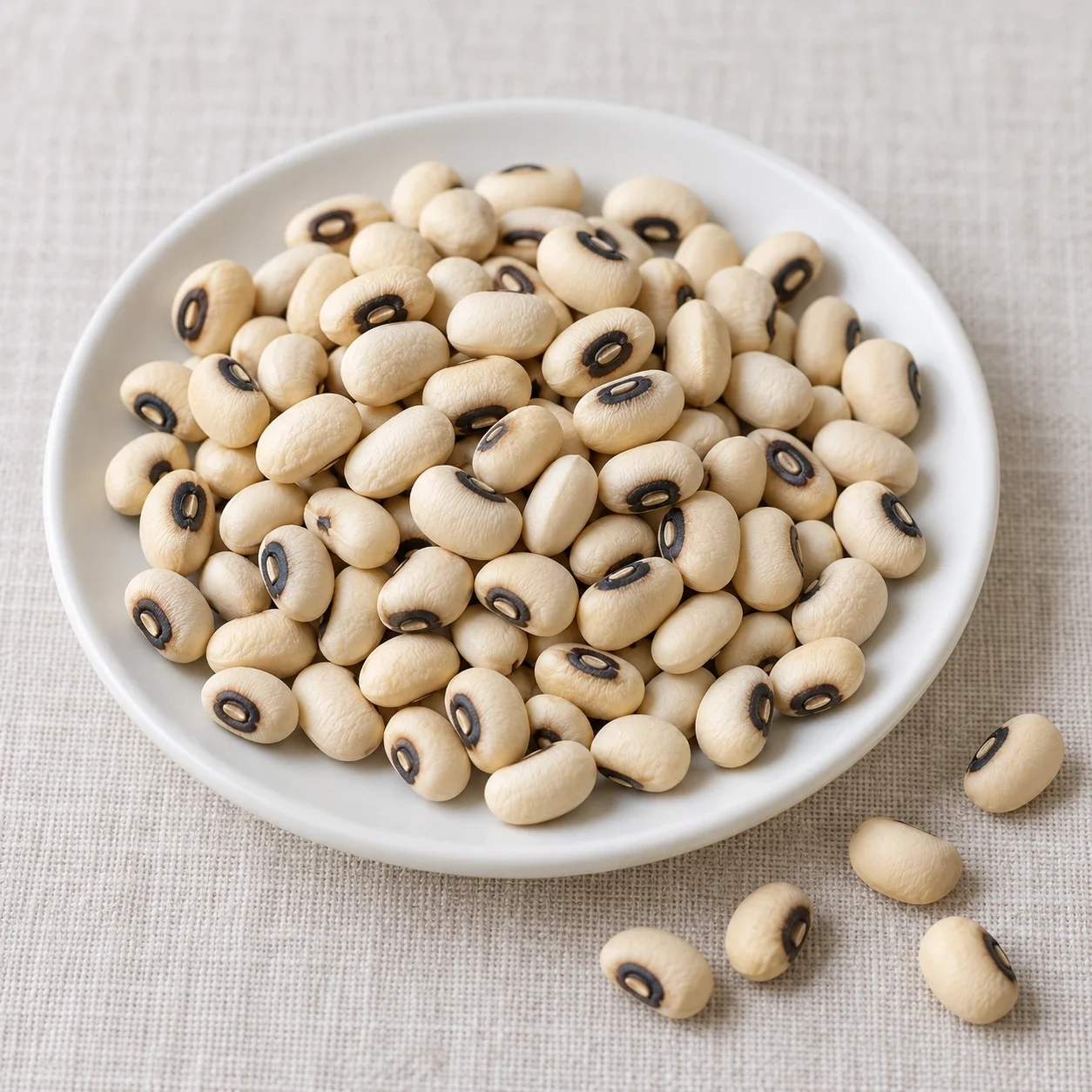
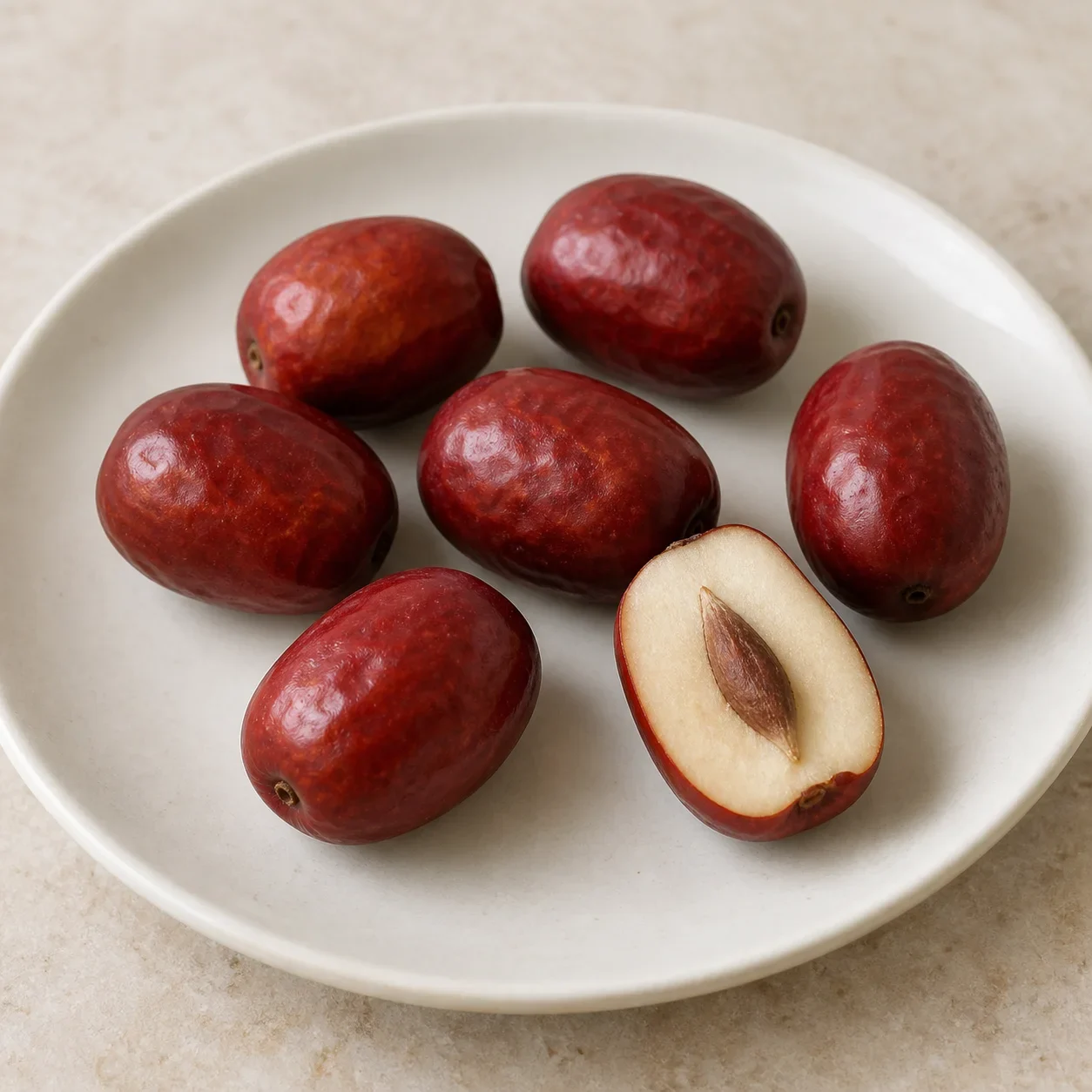
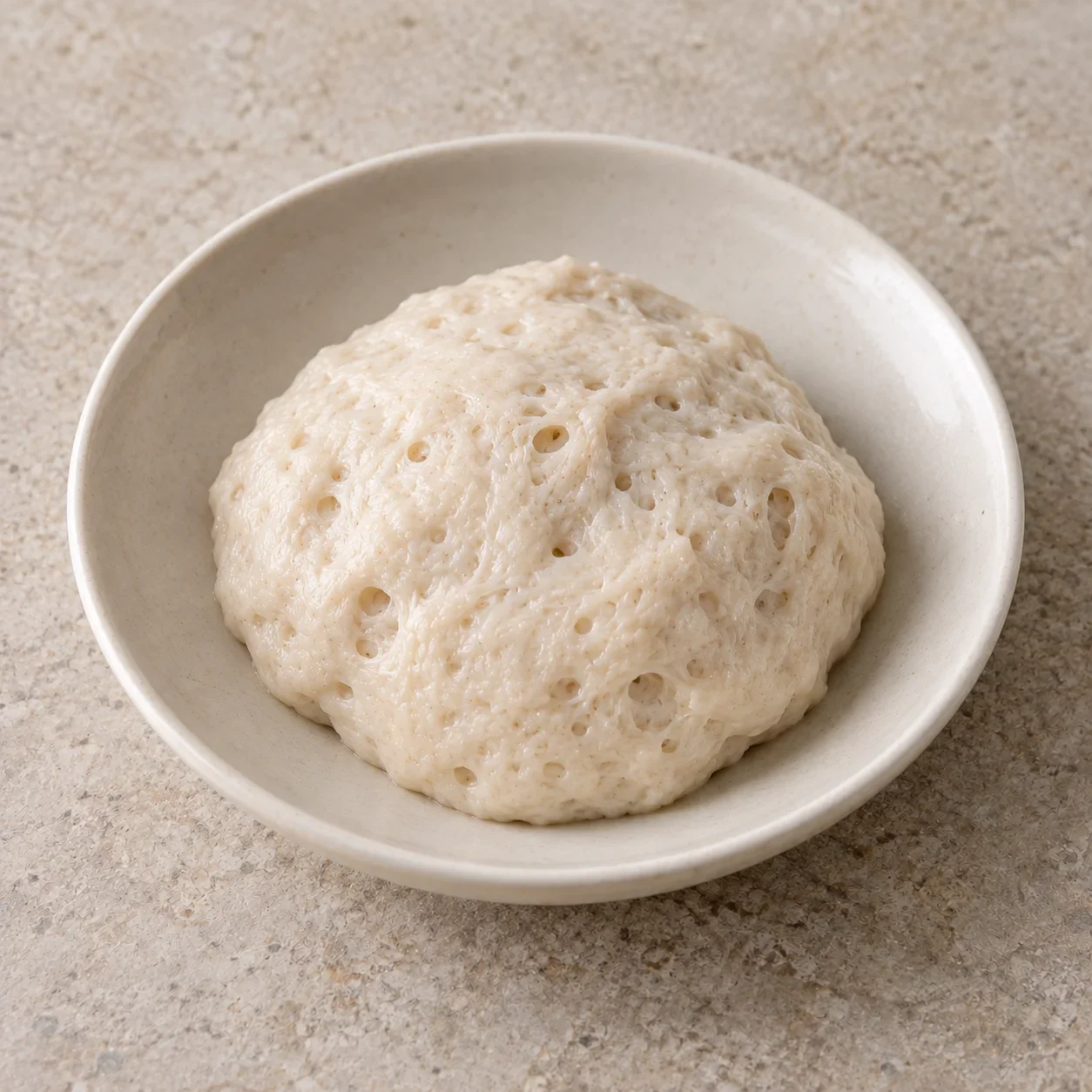
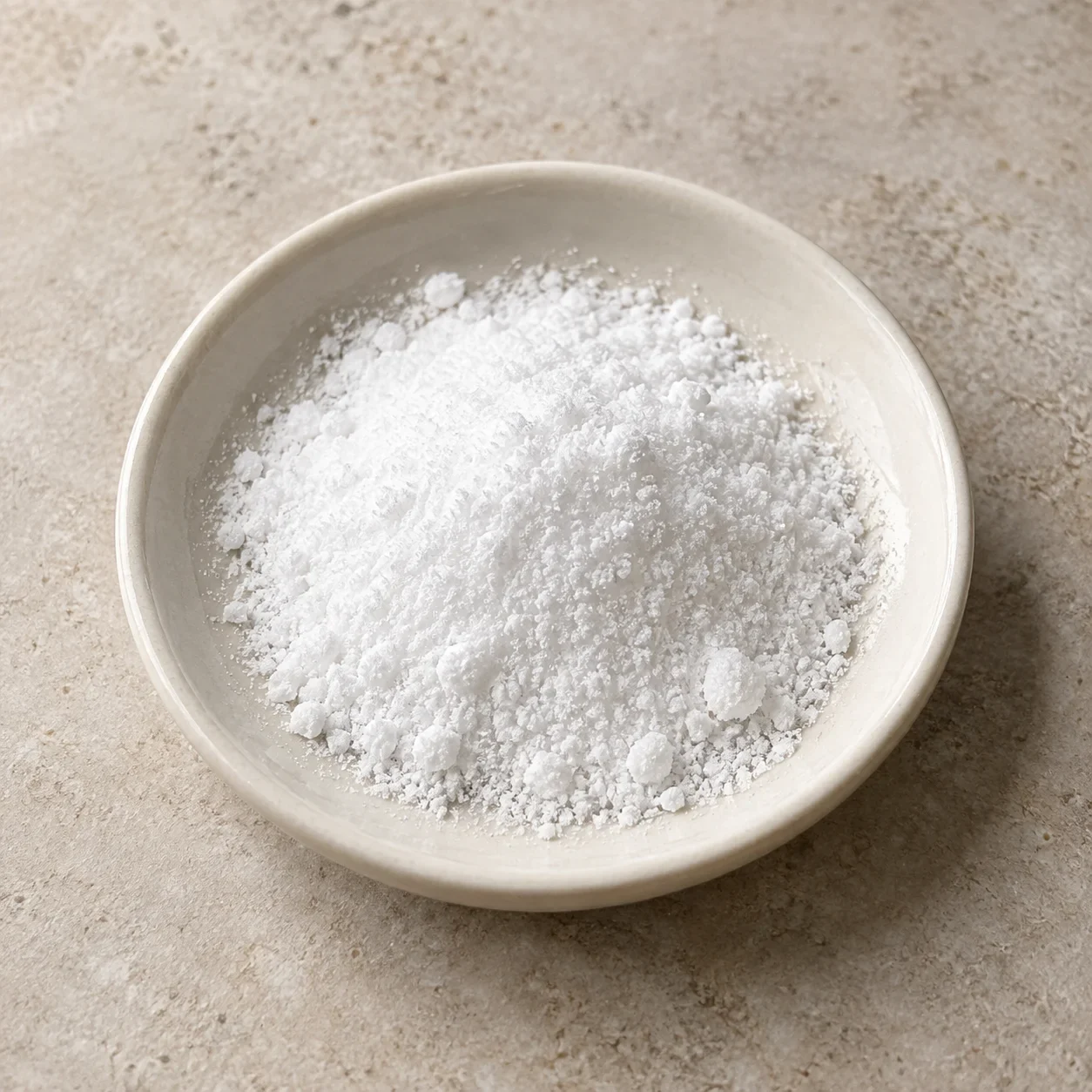
Recipes vary by restaurant.
How does it taste?
Gently sweet bean-and-jujube filling with a warm grain aroma; sweetness varies.
- Chili heat
- Texture
- Soft steamed millet dough with slight surface cracks and a thick, soft bean-and-jujube center.
- How it’s made
- The millet is prepared and milled, then the dough is fermented with a traditional starter and adjusted with culinary alkali. Cooked jujubes and cowpeas form the filling before steaming.
Filled and unfilled buns are both made. Some home versions add wheat flour and use baking yeast; grain blends and fillings depend on the maker.
A CONNECTION TO PLACE
Origin & regional roots
Associated with Shaanxi.
About this regional connection
Shaanxi: ActualSuideproducerinterviewandShaanbeiheritagecontext; associationnotexclusiveorigin orcurrentvenueavailability.
Ask if they have it first
请问你们有陕北黄馍馍吗?
Do you have this item?
A LITTLE SOMETHING TO READ
Story & history
Part of Shaanbei’s New Year cooking
This account describes a tradition or story, rather than an established historical fact.
In Suide, huang momo belongs to nian chafan, foods made for New Year gatherings and other celebrations. The craft lies in balancing the grain blend and fermentation, then enclosing a sweet filling before steaming.