
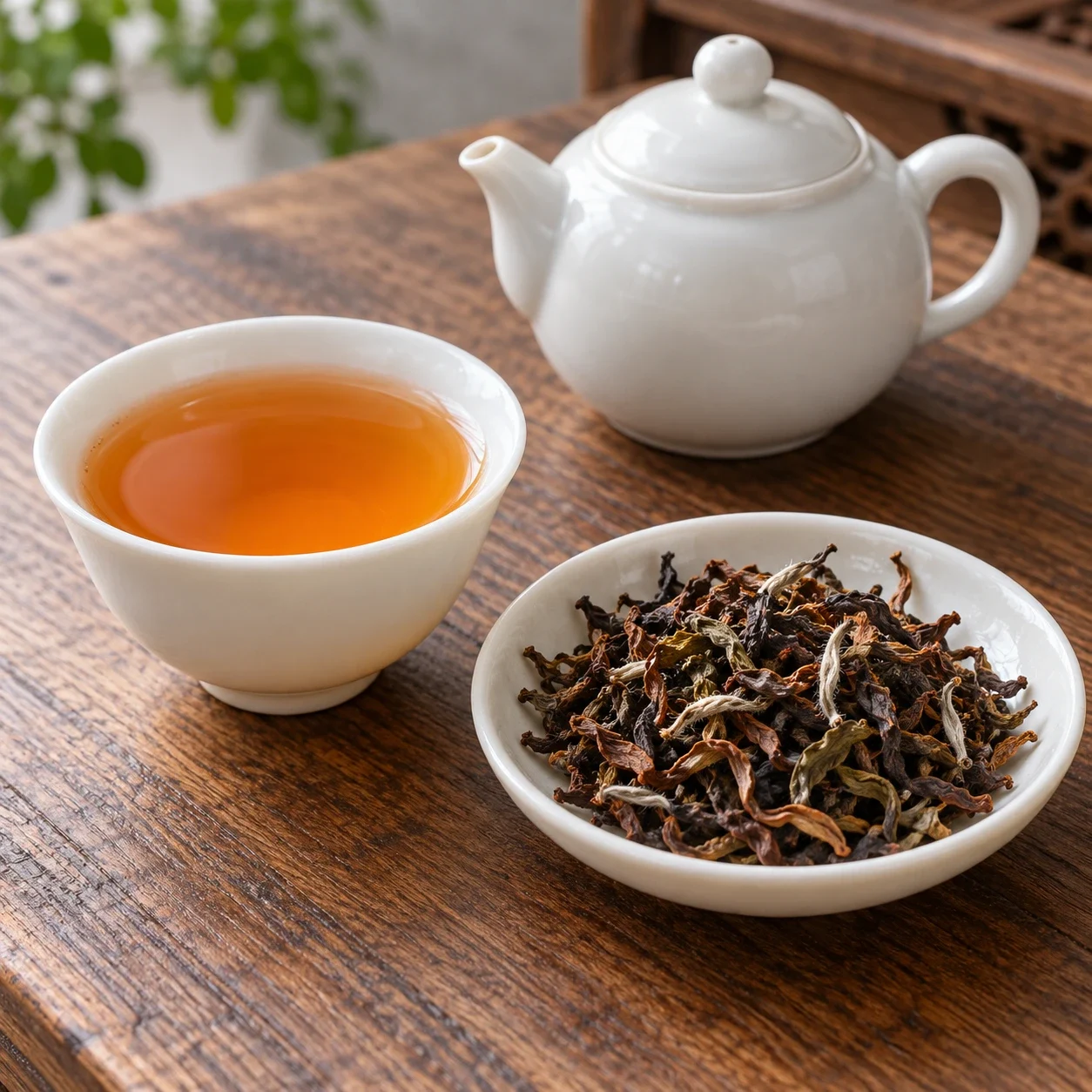
At the table
Let the tea cool slightly, then sip from the cup, leaving the leaves behind. If served in a pot or gaiwan, pour the infusion into a drinking cup; the leaves can be infused again.
Contains caffeine and may be served very hot. This is not a caffeine-free herbal drink.
The representative cup is plain, without added sugar, milk or honey. Leaf selection, processing and brewing strength affect its taste.
Know what you’re trying.
Plain brewed tea; no fixed serving size.
Ingredients
The named tea leaves and water.
Origin & regional roots
Taiwan
Its origins are linked to Taiwan.
About this regional connection
Taiwan: Taiwan, especially the tea-growing areas of Hsinchu and Miaoli.
Ask if they have it first
请问你们有東方美人茶吗?
Do you have this item?
A LITTLE SOMETHING TO READ
Story & history
Oriental Beauty tea
This account describes a tradition or story, rather than an established historical fact.
Also called Baihao oolong or Pengfeng tea, it is closely associated with the tea areas of Hsinchu and Miaoli. Its distinctive character links leafhopper-affected leaves with the local tea-making craft.