
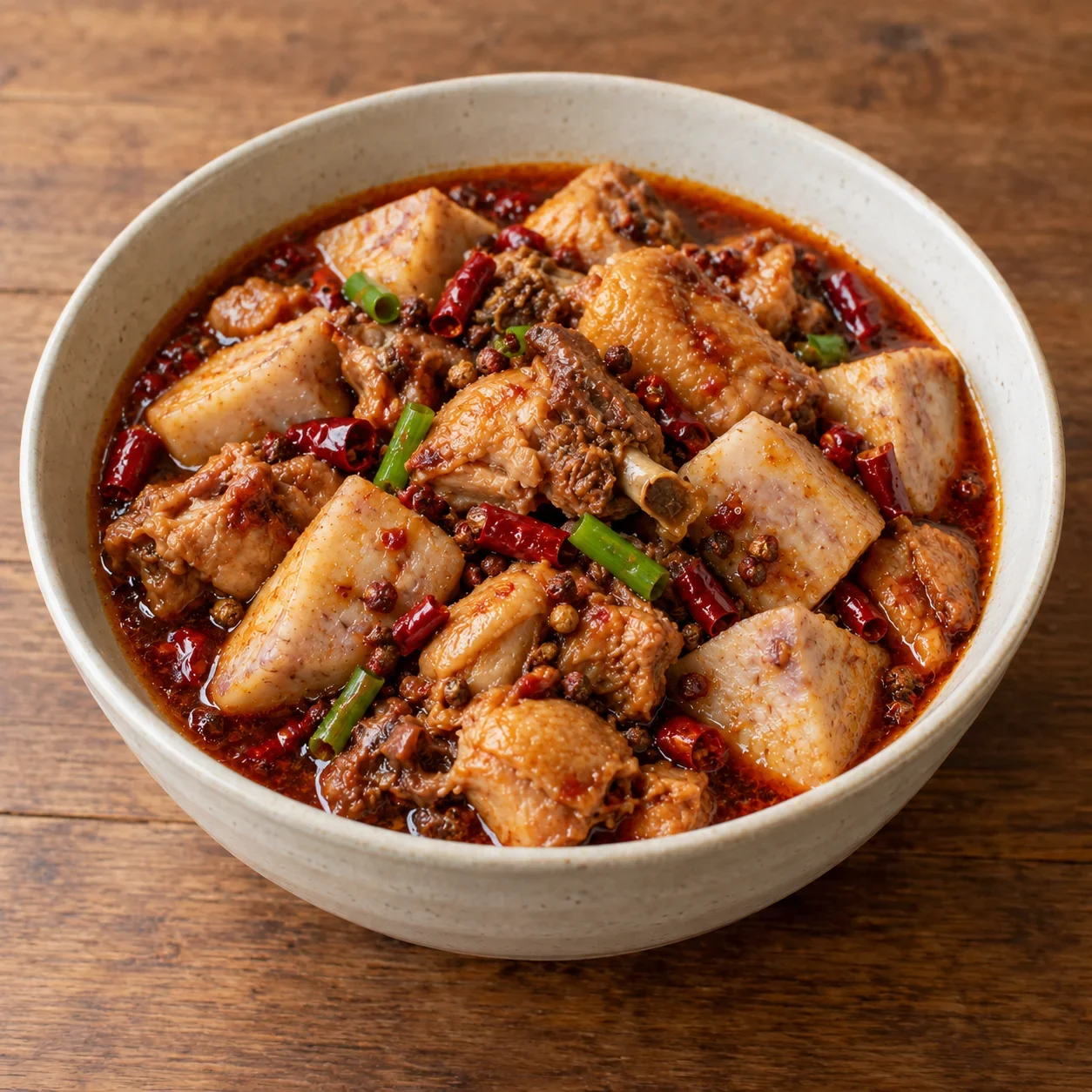
At the table
Serve the cooked chicken and taro over rice. Take small bites of chicken and check for bones; spoon up the soft taro.
Chicken pieces may contain small bones. Taro and thick sauce can hold heat, so let a portion cool before eating.
Chicken cuts, taro size and chili levels vary. Chongqing versions often use chili and Sichuan pepper; ask for less chili before ordering if needed.
GET TO KNOW THE DISH
What goes into it?
IN THE APP
Get to know every ingredient.
Explore what goes into a dish and how each ingredient shapes its flavor.
How does it taste?
Savory chicken and starchy taro form the base; some Chongqing versions are málà, while home-style seasoning varies.
- Chili heat
- 3/5
- Texture
- Chicken is cut into pieces, sometimes with larger thigh portions. Taro softens and can turn tender and sticky after stewing; exact textures vary by version.
A CONNECTION TO PLACE
Origin & regional roots
Chongqing
Associated with Chongqing.
About this regional connection
Chongqing: Chicken with taro is associated with Chongqing, with named local versions including Shixie, Lidu and Rongchang; not an exclusive-origin claim.
Ask if they have it first
请问你们有芋儿鸡吗?
Do you have this item?
A LITTLE SOMETHING TO READ
Story & history
Rongchang taro chicken around the Start of Autumn
This account describes a tradition or story, rather than an established historical fact.
In Rongchang, taro chicken is linked to the Start of Autumn and the seasonal idea of “adding autumn weight” after summer, when appetites may have waned. Autumn taro and chicken make a hearty home-style pairing: the taro is eaten alongside the meat, not just as a garnish. Wujia town is especially known for the dish, and diners from nearby Neijiang and Ziyang have traveled there specifically to try it. This seasonal pairing and its cross-border following give the everyday stew a place in Rongchang's local food culture.
Traveler experiences
Loading reviews…