
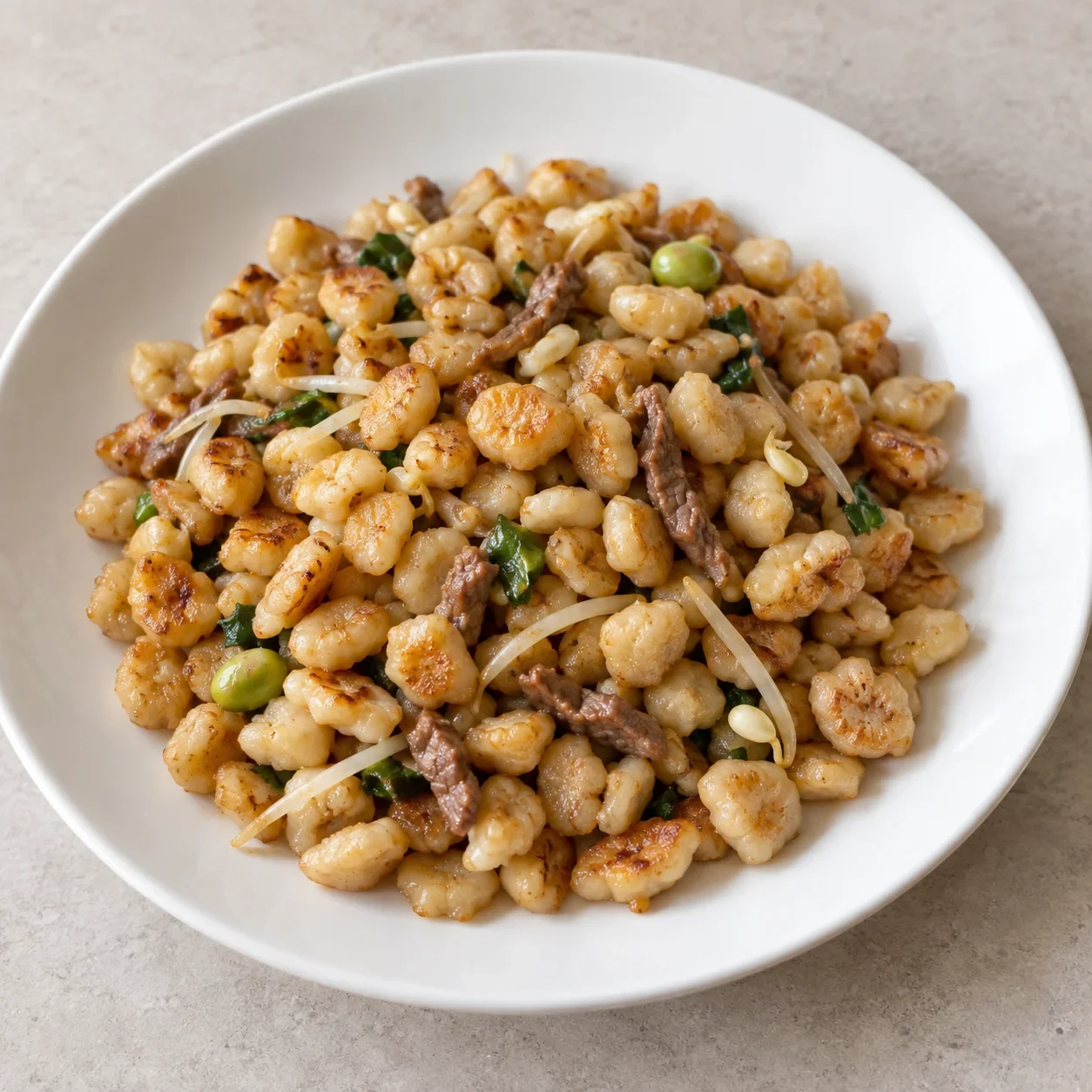
At the table
Eat warm with chopsticks or a spoon; the dough becomes firmer as it cools.
Contains wheat; sauces may contain soy and sesame. Some versions contain egg or shellfish. Ask about the chosen version if allergic.
Versions include beef, lamb, chicken, shrimp, egg or vegetables only. Seasonal vegetables and sauces vary.
The dense, chewy pieces should be cut smaller and cooled for young children.
Recipes vary. Ask the restaurant about ingredients and serving before you order.
GET TO KNOW THE DISH
What goes into it?
IN THE APP
Get to know every ingredient.
Explore what goes into a dish and how each ingredient shapes its flavor.
How does it taste?
Savory, with browned dough and soybean-paste or soy-sauce seasoning. Usually not chili-hot.
- Chili heat
- 0/5
- Texture
- Firm, chewy nuggets with lightly browned surfaces.
A CONNECTION TO PLACE
Origin & regional roots
Beijing
Associated with Beijing.
About this regional connection
Beijing: Beijing tourism page identifies it as a traditional Beijing Hui snack; historical origin is reported as a local account, not independently verified.
Ask if they have it first
请问你们有炒疙瘩吗?
Do you have this item?
A LITTLE SOMETHING TO READ
Story & history
The “Mu Guiying” behind a Beijing noodle shop
One chapter in chao geda’s history begins at Guangfu Guan, a Beijing halal noodle shop run by a mother and daughter surnamed Mu in the early Republican period. They shaped dough into small lumps, then developed a stir-fry with yellow bean paste, meat and sprouts. Regulars nicknamed the all-women shop “Mu Family Stronghold” and its owner “Mu Guiying”—a nickname borrowed from the legendary heroine.
Traveler experiences
Loading reviews…