
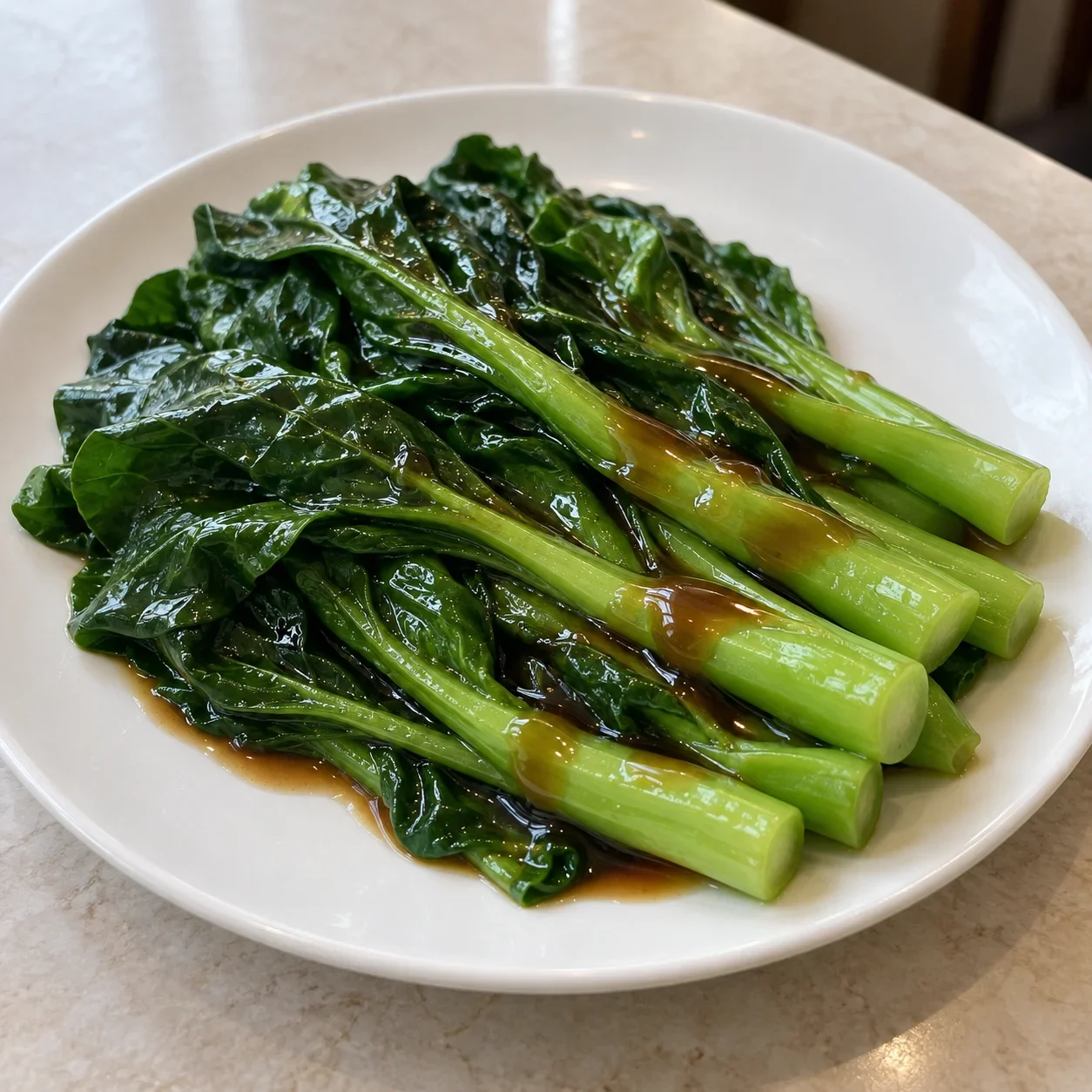
At the table
Take a few leaves and stems with a little sauce. Cut long stems into manageable pieces.
Ordinary oyster sauce contains oysters and may also contain wheat or soy. Check the actual sauce if you have allergies.
Both mature stalks and tender baby gai lan can be used. A mushroom-based sauce is an alternative to oyster sauce, but the sauce choice must be checked separately.
Tender leaves and crisp-tender stems make a mild vegetable side that can be shared; cut the stems into short pieces.
Recipes vary. Ask the restaurant about ingredients and serving before you order.
GET TO KNOW THE DISH
What goes into it?
IN THE APP
Get to know every ingredient.
Explore what goes into a dish and how each ingredient shapes its flavor.
How does it taste?
Green vegetable flavour with sweet-savoury oyster sauce.
- Chili heat
- 0/5
- Texture
- Tender leaves and firm, crisp-tender stems.
A CONNECTION TO PLACE
Origin & regional roots
Guangdong
Associated with Guangdong.
About this regional connection
Guangdong: Guangdong association; no exclusive origin claim.
Ask if they have it first
请问你们有蚝油芥兰吗?
Do you have this item?
A LITTLE SOMETHING TO READ
Story & history
A late-Qing record of oyster sauce
A late-Qing Xiangshan County Gazetteer may be among the earliest written records of oyster sauce: it describes oyster juice reduced to a sauce and praises its flavor over fermented-bean seasoning. The work was compiled in 1879, before the Lee Kum Kee signboard appeared at a Nanshui shop in 1888. That is an early record of the condiment, not proof of a single inventor. It also says nothing about gai lan, so the history of this pairing remains open.
Traveler experiences
Loading reviews…