
At the table
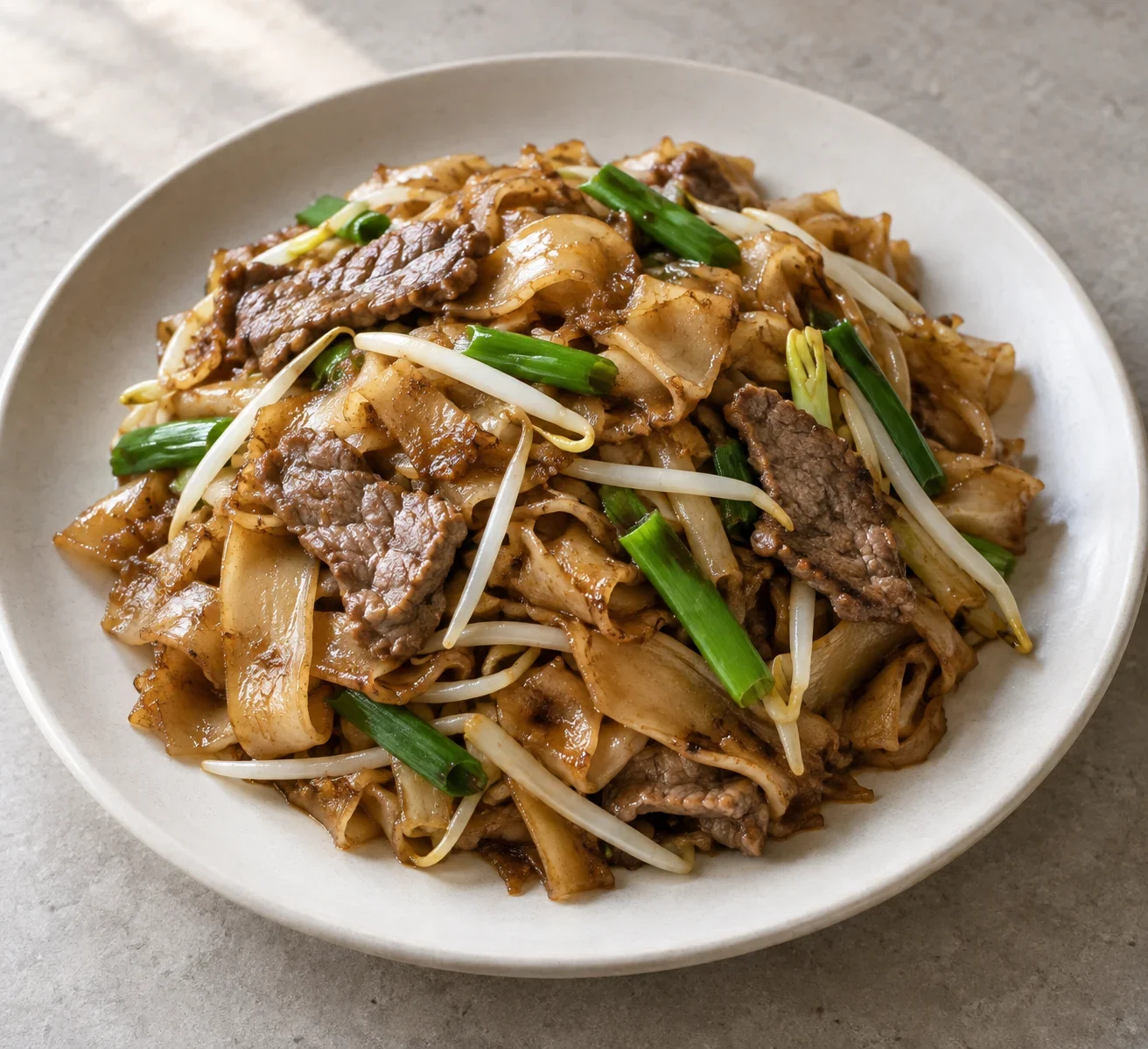
Separate a small portion of noodles and beef with chopsticks or a fork. Cut long noodles or large beef slices if needed.
Soy sauce may contain wheat; some recipes also use oyster sauce and sesame oil. Rice noodles do not make the whole dish gluten-free. Check seasonings if you have allergies.
This dry-fried version is served without pooled sauce.
Tender beef with soft wide rice noodles and bean sprouts can be shared from a plate; cut long noodles and beef into manageable pieces.
Recipes vary. Ask the restaurant about ingredients and serving before you order.
GET TO KNOW THE DISH
What goes into it?
IN THE APP
Get to know every ingredient.
Explore what goes into a dish and how each ingredient shapes its flavor.
How does it taste?
Savory, with browned beef.
- Chili heat
- 0/5
- Texture
- Tender beef; slippery noodles.
A CONNECTION TO PLACE
Origin & regional roots
Hong Kong · Guangdong
Associated with Hong Kong. Associated with Guangdong.
Ask if they have it first
请问你们有干炒牛河吗?
Do you have this item?
A LITTLE SOMETHING TO READ
Story & history
Shahe’s name in Guangzhou beef chow fun
These wide rice noodles take their name from Shahe, beneath Guangzhou’s Baiyun Mountain. A local tale says an elderly regular at a Shahe porridge shop made steamed rice sheets with spring water from the mountain for the shopkeeper’s ill wife; this is folklore, not a verified invention record. From the late Qing into the Republican period, Guangzhou tea houses and restaurants advertised authentic Shahe fen (沙河粉); the name was applied broadly to wide rice noodles and shortened to he fen (河粉), then simply he (河). Dry-fried beef chow fun is a classic way to enjoy them. The dish’s name carries a place association as well as describing its wide rice noodles.

Traveler experiences
Loading reviews…